Elevate your local knowledge
Sign up for the iNFOnews newsletter today!
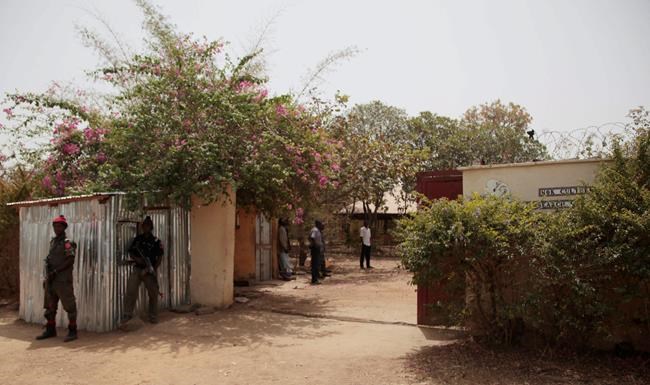
ABUJA, Nigeria – Nigerian police say it is not clear if a ransom was paid for the release of two German archaeologists freed by their kidnappers over the weekend.
Professor Peter Breunig and Johannes Behringer of Frankfurt’s Goethe University were seized at gunpoint Wednesday from Jenjela village in Kaduna state, less than 100 kilometres (60 miles) northeast of Abuja, Nigeria’s capital. Two villagers who tried to help them were killed by the kidnappers.
The kidnappers released the Germans unharmed on Saturday night, said a police statement.
The two freed academics were at the German Embassy in Abuja on Monday and are expected to return home, said Germany’s Foreign Ministry spokesman Martin Schaefer.
“It was good that such a positive solution came about so quickly,” he told the AP.
Germany’s government does not comment on hostage negotiations or ransom payments.
The kidnappers made direct contact with the German Embassy, a senior police officer involved in the search told The Associated Press on Monday. A worker at Jenjela said the kidnappers demanded a ransom of 60 million naira ($200,000). Both men spoke on condition of anonymity because they are not authorized to speak to reporters.
It was unclear if the kidnappers were paid or if they were frightened off by a massive hunt launched by police Special Forces, an elite anti-kidnapping unit and security agents aided by a low-flying helicopter.
The officer said security operatives had created a cordon to block off a thick forest where kidnappers often take hostages. He said the search for the kidnappers continued on Tuesday.
On Monday, Kaduna state Gov. Nasir Ahmad El-Rufai had “commended the security agencies for their efforts in securing the release of the Germans.” But he gave no details.
Kidnappings for ransom are common in Nigeria, with ordinary residents and even schoolchildren targeted as well as foreigners. Victims usually are freed unharmed after a ransom is paid, though security forces have rescued a few high-profile abductees.
Sierra Leone’s deputy high commissioner was kidnapped at gunpoint on the highway from Abuja to Kaduna in June and held for five days before he was released. Sierra Leone denied any ransom was paid.
Breunig, 65 and Behringer, in his 20s, are part of a four-man team from Goethe University investigating the culture of the Nok people in collaboration with Nigeria’s National Commission for Museum and Monuments. Breunig has been working for a decade on sites of the early Iron Age people, considered the earliest ancient civilization of West Africa, and their terracotta figurines viewed as the beginnings of African sculpture.
___
Associated Press writers David Rising in Berlin and Michelle Faul in Johannesburg contributed to this report.
News from © The Associated Press, . All rights reserved.
This material may not be published, broadcast, rewritten or redistributed.

This site is protected by reCAPTCHA and the Google Privacy Policy and Terms of Service apply.
Want to share your thoughts, add context, or connect with others in your community?
You must be logged in to post a comment.