Elevate your local knowledge
Sign up for the iNFOnews newsletter today!
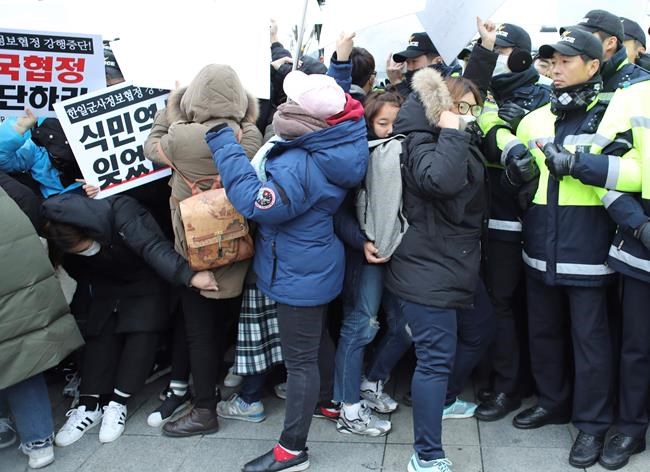
SEOUL, Korea, Republic Of – South Korea’s Cabinet approved a military intelligence-sharing agreement with Japan on Tuesday to better deal with threats from North Korea, officials said, despite a warning from the North that the deal would deepen regional animosities.
The approval of the pact, which takes effect after its formal signing later this week, also drew immediate criticism from South Korean opposition lawmakers who view it as an attempt to divert attention from a huge political scandal involving President Park Geun-hye.
Seoul officials said the deal has nothing to with the scandal and that information from Japanese satellites and other high-tech systems are necessary to thoroughly monitor developments in North Korea’s nuclear and missile programs.
Worries about the North’s weapons programs have grown since September, when the country carried out its fifth nuclear test, its most powerful to date.
Military co-operation with Japan is a divisive issue in South Korea, where many people still harbour strong resentment over Japan’s brutal 1910-1945 colonial rule of the Korean Peninsula. Seoul and Tokyo nearly signed the pact in 2012 but South Korea backed off at the last minute following a public backlash.

The North’s official Korean Central News Agency issued a commentary on Tuesday accusing Washington of pushing its two Asian allies to sign the intelligence deal to bolster its anti-North Korean regional hegemony.
The pact “will further the danger of a nuclear war on the Korean Peninsula and poses a grave threat to peace and security in northeast Asia and the world,” the commentary said.
North Korea often issues such rhetoric when Washington and Seoul stage military drills or bolster their military co-operation.
Opposition parties in South Korea have threatened to impeach Park over the scandal. On Sunday, prosecutors directly linked Park to alleged misdeeds by a shadowy confidante charged with pressuring companies to donate money to foundations controlled by her.
The Korean Peninsula was divided into U.S.-backed South Korea and Soviet-supported North Korea at the end of the Japanese occupation. The two Koreas fought a three-year war in the early 1950s that ended with an armistice, not a peace treaty.
News from © The Associated Press, . All rights reserved.
This material may not be published, broadcast, rewritten or redistributed.

This site is protected by reCAPTCHA and the Google Privacy Policy and Terms of Service apply.
Want to share your thoughts, add context, or connect with others in your community?
You must be logged in to post a comment.