Elevate your local knowledge
Sign up for the iNFOnews newsletter today!
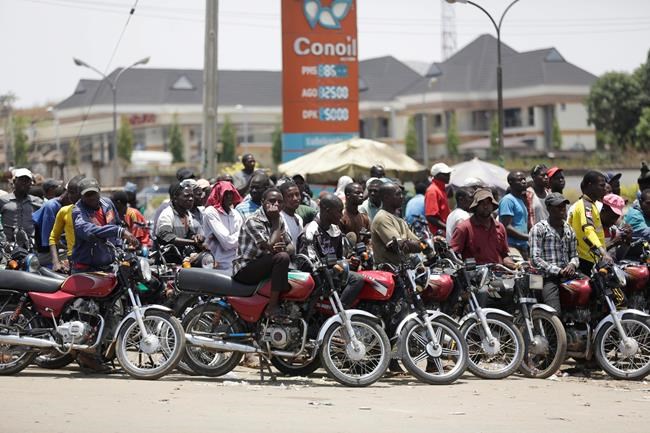
LAGOS, Nigeria – Nigeria’s government announced Wednesday it is lifting a controversial subsidy on gas, nearly doubling the price amid a massive fuel shortage and militant attacks on oil installations in Africa’s biggest petroleum producer.
Previous attempts to end the subsidy have provoked riots and, in 2012, the biggest demonstrations ever seen, forcing the government to retract.
The 4-million-strong Nigeria Labour Congress immediately announced that it and its civil society allies will fight the “most audacious and cruel” move that will “make life more miserable” for Nigerians struggling with spiraling inflation and increases in electricity tariffs despite more blackouts.
The year-old government of President Muhammadu Buhari said the decision was taken at a meeting that included legislators, labour leaders and Enough Is Enough Nigeria, which helped lead the 2012 protests. The congress said this implied an agreement that never happened as it advised the meeting that current prices should stand.
Petroleum Minister Ibe Kachikwu announced the new price of a maximum of 145 naira (73 U.S. cents) a litre, up from 86.5 naira (43 cents). He noted that the months-long scarcity has meant Nigerians already are paying up to 250 naira ($1.26) a litre on the black market.

Kachikwu said importers have had difficulty sourcing foreign currency because of a huge decline in foreign exchange earnings caused by low oil prices. Nigeria refines only enough crude to provide half its needs.
He said the government is liberalizing the market, allowing any Nigerian entity to import fuel using foreign currency from any source. That would include foreign exchange bureaus where the naira recently has traded at up to double the official rate of 199 naira to the dollar.
The meeting was led by Vice-President Yemi Osinbajo, who has said that the subsidy costs the government $5 billion a year.
Eighty per cent of Nigeria’s foreign currency comes from the petroleum industry, hit by renewed militant attacks that have cut production from 2.2 million barrels a day to about 1.68 million.
News from © The Associated Press, . All rights reserved.
This material may not be published, broadcast, rewritten or redistributed.

This site is protected by reCAPTCHA and the Google Privacy Policy and Terms of Service apply.
Want to share your thoughts, add context, or connect with others in your community?
You must be logged in to post a comment.