Elevate your local knowledge
Sign up for the iNFOnews newsletter today!
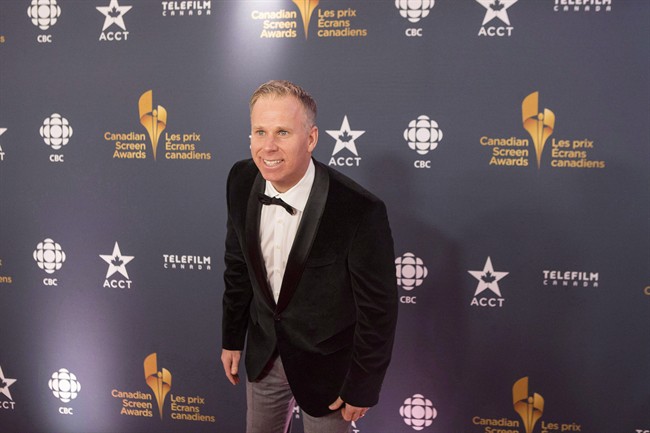
TORONTO – Have you heard the one about the standup comic who ripped off another comedian’s material?
Many have, and it’s no laughing matter.
The issue of joke theft made headlines this week after viewers compared a recent sketch that aired on “Saturday Night Live” to a strikingly similar bit on the Canadian series “This Hour Has 22 Minutes” from January.
While accusations of stealing material are rare in the world of TV comedy, they’ve been happening in the standup community since the vaudeville days.
Bob Hope, for example, once accused Milton Berle of stealing his material. In the 2008 book “Comedy at the Edge,” the late David Brenner claimed Robin Williams did the same. And in a 2008 appearance on “The Opie and Anthony Show,” Louis C.K. accused Denis Leary of ripping off one of his routines.
“I’ve seen comics do other comics’ material … where they changed one word and made it their own,” says “Mr. D” star and creator Gerry Dee.
“There are comics that don’t care if you accuse them of stealing and they don’t care that they steal.”
In the case of “SNL” and “22 Minutes,” both sketches feature a game show in which a reluctant contestant is asked to draw the Prophet Muhammad.
Also in both sketches the prize is $1 million, and while the contestants refuse to do the drawing, someone ends up guessing what the challenge was anyway.
“SNL” told The Canadian Press that it is not commenting on the parallels.
“22 Minutes” hasn’t taken any action or issued a statement, but it did post a winking comment on its Facebook page: “In regards to the ‘SNL’ sketch debate, we’re waiting for ‘SNL’ to say something and then we’ll say the same thing later — just shorter.”
“22 Minutes” star Shaun Majumder also tweeted: “Wow if only we could steal some of their budget” and “You’ve got to admit it’s (a) little too close for comfort.”
“It’s certainly considered within the Toronto comedy community (to be) plagiarism and people are pretty upset about it,” says Chris MacLean, a Toronto standup comedian and author.
“I’m seeing lots of stuff on Facebook where people are tagging the (’22 Minutes’) writer, Jeremy Woodcock, and saying, ‘Hey, that’s your sketch. I didn’t realize you were writing for “SNL” now.’”
But writer Andrew Clark, director of Humber College’s Comedy Writing and Performance Program, believes it could also be a case of parallel thinking.
“It happens, not just in comedy,” he says. “You’ll have journalists, freelancers, pitching the same story. It just gets in the zeitgeist,” Clark said.
“When you’re talking about the Charlie Hebdo drawings and not being able to draw Muhammad, well, a game show, Pictionary, these things would come to mind.”
“SNL” is also known for doing game show parodies, he adds.
“It’s not uncommon for two comedians or three to have a similar take on a joke or on, particularly, a news item.”
Parallel thinking is common in the standup world because many comics mine material from their own lives, which leads to similar themes being explored onstage.
“Everyone is going to do jokes about their mothers, everyone is going to do jokes about their children, and sometimes there is going to be some overlap,” says Clark.
The same thing can happen in the TV comedy world.
“There are only so many subjects you can think of,” says Dee.
“When we’re in the writers’ room for ‘Mr. D,’ it seems like every time we think of something it’s like, ‘”Seinfeld” did that, “Seinfeld” did that, “Seinfeld” did that, “Seinfeld” did that.’”
The unwritten rule seems to be that the path to a joke can be the same but the specifics, the angle and the punchline of it have to be different.
In the standup world, some performers act as “comic police” and will let others know if their act seems too similar to someone else’s, says MacLean.
“If you’re a performer and you perform onstage and you say a joke that is too much like someone else’s or particularly too much like a famous person’s, you’re probably going to hear about it right away,” she says.
“It can happen very unintentionally and usually the thing to do is just not perform that joke; it’s not original enough to be performed.”
Dee takes the same stance.
“I used to do a bit that was like a finger puppet, those finger puppet bits years ago, and Dane Cook does it and I’m like, ‘Well then, how creative is it if we both thought of it? How good is it?’” he says.
“So I kind of have that approach, that if someone does it, then what’s the point of doing it? I just cut it out.”
News from © The Canadian Press, . All rights reserved.
This material may not be published, broadcast, rewritten or redistributed.

This site is protected by reCAPTCHA and the Google Privacy Policy and Terms of Service apply.
Want to share your thoughts, add context, or connect with others in your community?
You must be logged in to post a comment.