Elevate your local knowledge
Sign up for the iNFOnews newsletter today!
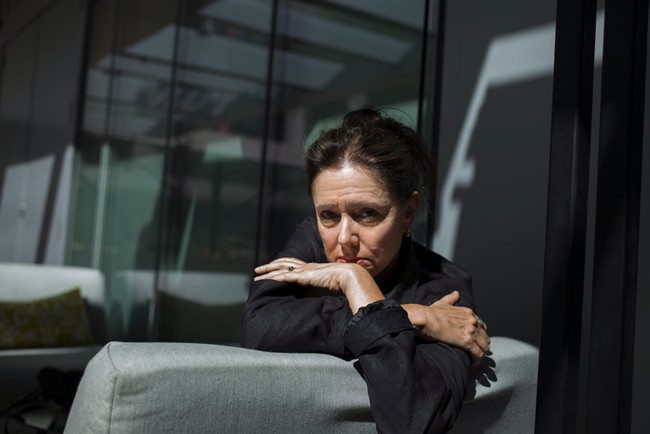
TORONTO – Julie Taymor’s “A Midsummer Night’s Dream” is so intricately crafted and creatively rich that one might assume she had been fantasizing about it for years.
But the lauded stage director says she always preferred “Titus,” with its bloodlust and vengeance rooted in human nature. It took her time to embrace Shakespeare’s woodland fantasy.
“I’ve been avoiding it for years,” she said. “People would say, ‘We know you love Shakespeare, you should do “Midsummer” because it’s full of magic and surrealism,’ but that’s actually what turned me away.”
Her eventual change of heart prompted one of 2013’s most celebrated off-Broadway productions. And on Saturday and June 24, an intimate film record of the hit show will screen at Cineplex theatres across Canada.
The Canadian Press sat down with Taymor at last fall’s Toronto International Film Festival to discuss “A Midsummer Night’s Dream.”
CP: Why did you change your mind about ‘Midsummer’?
Taymor: Once I committed and figured out a way that I would do the fairies in particular — with lots and lots of young children, manipulating the forest, moving, transforming, being kind of nasty raw energy, the Rude Elementals as they’re called — then I felt like, ‘OK, I have a way in.’ The other way into it was casting Kathryn Hunter as Puck.
CP: How did you find Hunter?

Taymor: I think she’s the greatest actor on stage at the moment, or has been for a while. She’s five-foot-two, very unusual, has this distinctive voice, but is the most present actor and so creative and so attuned to the language and transformative and androgynous. She’s as if she’s 90 and five years old and a boy and a jester. I knew that I had the right Puck when she said yes.
CP: How did you go about filming the production?
Taymor: By the time we’d done the film, we’d done 80 performances. The film was shot in four days: four live performances with four cameras in different positions, 16 different positions or something like that. Then during the daytime, (cinematographer Rodrigo Prieto) went on stage with a live audience watching. Cameramen would go on stage with steady cams and handheld cameras, which makes it very unusual. There is almost no theatre piece that is shot like this.
CP: There are four storylines in the play: the royal wedding, the lovers, the fairies and the Rude Mechanicals. Which inspired you most?
Taymor: Titania and Oberon is almost the overreaching love story, because it’s eternal love that has to last and is having a hard time. It’s about old love. They never die, but he goes off and wanders, has lots of lovers, she gets fed up, takes a child. You watch them and they are the representatives of human beings gone awry. Because with their quarrels, there’s global warming. I mean, seriously. (laughs)
If you listen to what she says — ‘Because we are fighting, the winds have gone mad, the waters have risen, there’s drought and the people are suffering.’ So there’s something cosmic and extraordinary for humans to see in this kind of commitment, this kind of love story that affects everybody.
— This interview has been edited and condensed.
News from © The Canadian Press, . All rights reserved.
This material may not be published, broadcast, rewritten or redistributed.

This site is protected by reCAPTCHA and the Google Privacy Policy and Terms of Service apply.
Want to share your thoughts, add context, or connect with others in your community?
You must be logged in to post a comment.