Elevate your local knowledge
Sign up for the iNFOnews newsletter today!
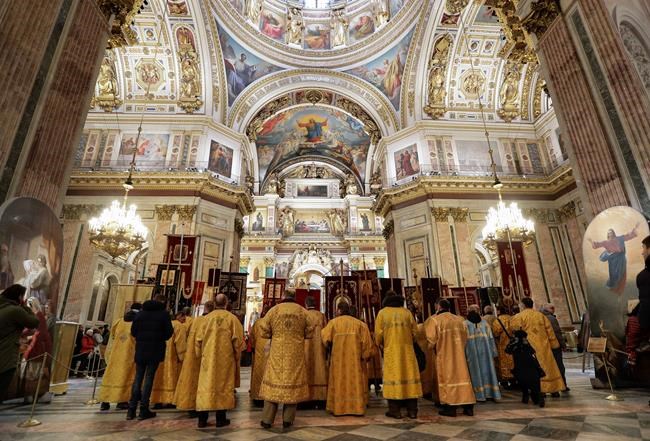
ST. PETERSBURG, Russia – Thousands of people in Russia’s second-largest city held competing demonstrations Sunday for and against the return of the renowned St. Isaac’s Cathedral to the Russian Orthodox Church.
The cathedral, one of St. Petersburg’s top tourist destinations, was seized by the state after the 1917 Bolshevik Revolution and became a museum. The city announced last month that it would be returned to church control.
Opponents say they fear that under the church, tours will focus on the cathedral’s religious aspects and give short shrift to its architectural and cultural importance.
“One of the city’s biggest museums is being ruined,” Anna Polovikina, an opponent of the handover, said. “I’m an Orthodox believer, and this situation won’t change my belief, but I know people who are really disappointed with the church.”
The Russian Orthodox Church is the country’s predominant religion, and critics say it has become too closely allied with the Kremlin.
But proponents of returning St. Isaac’s to the church say secular control debases the cathedral, where occasional masses were said during its years of being city-run.
As a museum, St. Isaac’s has become “a business that feeds itself … the rare church services held in the cathedral are like theatre for tourists,” demonstrator Vitaly Milonov, a Russian parliament member who supports putting the church back in charge, said.
The demonstration supporting church control attracted about 1,000 people, while the one in opposition was twice that size.
The director of the city’s famed Hermitage Museum is among the critics of the cathedral’s conveyance.
News from © The Associated Press, . All rights reserved.
This material may not be published, broadcast, rewritten or redistributed.

This site is protected by reCAPTCHA and the Google Privacy Policy and Terms of Service apply.
Want to share your thoughts, add context, or connect with others in your community?
You must be logged in to post a comment.