Elevate your local knowledge
Sign up for the iNFOnews newsletter today!
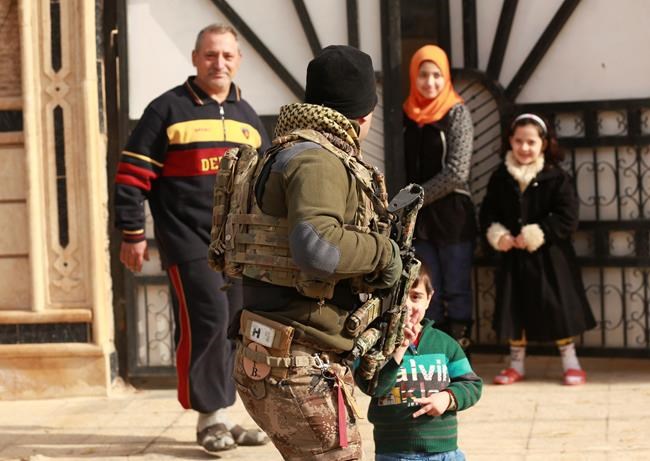
MOSUL, Iraq – The bodies of two dead Islamic State fighters have been lying on the sidewalk in front of Muhammad Jassim’s house in eastern Mosul for the past week. Both of the corpses were burned, abused and decapitated, one was partially covered by a pastel floral bed sheet.
“This isn’t something we want our children to see,” Jassim said, coming out into the street to approach a group of Iraqi special forces officers touring the recent territorial gains. “I asked them to please take the bodies away, the smell is terrible.”
As Iraqi forces settle into a routine of slow, steadier progress inside Mosul, more civilians remain trapped living along front lines for longer. Jassim’s Mishraq neighbourhood was declared liberated from IS nearly a week ago, but remains too dangerous for most aid groups to visit as it lies just a few hundred meters from ongoing clashes.
Thursday, a mortar landed across the street from Jassim’s home and killed three of his neighbours.
As the operation to retake Mosul enters its third month, Iraqi forces control two pockets of territory in Mosul: a cluster of neighbourhoods on the city’s southeast held by the Iraqi army’s 9th division and neighbourhoods on the city’s east held by the special forces.
“We’ve received nothing,” Jassim said. Around the corner from his home a group of men filled plastic buckets with water from a burst pipe in a crater left by an airstrike.
Another resident, Younis Ali, ran up to the officers asking for heating fuel or electricity. Families on Ali’s street have begun collecting scraps of wood and cardboard to burn for heat as temperatures have repeatedly dropped below zero in Mosul over the past week.
As Iraqi special forces Lt. Gen. Abdul-Wahab al-Saadi toured the area Friday, he kissed babies for a cluster of television cameras, posed for mobile phone selfies and promised the residents swift improvements.
“We want people to know that this area is safe, that the military is here now,” al-Saadi said, but he admitted that he expected progress to continue at a slow pace.
Iraqi forces have repeatedly faced punishing IS counterattacks in Mosul’s dense residential neighbourhoods, after swift advances left the Iraqi forces vulnerable.
“We are so thankful for these soldiers,” Jassim said of the half dozen black armoured Humvees dotting his neighbourhood, “but what we really need now is a medical centre.”
News from © The Associated Press, . All rights reserved.
This material may not be published, broadcast, rewritten or redistributed.

This site is protected by reCAPTCHA and the Google Privacy Policy and Terms of Service apply.
Want to share your thoughts, add context, or connect with others in your community?
You must be logged in to post a comment.