Elevate your local knowledge
Sign up for the iNFOnews newsletter today!
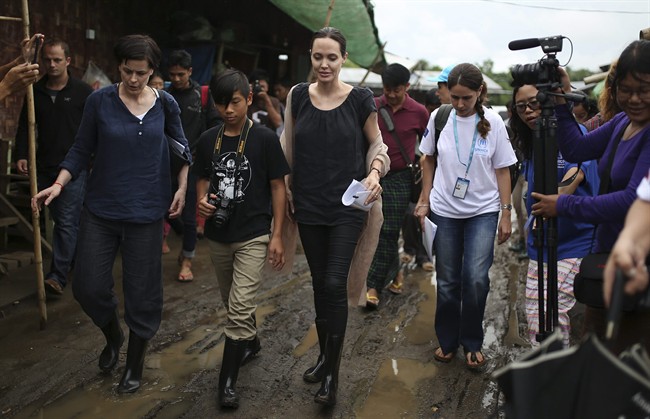
YANGON, Myanmar – Angelina Jolie has joined Myanmar’s opposition leader and democracy icon, Aung San Suu Kyi, in sitting down with female workers to learn more about their dire conditions.
Jolie, who is a special envoy for the U.N. High Commissioner for Refugees, is on a four-day visit to the Southeast Asian nation.
During her meeting with the factory workers on the outskirts of an industrial zone in Myanmar’s largest city, Yangon, Jolie and Suu Kyi witnessed first-hand the conditions the women live in, mostly low-cost hostels. Jolie also toured inside the factory.
She travelled to Kachin state earlier this week, home to more than 10,000 displaced people since a cease-fire between Myanmar’s government and ethnic rebels has broken down in 2011.

According to her trip details, it is unlikely that Jolie will be able to travel to western Rakhine State, where more than 100,000 Muslim minority Rohingya live in apartheid-like conditons in camps.
It is Jolie’s first visit to Myanmar, which only recently emerged from decades of military rule. More than a dozen ethnic minority groups, mostly in Myanmar’s border areas, have been fighting for greater autonomy since the country attained independence from Britain 67 years ago.
Recently, the world attention has turned to the plight of stateless Rohingya Muslims who have been trafficked from Myanmar and Bangladesh aboard overcrowded boats. Dozens of graves as well as pens likely used as cages for Rohingya have been found in abandoned jungle camps on both sides of the Thailand-Malaysian border.
News from © The Associated Press, . All rights reserved.
This material may not be published, broadcast, rewritten or redistributed.

This site is protected by reCAPTCHA and the Google Privacy Policy and Terms of Service apply.
Want to share your thoughts, add context, or connect with others in your community?
You must be logged in to post a comment.