Elevate your local knowledge
Sign up for the iNFOnews newsletter today!
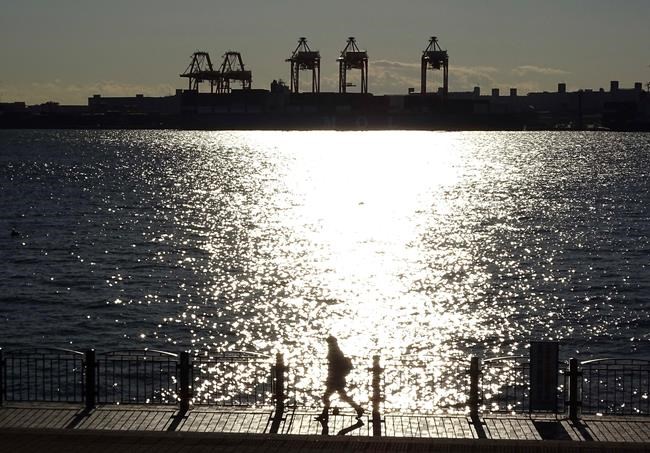
TOKYO – Japan posted its first trade surplus in six years in 2016 thanks to a rebound in exports late in the year and persisting low oil prices, though uncertainties over U.S. policy and global growth are overshadowing the recovery.
The 4.1 trillion yen ($35.8 billion) surplus in 2016 compared with a 2.8 trillion yen deficit in 2015, the government reported Wednesday. Exports fell 7.4 per cent from a year earlier to 70.04 trillion yen ($617 billion) while imports dropped 16 per cent to 66 trillion yen ($581 billion), the report showed.
But December’s data showed a strong rebound in exports to China and some other Asian countries, suggestion a recent uptick in growth in Asia’s biggest economy is filtering through supply chains across the region.
A weakening in the Japanese yen against the U.S. dollar since Donald Trump was elected president also increased the value of exports in yen terms. A dollar now buys about 114 yen, up from about 101 yen at the time of the Nov. 8 election.
In the full year, Japan’s trade surplus with the U.S. fell nearly 5 per cent, to 6.8 trillion yen ($59 billion). Exports fell 7.1 per cent from the year before to 14.1 trillion yen ($124.6 billion) and imports dropped 7.3 per cent to 7.3 trillion yen ($64.4 billion), the report said.
Japan ran a 4.6 trillion yen ($41 billion) deficit with China, its largest trading partner, down by a quarter from a year earlier.
U.S. President Donald Trump’s decision to drop out of the Trans-Pacific Partnership trade pact, and his comments on imposing “border taxes” on some imports has added to uncertainties over U.S. trade policy.
“The sustainability of external demand remains the key for the Japan’s export recovery, because of emerging protectionism and uncertainties in the US trade policy, given President Donald Trump’s repeated concerns about Japan’s auto exports and trade surplus with the U.S.,” Harumi Taguchi, principal economist at IHS Global Insight, said in a note.
A Japanese government spokesman said Wednesday that Tokyo was discussing how to handle future trade negotiations such as the TPP and another Asian trade pact involving China, the Regional Comprehensive Economic Partnership.
Asked about reports Japan plans to set up a new agency to handle trade talks, Koichi Hagiuda said no decision had been made yet, but “there’s no denying that this is one of the options we’re considering.”
Past trade friction with the U.S. over auto exports had largely eased after Japanese automakers expanded investments in U.S. factories.
Japan’s vehicle exports to the U.S. rose a scant 0.6 per cent in 2016, measured in terms of Japanese yen, but the number of vehicles shipped rose 7.7 per cent to 1.75 million.
Globally, Japan’s vehicle exports fell 6 per cent by value and 0.7 per cent by volume, to 5.8 million units. Exports of most other products fell, suggesting only a tepid recovery in demand.
Japan’s trade balance slipped into deficit after the 2011 earthquake and tsunami triggered meltdowns at the Fukushima Dai-Ichi nuclear plant and the country’s reactors were shut down for safety checks.
To compensate, resource-poor Japan ramped up imports of oil, gas and coal for its conventional power generators. In 2016, imports from the Middle East, Japan’s main source of crude oil, dropped by nearly a third from the year before.
News from © The Associated Press, . All rights reserved.
This material may not be published, broadcast, rewritten or redistributed.

This site is protected by reCAPTCHA and the Google Privacy Policy and Terms of Service apply.
Want to share your thoughts, add context, or connect with others in your community?
You must be logged in to post a comment.