Elevate your local knowledge
Sign up for the iNFOnews newsletter today!
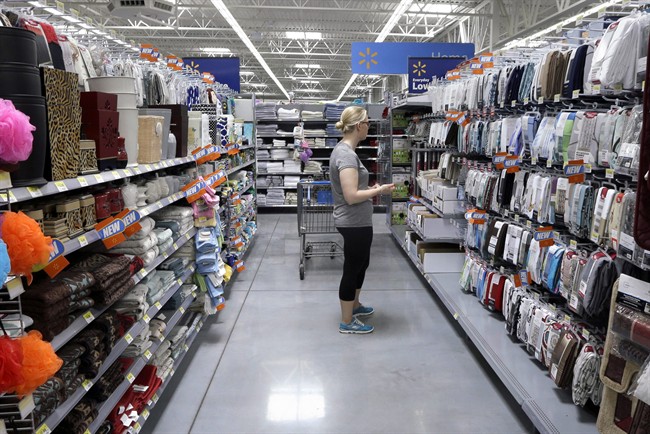
WASHINGTON – The biggest drop in airline fares in nearly two decades slowed consumer inflation in July following two months of slightly faster gains.
The Labor Department said Wednesday that its consumer price index rose 0.1 per cent in July following increases of 0.3 per cent in June and 0.4 per cent in May.
The July figures indicate that inflation pressures remain modest. But economists said the latest data is unlikely to derail expectations that the Federal Reserve will raise interest rates at its next meeting in September, given that the job market has strengthened considerably over the past year.
Core inflation, which excludes energy and food, rose just 0.1 per cent in July, after a 0.2 per cent June gain.
Joshua Shapiro, chief U.S. economist at MFR Inc., said that the lower inflation readings “could feed into a more cautious stance on the timing of liftoff” by Fed officials, especially in light of recent declines in global oil prices and China’s recent devaluation of its currency. Both developments are expected to slow inflation in the months ahead.
“We still think September liftoff is in the cards, but it is by no means a done deal,” Shapiro said.
Energy costs edged up 0.1 per cent in July and are 14.8 per cent below the level a year ago. Food costs rose a modest 0.2 per cent despite another big jump in the price of eggs, reflecting further fallout from the avian flu outbreak.
Over the past 12 months, consumer prices are up just 0.2 per cent. Core inflation has risen a modest 1.8 per cent.
A key price gauge that the Federal Reserve monitors has been running below its 2 per cent target for inflation for the past three years. The Fed has said that it needs to feel “reasonably confident” that inflation is moving back to its 2 per cent goal before beginning to raise interest rates.
The central bank has kept a key rate that it controls at a record low near zero since December 2008. With the unemployment rate at a seven-year low of 5.3 per cent, many private economists believe the Fed will finally start to raise interest rates at its next meeting on Sept. 16-17.
However, other economists argue that with inflation still so low, the central bank may decide to wait until December before beginning to raise rates.
For July, airline fares dropped 5.6 per cent, the biggest decline since a 6.8 per cent plunge in December 1995.
Shelter costs, the government’s way to track the cost of owning or renting a home, rose 0.4 per cent in July, the biggest increase in housing since February 2007.
Egg prices rose 3.3 per cent in July and are up 24.9 per cent over the past 12 months, reflecting the avian flu epidemic.
The AAA reports that nationwide, gas prices currently are at $2.66 for a gallon of regular. That is down from $2.76 a month ago and $3.45 a year ago.
News from © The Associated Press, . All rights reserved.
This material may not be published, broadcast, rewritten or redistributed.

This site is protected by reCAPTCHA and the Google Privacy Policy and Terms of Service apply.
Want to share your thoughts, add context, or connect with others in your community?
You must be logged in to post a comment.