Elevate your local knowledge
Sign up for the iNFOnews newsletter today!
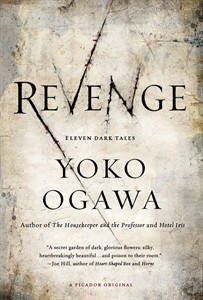
“Revenge: Eleven Dark Tales” (Picador), by Yoko Ogawa, translated by Stephen Snyder
They are the scenes of ordinary life: a mother stopping by the neighbourhood bakery to purchase two strawberry shortcakes for her son’s birthday, an aspiring writer toiling over a manuscript in a spare apartment, a young woman preparing dinner for her beau, a woman spying on her husband’s mistress.
Yet in Yoko Ogawa’s story collection, “Revenge: Eleven Dark Tales,” those ordinary exteriors are merely brittle shells that crack open to reveal darkness, death and despair. Woven through the 11 interconnected tales is a thread of the grotesque, the macabre, the mournful.
The mother’s errand turns out to be a paean to inconsolable loss. The writer emerges as an unhinged character that evokes both love and pity. The amorous young woman finds herself entwined in both a murder scene and a museum dedicated to torture.
Ogawa, a prolific author whose work has appeared in The New Yorker and Harper’s Magazine, laces her stories with gruesome murders, exotic animals and peculiar events. Her language is both spare and searingly precise, crystallizing the details of everyday existence and capturing the unexpected shock of the bizarre.
In “Sewing for the Heart,” for example, the narrator is a bag-maker who has been contracted to create a purse for a beating heart. The client is a cabaret singer who was born with the organ outside her chest. The narrator gasps in awe at the sight and utters an oddly erotic ode to the throbbing muscle: “What extraordinary, breathtaking beauty! Would it feel damp if I cupped it in my hands? Would the membrane rupture if I gave it a squeeze? … I wanted to run my fingertips over each tiny bump and furrow, touch my lips to the veins, soft tissue on soft tissue, the pressure of her pulse against my skin.”
Many of Ogawa’s characters, including the bag-maker and the cabaret singer, reappear in other stories, as do details and events in ways that are sometimes incidental, sometimes integral to the plots. The effect is, as Ogawa describes the novel written by the unhinged author, an “icy current running under her words.”
In these stories, ordinariness is not a mask hiding the morbid and the macabre. In many cases, the ordinary life itself, with its insistent drip of isolation, sameness, sadness and loss, is what pushes the characters to the edge of madness and vengeance.
As Ogawa writes in “Welcome to the Museum of Torture,” which introduces readers to an exhibit space for devices such as corsets that crush internal organs and tweezers used to slowly pluck out a victim’s hair: “For torture to be effective, the pain has to be spread out; it has to come at regular intervals, with no end in sight.”
Ogawa’s haunting prose may not be to everyone’s taste, but readers willing to explore the murkier edges of the human psyche will not be disappointed.
News from © The Associated Press, . All rights reserved.
This material may not be published, broadcast, rewritten or redistributed.

This site is protected by reCAPTCHA and the Google Privacy Policy and Terms of Service apply.
Want to share your thoughts, add context, or connect with others in your community?
You must be logged in to post a comment.