Elevate your local knowledge
Sign up for the iNFOnews newsletter today!
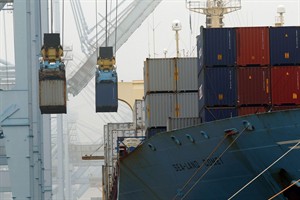
WASHINGTON – The U.S. trade deficit narrowed sharply in December because oil imports plummeted and total exports rose. The smaller trade gap means the economy likely performed better in the final three months of last year than first estimated last week.
The trade deficit fell nearly 21 per cent in December from November to $38.6 billion, the Commerce Department said Friday. That’s the smallest in nearly three years.
Exports rose 2.1 per cent to $186.4 billion. Exports of oil and other petroleum products rose to the highest level on record.
Imports shrank 2.7 per cent to $224.9 billion. Oil imports plunged to 223 billion barrels, the fewest since February 1997.
A narrower trade gap boosts growth because it means U.S. companies earned more from overseas sales while consumers and businesses spent less on foreign products.

Fewer exports were one of the reasons the government’s first estimate of economic growth in the October-December quarter showed a contraction at an annual rate of 0.1 per cent.
The precise figures for the December trade deficit were not available when the growth estimate was made. The steep decline in the trade gap suggests the government second estimate will be revised higher to show the economy grew slightly in the fourth quarter. Still, sluggish restocking by companies and deep cuts in defence spending are expected to keep growth at the end of last year weak.
The trade deficit also narrowed for all of last year, shrinking 3.5 per cent to $540.4 billion.
The politically sensitive trade deficit with China rose to $315.1 billion last year, the largest on record with any country. That could add to pressure on the Obama administration and Congress to take a harder line on China’s trade practices. Critics contend they give the Chinese an unfair advantage over U.S. companies and workers.
Many economists believe that trade will give the economy a small lift in 2013. That forecast is based on an assumption that the European debt crisis will stabilize, helping boost U.S. exports to that region, and economic growth in Asia will continue to rebound.
News from © The Associated Press, . All rights reserved.
This material may not be published, broadcast, rewritten or redistributed.

This site is protected by reCAPTCHA and the Google Privacy Policy and Terms of Service apply.
Want to share your thoughts, add context, or connect with others in your community?
You must be logged in to post a comment.