Elevate your local knowledge
Sign up for the iNFOnews newsletter today!
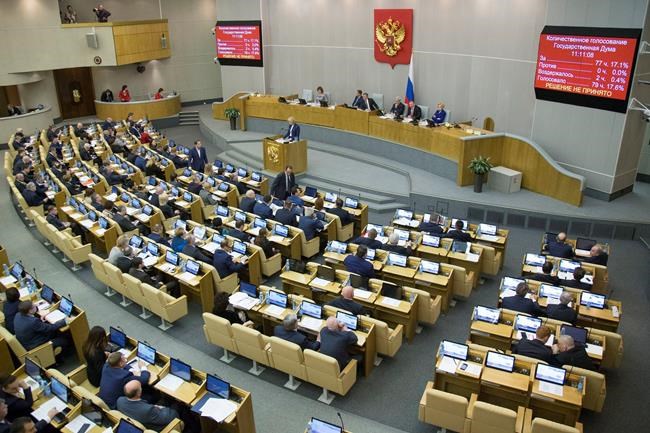
MOSCOW – The Russian parliament on Wednesday passed the second reading of a controversial bill to decriminalize some forms of domestic violence.
The State Duma voted 385-2-1 to eliminate criminal liability for battery on family members that doesn’t cause bodily harm. The bill that makes battery on a family member punishable by a fine or a 15-day day arrest has yet to be approved in the third reading. From the Duma, it would proceed to the upper house, largely a rubber-stamp body, and then to President Vladimir Putin’s desk.
The bill stems from a Supreme Court ruling to decriminalize battery that doesn’t inflict bodily harm, but to retain criminal charges for those accused of battery against family members. Conservative activists objected, arguing it was a threat to parents who might spank their children.
Activists picketed the Duma on Wednesday morning to oppose the bill, which has caused controversy and attracted more than 200,000 signatures online against it.

Olga Batalina, one of the bill’s co-authors, rejected suggestions that the bill would sow impunity for those who beat up their families.
“The Criminal Code still carries criminal responsibility for battery, but now it will be applicable only for repeat offenders,” he told state television. All those “who terrorize their family members, who do it repeatedly … will face criminal responsibility.”
Kremlin spokesman Dmitry Peskov wouldn’t comment on the bill.
A survey this month by state-run pollster VTsIOM showed that 19 per cent of Russians said “it can be acceptable” to hit one’s wife, husband or child “in certain circumstances.” The nationwide poll by phone of 1,800 people was held Jan. 13-15. The survey had a margin of error of 2.5 percentage points.
News from © The Associated Press, . All rights reserved.
This material may not be published, broadcast, rewritten or redistributed.

This site is protected by reCAPTCHA and the Google Privacy Policy and Terms of Service apply.
Want to share your thoughts, add context, or connect with others in your community?
You must be logged in to post a comment.