Elevate your local knowledge
Sign up for the iNFOnews newsletter today!
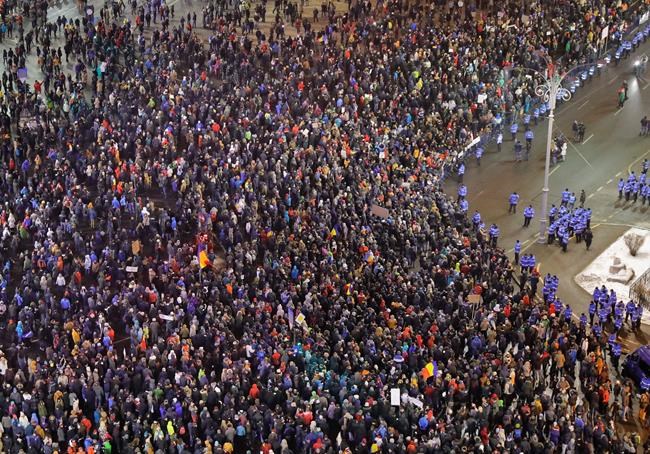
BUCHAREST, Romania – Tens of thousands of people marched through Romania’s capital and other cities on Sunday to protest a government proposal to pardon thousands of prisoners, a move critics said would set back anti-corruption efforts.
Protesters massed in Bucharest’s University Square called the ruling Social Democratic Party “the red plague.” They later marched to Victory Square, where the government has its main offices.
Premier Sorin Grindeanu has requested an emergency ordinance allowing the government to pardon prisoners to ease prison overcrowding. On Sunday, he said the protests had been “politicized” and criticized President Klaus Iohannis, who took part in a similar protest a week ago.
Critics say the proposal would benefit party allies convicted of corruption. Romania’s top prosecutor has criticized the plan.
It would primarily affect people serving sentences of less than five years, except those convicted of sexual or violent crimes.

Prisoners over age 60, pregnant women and inmates with young children would see their sentences halved regardless of the charges on which they were convicted.
According to a draft of the proposal, the government also intends to decriminalize official misconduct that involves financial damage valued at less than 200,000 lei ($47,800.)
The government says its proposal would lead to the release of 2,500 prisoners. Prison authorities estimate 3,700 would be freed.
Along with Bucharest, protests were held in the Cluj, Timisoara and more than a dozen cities around Romania.
News from © The Associated Press, . All rights reserved.
This material may not be published, broadcast, rewritten or redistributed.

This site is protected by reCAPTCHA and the Google Privacy Policy and Terms of Service apply.
Want to share your thoughts, add context, or connect with others in your community?
You must be logged in to post a comment.