Elevate your local knowledge
Sign up for the iNFOnews newsletter today!
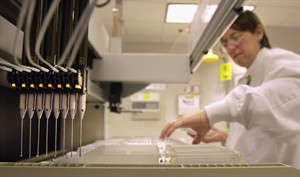
A ruling by the Supreme Court that human genes can’t be patented is expected to increase access and drop the cost for tests for gene mutations that greatly raise the risk of developing breast or ovarian cancer.
In a bit of a mixed message, the court unanimously decided that certain types of gene tests may still be protected by patents, yet it struck down patents that a company has long held for BRCA genes. The company makes the only test for two of those breast cancer genes.
“It appears that it will allow the market to open up so that other laboratories can offer the test,” said Rebecca Nagy, a genetics counsellor at Ohio State University and president of the National Society of Genetic Counselors. And that should make the tests cheaper and available to more women, she said.
A primer on the case:
Q: What did the court say?
A: Patents held by Myriad Genetics Inc. on BRCA1 and BRCA2 genes are not valid, because isolating a naturally occurring segment of DNA cannot be patented. We all have two copies of these genes; mutations in one of them can give a woman up to an 87 per cent risk of developing breast cancer and up to a 54 per cent risk for ovarian cancer.
Q: How many people have them?
A: In the U.S., about 5 to 10 per cent of breast cancers are thought to be due to bad BRCA genes. Among breast cancer patients, BRCA mutations are carried by 5 per cent of whites and 12 per cent of Eastern European (Ashkenazi) Jews. Rates in other groups aren’t as well known, but a recent study suggests they are more common than has been believed in blacks.
Q: How expensive are the Myriad tests?
A: They cost $3,000 to $4,000 and insurers only cover them for women thought to be at high risk because of family history of breast or ovarian cancer or other risk factors. The tests are not recommended for women at average risk.
Q: What about other tests for breast cancer genes?
A: Some other tests look for mutations in 16 other genes less commonly involved in breast cancer but those have not been able to include BRCA1 and BRCA2 because of Myriad’s patents. Those other tests cost around $2,600. The court’s ruling means these tests likely will be able to include BRCA1 and BRCA2 for no or little additional cost in the future, giving a more complete picture of a woman’s risk, Nagy said.
Q: What about other gene tests that can still be patented?
A: The court said tests that involve makingcDNA, or complementary DNA, can still be patented. They take an extra step to isolate only the “working parts” or coding regions of a gene.
___
Online:
Court decision: http://www.supremecourt.gov/opinions/12pdf/12-398_8njq.pdf.
___
Marilynn Marchione can be followed at http://twitter.com/MMarchioneAP
News from © The Associated Press, . All rights reserved.
This material may not be published, broadcast, rewritten or redistributed.

This site is protected by reCAPTCHA and the Google Privacy Policy and Terms of Service apply.
Want to share your thoughts, add context, or connect with others in your community?
You must be logged in to post a comment.