Elevate your local knowledge
Sign up for the iNFOnews newsletter today!
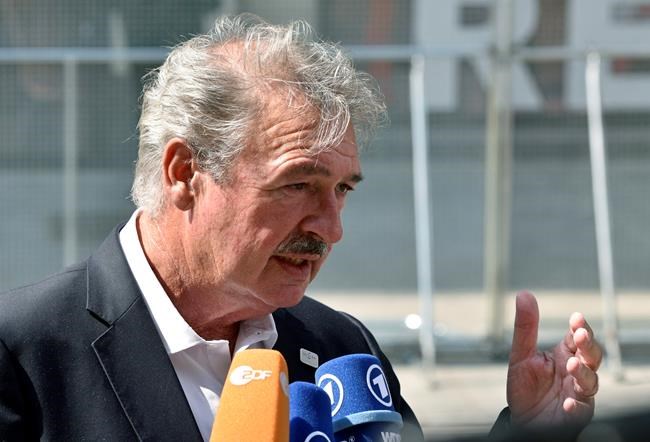
BERLIN – Luxembourg’s foreign minister accused Turkish authorities on Monday of using methods reminiscent of those employed by Nazis in a crackdown following July’s coup attempt.
In a German radio interview, Jean Asselborn suggested that Turkey’s strong economic ties with the European Union could be used to exert pressure on Ankara over human rights issues.
Turkey brushed off the accusation, arguing that the movement led by a U.S.-based cleric whom the government accuses of masterminding the failed coup is worse than the Nazis. It insisted it would not be deterred from its efforts to go after cleric Fethullah Gulen’s network of followers.
Opposition parties in Turkey and human rights groups accuse the government of clamping down on all critics, not just alleged coup plotters.
Asselborn told Germany’s Deutschlandfunk radio that people who’ve been fired have their names published, have their passports destroyed, have no chance of finding another job and no income, and risk hunger.
“These are methods, one must say this bluntly, that were used during Nazi rule,” said Asselborn, who has a record of making outspoken comments. “And there has been a really, really bad evolution in Turkey since July that we as the European Union cannot simply accept.”
Turkey’s EU affairs minister, Omer Celik, retorted that “the issue does not resemble Nazi-era practices, rather the struggle against the Nazis after they were chased from power.”
“Compared to the (Gulen movement) Nazis would resemble apprentices. They would appear like schoolchildren next to the (Gulen movement),” he said.
“No one should think that we would step back from our struggle against an organization that used warplanes, tanks, battleships and helicopters against its own people.”
Asselborn said that Turkey’s strong economic ties with the EU are “absolutely a means of pressure.”
“At a certain moment we will not be able to get around using this means of pressure to counteract the unspeakable state of human rights,” he added.
Germany, the EU’s most populous country, sounded unenthusiastic about that idea.
“The German government is not participating now in a debate about sanctions,” said Chancellor Angela Merkel’s spokesman, Steffen Seibert.
He said Europe needs to make clear to Turkey “what effects the repression of the press and the repression of the opposition have on relations … and for that it is important to keep open channels of communication.”
___
Suzan Fraser in Ankara contributed to this report.
News from © The Associated Press, . All rights reserved.
This material may not be published, broadcast, rewritten or redistributed.

This site is protected by reCAPTCHA and the Google Privacy Policy and Terms of Service apply.
Want to share your thoughts, add context, or connect with others in your community?
You must be logged in to post a comment.