Elevate your local knowledge
Sign up for the iNFOnews newsletter today!
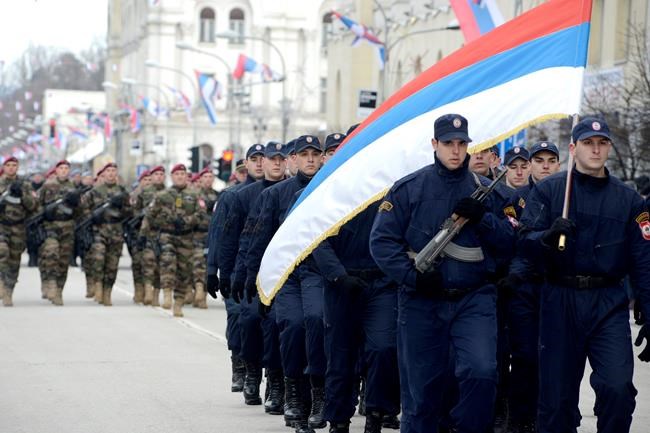
BANJA LUKA, Bosnia – Bosnian Serbs celebrated a controversial holiday Monday in defiance of the country’s other ethnic groups, its constitutional court and the international community.
The Jan. 9 holiday commemorates the date in 1992 when Bosnian Serbs declared the creation of their own state in Bosnia, igniting the country’s devastating four-year war.
Police officers, firefighters and folklore groups paraded through the streets of Banja Luka, the de-facto capital of the Serb-run part of the country, Republika Srpska.
Members of a Bosnian Army regiment who come from the Serb chunk of the country were also in attendance despite warnings by the defence ministry and NATO that their participation would be considered illegal.
The soldiers did not take part in the parade, but were present on the orders of the Serb member of Bosnia’s tripartite presidency, Mladen Ivanic, who insisted he had the right to request a military honour guard.
The separate post-war militaries of Bosnia’s three ethnic groups merged into a common army in 2005 in what was considered the country’s most successful postwar reform. Monday’s events were the first time that the army’s unity and shared command — requiring unanimous decisions by the presidency’s Bosniak, Croat and Serb members — had been challenged.
Bosnia’s defence ministry said Monday it had issued a clear order vetoing participation of the Bosnian Army soldiers in the celebration. The ministry added in a statement that it will investigate how and why its order was disregarded.
Reacting to the celebration, the U.S. embassy in Bosnia said it was taking “any threat to the security and stability … very seriously,” adding that those responsible for the rule of law violations “must be held accountable”
Although Serb leaders insisted that Monday’s celebrations would be a secular holiday, they participated in Serb Christian Orthodox ceremonies in the city’s main church. That was broadcast live on local television, along with interviews with Bosnian Serb wartime military and political leaders who had been sentenced for crimes against humanity by a U.N war crimes court.
During the war that killed 100,000 people and turned half of the country’s population into refugees, Muslim Bosniaks and Catholic Croats were persecuted and almost completely expelled from Republika Srpska territory.
After the war, Republika Srpska became an autonomous region of Bosnia. Bosniaks and Croats who returned there view the holiday as a celebration of their expulsion.
The holiday was banned last year by Bosnia’s top court. It ruled that the date, which falls on a Serb Christian Orthodox religious holiday, discriminates against the country’s other ethnic groups.
The continued celebration was repeatedly condemned by the top European Union and the U.S diplomats in Bosnia who urged Bosnian Serbs to stop defying the country’s top court.
News from © The Associated Press, . All rights reserved.
This material may not be published, broadcast, rewritten or redistributed.

This site is protected by reCAPTCHA and the Google Privacy Policy and Terms of Service apply.
Want to share your thoughts, add context, or connect with others in your community?
You must be logged in to post a comment.