Elevate your local knowledge
Sign up for the iNFOnews newsletter today!
TORONTO – The Toronto stock market headed for a higher open Thursday amid strong bank earnings and an easing of concerns over a U.S.-led military intervention in Syria.
The Canadian dollar was down 0.17 of a cent to 95.2 cents US as the greenback strengthened against other currencies across the board.
CIBC (TSX:CM) posted net earnings of $890 million or $2.16 per diluted share in the most recent period, up from $841 million or $2 a diluted share in the same period last year. Revenue rose to $3.26 billion from $3.15 billion.
Adjusted net income was $943 million or $2.29 per share diluted, 14 cents ahead of estimates.
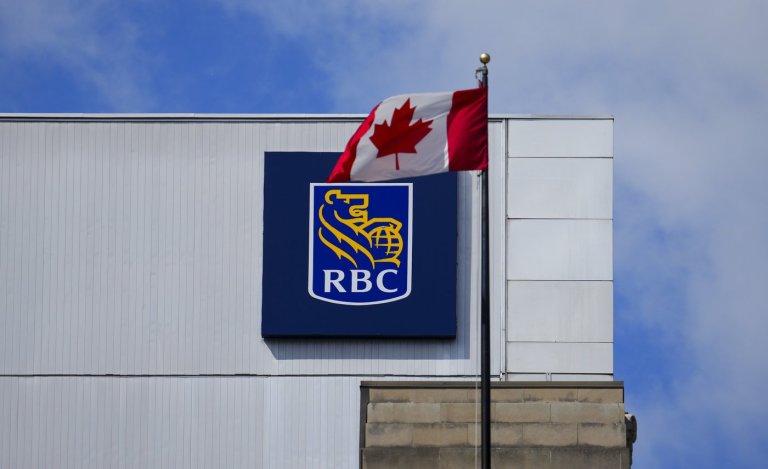
Royal Bank (TSX:RY) reported record net income of $2.3 billion for the third quarter, an increase of three per cent from a year ago. Diluted earnings per share were $1.52, an increase of five cents from the third quarter of 2012. The bank also raised its dividend six per cent to 67 cents a share.
Profit was $1.48 a share ex-items, beating expectations of $1.38.
TD Bank’s (TSX:TD) quarterly net income was $1.53 billion or $1.58 per diluted share, compared with $1.7 billion or $1.78 per share a year ago. However, earnings ex-items were $1.65 a share against estimates of $1.55 a share and the bank increased its quarterly dividend by four cents, or five per cent, to 85 cents per share.
TD Insurance posted a third-quarter loss of $243 million after tax, the result of charges of approximately $418 million after tax from a combination of severe weather-related impacts and increased general insurance claims.
Meanwhile, U.S. futures were also higher amid indications that a U.S.-led military intervention in Syria may not be happening imminently.
Traders were also pleased with the latest reading on U.S. economic growth for the second quarter. Annualized gross domestic product grew at an annualized rate of 2.5 per cent, better than the 2.2 per cent that economists expected. The original reading was 1.7 per cent.
The latest Canadian economic growth figures come out Friday.
Also, jobless insurance claims dipped by 6,000 last week to 331,000.
The Dow Jones industrial futures gained 56 points to 14,862, the Nasdaq futures were 14.5 points higher to 3,082.8 while the S&P 500 futures were ahead 6.25 points to 1,638.5.

The prospect of an immediate multinational response diminished late Wednesday after the UN Security Council’s permanent members failed to agree to a proposal to use force against Syria.
And President Barack Obama also gave the impression that he had not yet decided to back a military strike. The U.K. government also backed down on a parliamentary vote to authorize British participation in any strike against Syria until UN inspectors reveal their findings on the apparent chemical attack in the suburbs of Damascus that has been blamed on the government of President Bashar Assad. The report is expected within a week.
The prospect of intervention in the country’s civil war has rattled markets this week as it has raised fears that such a move could seriously affect a fragile global economic recovery and that fighting could spread to other areas of the Mideast.
Oil prices declined after running up about $4 in the last two sessions on supply disruption concerns. The October contract on the New York Mercantile Exchange fell 76 cents to US$109.34. Crude also felt the effect of data released Wednesday showing a sharp run-up in inventories last week.
Other commodities were lower as gold prices also started to back off following gains earlier in the week. The December bullion contract in New York lost $6 to US$1,412.80 an ounce.
September copper slipped one cent to US$3.29 a pound.
On the economic calendar, traders looked to info on weekly jobless claims and an updated reading of second-quarter economic growth. Economists expect an upward revision of annualized growth to 2.2 per cent from the advance estimate of 1.7 per cent.
The U.S. economic data could refocus traders attention to whether the Federal Reserve will start to reduce its monetary stimulus as soon as next month. A run of largely solid economic figures had raised the likelihood of that happening but recently the data have been a little bit more mixed.
The Fed is currently buying US$85 billion worth of financial assets a month in an attempt to lower borrowing rates and shore up the U.S. economy.
The stimulus has kept long term rates low and fuelled a strong rally on many stock markets this year.
European bourses advanced with London’s FTSE 100 index up 0.67 per cent, Frankfurt’s DAX rose 0.19 per cent and the Paris CAC 40 climbed 0.32 per cent.
Earlier in Asia, Japan’s Nikkei 225 index rose 0.9 per cent while South Korea’s Kospi advanced 1.2 per cent. Hong Kong’s Hang Seng rose 0.7 per cent and Australia’s S&P/ASX 200 gained 0.1 per cent.
News from © The Canadian Press, . All rights reserved.
This material may not be published, broadcast, rewritten or redistributed.

This site is protected by reCAPTCHA and the Google Privacy Policy and Terms of Service apply.
Want to share your thoughts, add context, or connect with others in your community?
You must be logged in to post a comment.