Elevate your local knowledge
Sign up for the iNFOnews newsletter today!
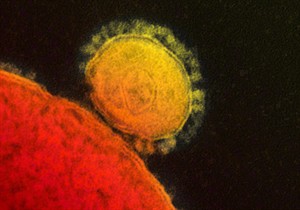
TORONTO – The spread of MERS in Saudi Arabia is caused by a mixture of person-to-person and animal-to-person transmission, authors of a new study on the virus suggest.
The work is based on an analysis of genetic sequences from 21 MERS patients from the country. It is the largest collection of MERS genetic blueprints published to date, and swells the number of publicly available sequences to 30.
“Transmission within Saudi Arabia is consistent with either movement of an animal reservoir, animal products, or movement of infected people,” the authors conclude.
“Further definition of the exposures responsible for the sporadic introductions of MERS-CoV” — short for coronavirus — “into human populations is urgently needed to provide the necessary information to interrupt transmission and contain the virus.”
That statement, which concludes the study, echoes pleas from outside experts and the World Health Organization that Saudi officials undertake what is known as a case control study, which is an essential tool to try to crack the mystery of how people are becoming infected with MERS.
Though the new coronavirus has now been on the world’s radar for a year, to date, there has been no case control study on MERS patients published, and it is unclear if one has even been started.
The sequencing paper is published in the journal The Lancet by a team of researchers from Britain’s Sanger Institute — which applied state of the art techniques to come up with the sequences — as well as others from Britain, the United States and Saudi Arabia. The senior author of the paper is Dr. Ziad Memish, the Saudi deputy minister of health.
But several other scientists — including a coronavirus expert who believes person-to-person spread is now driving the outbreak — say the sequences cannot reveal whether animal-to-human spread is happening. So far, the virus has not been found in animals, so there are no animal viruses with which to compare the human sequences.
“What you can say is: These viruses are introduced viruses, but you cannot say from where they were introduced. Either from other humans, in the next village, or from a camel or a cow. This is all possible. We don’t know where they come from,” said Dr. Christian Drosten, director of the institute of virology at the University of Bonn Medical Centre in Bonn, Germany.
Drosten’s belief the virus is now spreading person to person is not universally shared. But a number of other experts agreed study of the sequences doesn’t reveal their sources.
“The sequence information tells us that there are different coronaviruses causing disease but we still don’t know where the reservoir is,” said Eric Donaldson, a coronavirus expert and an adjunct assistant professor at the University of North Carolina.
The Lancet study also suggests analysis of the sequences supports the previously hypothesized estimate that the virus has been spreading since about the summer of 2011, about eight months before the first known human cases occurred. Those infections — a cluster of cases in a hospital in Jordan — were recognized as being caused by MERS only after the fact.
News from © The Canadian Press, . All rights reserved.
This material may not be published, broadcast, rewritten or redistributed.

This site is protected by reCAPTCHA and the Google Privacy Policy and Terms of Service apply.
Want to share your thoughts, add context, or connect with others in your community?
You must be logged in to post a comment.