Elevate your local knowledge
Sign up for the iNFOnews newsletter today!
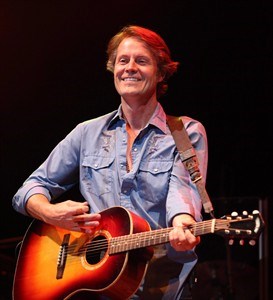
TORONTO – Blue Rodeo’s last release, the sprawling double album “The Things We Left Behind,” was a critical and commercial success that returned the Toronto alt-country originals to platinum status for the first time since 2002. Creatively they were riding high — and yet, behind the scenes, it felt as though they could be nearing the end.
Co-frontman Greg Keelor’s hearing issues had only been growing more severe, and performing live was such a painful chore that he couldn’t be around volume at all. In concert, he might as well have been relegated to special-guest status, limited as he was to materializing for a few acoustic songs scattered about the set.
“That was getting really bad,” the band’s other mastermind, Jim Cuddy, said in a recent interview seated next to Keelor. “It was such a bad version of the band.”
So, they changed the band — drastically. Very nearly four years elapsed between that album and this week’s release of their rich latest, “In Our Nature.” That’s the longest gap between studio albums in Blue Rodeo’s quarter-century-plus history.
The time away was necessary, Cuddy says, to reconfigure the 12-time Juno-winning outfit’s setup.
At Cuddy’s suggestion, the band swapped stage monitors for in-ear monitors that would be easier on Keelor’s battered ears. They made Colin Cripps an official member on electric guitar, so that Keelor could play only acoustic and sing. They stood in a different formation onstage, to keep Keelor away from the sources of the loudest noise.
All common-sense solutions, perhaps, but for a band so well-established the adjustments took time. Cuddy notes that at first, without the monitors blaring in their faces, the band took a less physical approach to their performances, playing in a “really milquetoast way.”
They eventually figured that out, and mutually agree that the changes were for the better.
“We had a long reinvention,” Cuddy said, before listing off the benefits of the new arrangement: singing was easier; onstage communication was easier; and there was more space for all the members to contribute, including piano player Mike Boguski, now a full-fledged member of the band.
“It truly was like clearing the cobwebs away. This is a beautiful place.”
And, Cuddy says, it fundamentally changed the sound of the band’s naturalistic new set of tunes.
Hopeful opener “New Morning Sun” heralds the band’s refreshed state, before they set into an ambling groove. Cuddy is particularly pleased with the record’s light production touch — the instruments, played adroitly as always, sound clear and organic. The record ends with a version of the Band’s “Out of the Blue” lit by incandescent organ.
“I think it’s one of our best-sounding records,” Cuddy says. “What we intended, that’s what it sounds like. It’s kind of woolly and comfortable. And I think it’s got a lot of strength and the stuff’s really played (well).”
Though they have a pristine studio in downtown Toronto, they headed off to Keelor’s country farm to make the album above Cuddy’s mild consternation (he says he dropped any objections once it became clear the rest of the band was determined, though Keelor wryly points out: “you could have used your executive veto.”)
In reality, it was the only place Keelor was going to be able to make the record because he says he can’t comfortably use headphones anymore. He sits in a quiet room, singing and playing to one stereo speaker.
“It was the only place I knew I could contribute to the record the way I wanted to,” he says. “It was a way that I’d worked out for myself to play music again. So I’m very grateful to everyone for doing that for me.”
Meanwhile, the rustic setting grew on Cuddy (for the record, the only reason he ever objected was because he liked the convenience of their other studio).
When the band initially set out to record, Keelor says Cuddy “didn’t have any songs” because he’d released his second solo record, “Skyscraper Soul,” in 2011 and followed with a tour. (“It sounds bad when YOU say it,” Cuddy laments with a smile).
So away from the distractions of the city, Cuddy would drive out to a little river near Keelor’s farm every morning and sit there for an hour or two, tweaking his tunes.
“It became this beautiful holiday all down in the country,” he said. “The band had coalesced because of all the playing we’d done.”
Such harmony was a far cry from the experience the band had when they recorded 1995’s “Nowhere to Here” during a particularly fractious period. Keelor had hurt himself during the middle of that recording, which only made the situation worse, and it was the dead of winter — Cuddy compares the experience to “all those movies they made about Canadian winter isolation that (he) used to watch in the ’70s and ’80s. We were living it.”
The band works as well as it does in part because of the friction between Cuddy and Keelor’s opposing styles — Cuddy with his approachably tuneful pop-country, Keelor with his tendency toward moodier material — and they’ve always been fairly open about occasional periods of internal dischord.
But it does seem like they’re in a good place at the moment.
Begins Cuddy: “We’ve certainly had our times where it’s been difficult to —”
“Look at each other,” Keelor interjects.
“There’s a lot you have to work out,” Cuddy agrees. “And then we’ve had some pretty difficult members too and they’ve caused us a lot of grief. We don’t have that right now. For the last few years, we’ve had a very harmonious group of people. It’s not like stuff doesn’t happen. It’s sort of amazing. It’s a little microcosm of a society.”
Adds a smiling Keelor: “We would be a worthy reality show, if we were so inclined.”
“We’d be constantly closing the door,” Cuddy says with a laugh. “‘They can’t hear this.’”
The band will embark on a two-month Canadian tour in the new year, hitting all 10 provinces before wrapping on March 2 in Montreal. Cuddy’s son Devin will be the opener on the tour, which has the proud father feeling reflective.
“We knew that he was touring with us, and his mother mentioned it to him at dinner, and he hadn’t sort of fully worked it out with his partner,” Cuddy said. “Devin’s now at that stage where he’s getting … offers of longer tours. He’s away a lot. And that’s something that he may have to figure out.
“I think he’s really happy with what’s happening to him and I think it’ll be really fun. I also remember what it was like when those opportunities came my way and I recognized how destructive it was going to be to my personal life. ‘You thought it was all fun and games? Well, watch this.’”
And yet, Cuddy and Keelor seem keen as ever to continue on indefinitely. At this point, whether they’re able to do so or not lies mostly on Keelor’s shoulders — or, actually, his ears.
“I never know what’s going to happen with my ears,” he says. “Right now, they’re in good shape. They have the resilience again. I wear the ear plugs all the time. It’s changed my whole life. It’s changed my social life a lot, because I can’t really go out to bars anymore, certainly if they’ve got a band. Even loud restaurants are hard on my ears. I can’t listen to music in the car when I’m driving around. I can’t go to clubs. I can’t go out and play with friends, that used to be one of my favourite things.”
“That’s why he’s single,” Cuddy jokes.
“At first (it’s) quite daunting,” Keelor continues. “You think, oh my God, what am I going to do? But with time and quiet, they’ve sort of healed a bit. They’re nowhere near being good, but they’re tolerable. And I can make music and records again.”
News from © The Canadian Press, . All rights reserved.
This material may not be published, broadcast, rewritten or redistributed.

This site is protected by reCAPTCHA and the Google Privacy Policy and Terms of Service apply.
Want to share your thoughts, add context, or connect with others in your community?
You must be logged in to post a comment.