Elevate your local knowledge
Sign up for the iNFOnews newsletter today!
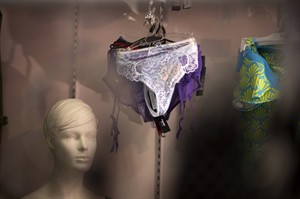
MOSCOW – A trade ban on lacy lingerie has Russian consumers and their neighbours with their knickers in a twist.
The ban will outlaw any underwear containing less than 6 per cent cotton from being imported, made, or sold in Russia, Belarus and Kazakhstan. And it has struck a chord in societies where La Perla and Victoria’s Secret are panty paradises compared to Soviet-era cotton underwear, which was often about as flattering and shapely as drapery.
On Sunday, 30 women protesters in Kazakhstan were arrested and thrown into police vans while wearing lace underwear on their heads and shouting “Freedom to panties!”
The ban in those three countries was first outlined in 2010 by the Eurasian Economic Commission, which regulates the customs union, and it won’t go into effect until July 1. But a consumer outcry against it already is reaching a fever pitch.
Photographs comparing sexy modern underwear to outdated, Soviet goods began spreading on Facebook and Twitter on Sunday, as women and men alike railed against the prospective changes.
“As a rule, lacy underwear … is literally snatched off the shelves,” said Alisa Sapardiyeva, the manager of a lingerie store in Moscow, DD-Shop, as she flicked through her colorful wares. “If you take that away again, the buyer is going to be the one who suffers the most.”
According to the Russian Textile Businesses Union, more than $4 billion worth of underwear is sold in Russia annually, and 80 per cent of the goods sold are foreign made. Analysts have estimated that 90 per cent of products would disappear from shelves, if the ban goes into effect this summer as planned.
The Eurasian Economic Commission declined to comment Monday, saying it was preparing to issue a statement about the underwear ban.
While consumer outrage may force customs union officials to compromise, many see the underwear ban as yet another example of the misguided economic policies that have become a trademark of many post-Soviet countries.
Sunday’s panty protest in Kazakhstan followed a larger demonstration the day before against a 19 per cent devaluation of the country’s currency, the tenge.
Other people laughed off the panty ban, seeing it as yet another attempt to add regulations and controls to an already byzantine bureaucracy in the three countries.
“I think (the girls)… will still have the opportunity to wear it (synthetic underwear) whether you can buy it in Russia or not,” said 22-year-old Muscovite Trifon Gadzhikasimov, noting that most of his friends travel abroad regularly. “I think this is just another silly law that shows the ineffectiveness of our government.”
___
Vitnija Saldava in Moscow contributed to this report.
News from © The Associated Press, . All rights reserved.
This material may not be published, broadcast, rewritten or redistributed.

This site is protected by reCAPTCHA and the Google Privacy Policy and Terms of Service apply.
Want to share your thoughts, add context, or connect with others in your community?
You must be logged in to post a comment.