Elevate your local knowledge
Sign up for the iNFOnews newsletter today!
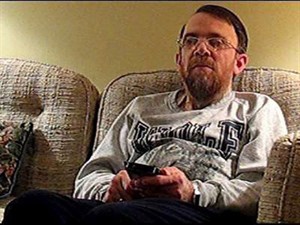
TORONTO – A Toronto man whose brain was among the most studied in the world has died.
Kent Cochrane suffered from amnesia that was the result of a traumatic brain injury he incurred in a motorcycle accident when he was 30.
Cochrane, who was 62 when he died late last week, is known in the scientific literature by his initials, K.C.
York University professor Shayna Rosenbaum is one of the scientists who have studied Cochrane over the years.
She says Cochrane was the subject of at least 32 scientific papers, with five more in the publication pipeline.
Cochrane’s memory deficits were like those suffered by the lead character in the 2000 movie “Memento.” He was unable to form new memories.
Studying what Cochrane remembered from his past and how much he could learn after his accident has helped to rewrite some of the theories on where memories are formed and stored in the brain, Rosenbaum says.
She began working with Cochrane when she was a graduate student in 1998 and has studied him since. Days before his sudden death, Rosenbaum learned that another paper on research focused on Cochrane was accepted for publication.
“He inspired, I would say, almost every paper I’ve written since (graduation). Even though he wasn’t necessarily the subject of every paper, he was a very great influence,” she says of the man she describes as gentle, kind and even keeled.
“Despite everything he was just a very warm and very pleasant person to be around,” Rosenbaum says. “I felt as though he was just a real source of light in general.”
He was also a source of tremendous learning.
“From a scientific point of view, we’ve really learned a lot (from him), not just about memory itself but how memory contributes to other abilities,” Rosenbaum says.
Cochrane’s sister, Karen Casswell, says it isn’t known what precisely her brother died of, though it is believed to have been a heart attack or a stroke. He died in his room at an assisted living facility where he lived and the family opted not to have an autopsy done to determine cause of death.
Casswell says the family has taken pride in the fact that Cochrane, the oldest of five children, made such a contribution to the understanding of memory.
She noted her eldest daughter was in a psychology class at university when the professor started to lecture about the man the scientific literature knows as K.C.
“She was quite thrilled to say ‘That’s my uncle.’”
Cochrane was predeceased by his father, Irving, and one brother. He is survived by his mother, Ruth, a retired nurse, two brothers, his sister and numerous nieces, nephews, grandnieces and grandnephews.
News from © The Canadian Press, . All rights reserved.
This material may not be published, broadcast, rewritten or redistributed.

This site is protected by reCAPTCHA and the Google Privacy Policy and Terms of Service apply.
Want to share your thoughts, add context, or connect with others in your community?
You must be logged in to post a comment.