Elevate your local knowledge
Sign up for the iNFOnews newsletter today!
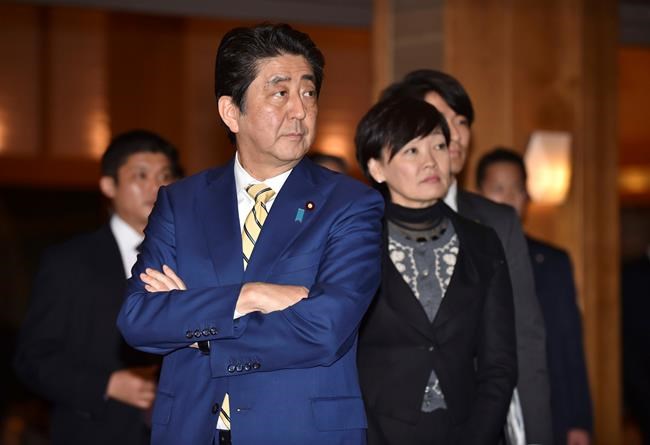
NAGATO, Japan – The leaders of Russia and Japan move to Tokyo on Friday to wrap up a two-day summit on an economic co-operation agreement and a protracted territorial dispute that has prevented their countries from signing a peace treaty to end World War II.
Japanese Prime Minister Shinzo Abe and Russian President Vladimir Putin spent much of their first round at a hot springs resort in western Japan on Thursday discussing small steps to move forward on the dispute over four small islands.
“We had in-depth discussions on a peace treaty,” Abe told reporters afterward.
He said they discussed possible joint economic projects on the disputed islands. A sticking point: Japan says they should be operated under a special legal status that does not raise sovereignty issues. Russia, which governs the islands, wants them to be run under its law.
Japanese media reports say Japan and Russia may ink a broader economic co-operation agreement Friday that the two sides have been negotiating for several months.
For Putin, the summit meeting marks his first official visit to a G-7 country since Russia annexed Crimea in 2014.
Abe invited Putin even though the G-7 nations, including Japan, still have sanctions on Russia.
Abe said the two leaders talked for three hours Thursday, spending about half of the time on the dispute over the southern Kuril islands seized by the former Soviet Union in the closing days of World War II, and a peace treaty. Japan calls the islands the Northern Territories.
Japan says the Soviet Union took the islands illegally, expelling 17,000 Japanese to nearby Hokkaido, the northernmost of Japan’s four main islands.
Putin expressed concern about the deployment of U.S. missile defence systems in Japan, calling them an overreaction to North Korea’s missile program, Japanese media reported. Abe assured him that they are limited to self-defence and do not pose a threat to neighbouring countries, while stressing the importance of discussing defence issues amid growing security concerns in the region, they said.
To that end, the two leaders agreed to resume “2+2” talks among the countries’ foreign and defence ministers, Russian Foreign Minister Sergey Lavrov said. Lavrov, who is accompanying Putin, attended the first and last “2+2” meeting three years ago.
Russia wants to attract Japanese investment, particularly to its far east. Japan hopes that stronger ties through joint economic projects will help resolve the thorny territorial issue over time.
___
Yamaguchi reported from Tokyo. Associated Press writer Nataliya Vasilyeva in Moscow and videojournalist Kaori Hitomi in Tokyo contributed to this story.
News from © The Associated Press, . All rights reserved.
This material may not be published, broadcast, rewritten or redistributed.

This site is protected by reCAPTCHA and the Google Privacy Policy and Terms of Service apply.
Want to share your thoughts, add context, or connect with others in your community?
You must be logged in to post a comment.