Elevate your local knowledge
Sign up for the iNFOnews newsletter today!
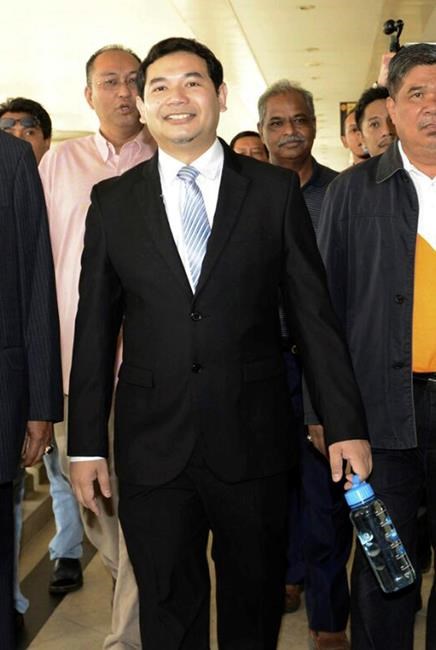
KUALA LUMPUR, Malaysia – A prominent Malaysian opposition lawmaker with a reputation as a whistleblower was sentenced to 18 months in jail on Monday for releasing one page of a classified document on a controversial state investment fund.
A Malaysian rights group called the sentence a “dangerous chill on free speech” that could lead to a more repressive and unaccountable government.
Rafizi Ramli, vice-president of the People’s Justice Party, was found guilty by the court of violating the Official Secrets Act by possessing and disclosing content of a government audit report on the indebted 1MDB fund, founded by Prime Minister Najib Razak.
Rafizi, who often makes allegations on alleged government wrongdoing, said he would appeal. He risks being disqualified from running in the next general election, due in 2018.
“I am not shocked, sad, angry, afraid or anything. No such feeling. Just another day. Been like this. What doesn’t kill u makes u stronger,” he tweeted just before the sentencing.
The Malaysian rights group Lawyers for Liberty called the sentence harsh and excessive. It questioned why the Auditor General’s report on 1MDB was suddenly classified as an official secret when it is normally presented to Parliament annually and made available to the public. Authorities were quick to punish whistleblowers like Rafizi, but have taken little or no action against alleged corruption involving the fund, it said.
“The conviction and sentence will create a dangerous chill on free speech and result in a more repressive, opaque and unaccountable government,” Lawyers for Liberty said in a statement.
The 1MDB fund has been at the centre of investigations in the U.S. and several countries amid allegations of a global embezzlement and money-laundering scheme. Najib started the fund shortly after taking office in 2009 to promote economic development projects, but the fund accumulated billions in debt over the years.
The U.S. Justice Department says at least $3.5 billion has been stolen from 1MDB by people close to Najib and initiated action in July to seize $1.3 billion it says was taken from the fund to buy assets in the U.S.
The government complaints also say that more than $700 million has landed in the accounts of “Malaysian Official 1.” They did not name the official, but appear to be referring to Najib. The prime minister has denied any wrongdoing since the allegations of massive fraud in the fund erupted last year.
Rafizi’s sentencing comes ahead of a planned mass rally by the democracy group Bersih to demand Najib’s resignation over the 1MDB scandal.
New York-based Human Rights Watch said Rafizi’s conviction under the Official Secrets Act was unprecedented and targeted to “intimidate whistleblowers into silence over the 1MDB corruption scandal.”
The group’s deputy Asia director, Phil Robertson, said in a statement that the public has the right to know about Najib’s alleged involvement in the scandal and “express views without facing these kinds of politically motivated prosecutions.”
Government minister Abdul Rahman Dahlan, however, said Rafizi had been warned repeatedly against disclosing any of the report.
“He tried a cheap stunt for personal political gain, but he knowingly committed a serious crime in doing so,” Rahman said in a statement. “It is right that he pays the price — and he has only himself to blame.”
Najib has remained firmly in political control by clamping down on critics and because of unwavering support from most ruling party members. His ruling coalition won the last elections in 2013, but lost the popular vote to an opposition coalition that includes Rafizi’s party.
News from © The Associated Press, . All rights reserved.
This material may not be published, broadcast, rewritten or redistributed.

This site is protected by reCAPTCHA and the Google Privacy Policy and Terms of Service apply.
Want to share your thoughts, add context, or connect with others in your community?
You must be logged in to post a comment.