


South Okanagan winery owner invests millions in solar vineyard project

A plan is in the works for a South Okanagan winery owner to install millions of dollars worth of solar technology this spring that will protect is vineyards from extreme weather events.
Double Barrel Vineyards in Oliver is one of three wineries in the area owned by Abbotsford resident Jesse Gill, and the one at the centre of a 33-million-dollar agrivoltaics project.
Also known as farm-first solar, agri-solar and dual-use solar, agrivoltaics is still in its infancy in Canada, and allows land to be used for both solar energy production and agriculture.
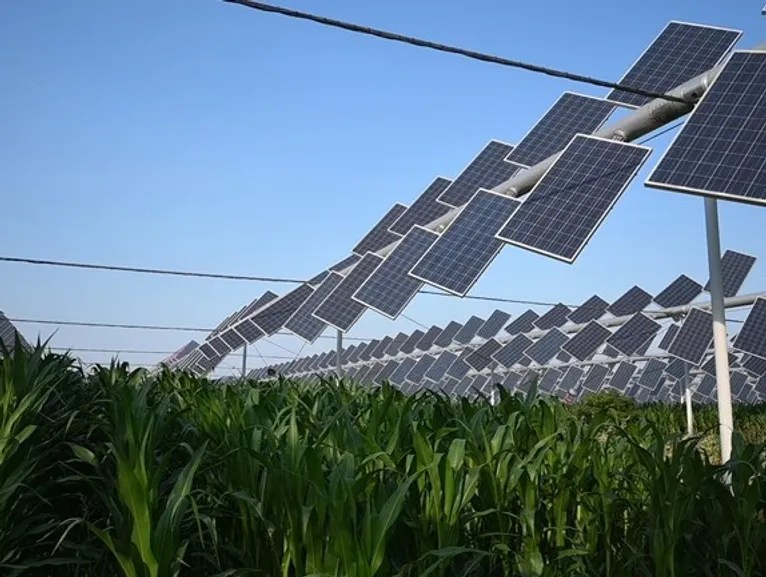
Gill’s vineyard will be the first commercial vineyard in North America to use it. Rows of solar panels will be set up above the vineyard.
“I’m sure a lot of people’s first thought is ‘this guy is crazy, he is putting panels above a vineyard and isn’t going to get enough sun,’” he said. “But the panels are specifically designed for my vineyard. There is data involved, we’re not just spit-balling this.”

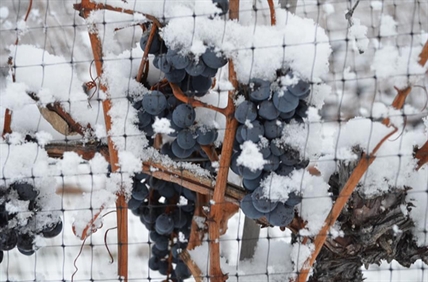
Gill discovered the technology while searching for solutions for protecting vineyards after crops in the Similkameen and Okanagan Valleys were wiped out two years in a row due to extreme weather events.
“Everyone prepares for that one year where things don’t work out but no one predicts two years of back-to-back events, it was a shock,” he said. “I started looking for solutions to winter freeze and how to generate some kind of heat source. Propane, diesel and kerosene are dirty for the environment and electrical power is super expensive.”
Gill came across agrivoltaics, a solar technology used in regions across Europe that combines agriculture and photovoltaic systems, allowing for both crop cultivation and solar energy production.
He took the model and broke it down to how it could be applied to his vineyard and took his idea to a professor at Simon Fraser University who runs a clean energy resource group. He then got a hold of someone at Agrivoltaics Canada who put him in touch with an agrivoltaics expert at Western University in London, Ontario.
“I looped everyone in and we thought about how we could develop the system for my vineyard,” Gill said. “I don’t want to be a guinea pig on my own, my expertise is not in this area. We’ve taken what was a concept and hammered it down to a workable solution.”
The system is composed of solar panels that track the sun. If there is a cold event, the panels fold into table top mode over the crops and thermal shade curtains auto deploy, coming down around the perimeter of the vineyard creating an enclosed structure with temperature control.
“The idea is not to heat up to the point you wake up the vines, all you want to do is just keep it warm enough they get damaged,” Gill said. “It also protects from too much rain and frost. The panels run based on the need of the vines. If the carbs or moisture is too high or low, the panels adjust.”
Sensors in the vineyards are integrated and the system runs according to the need of what the sensors are telling the panels.
The panels will also give Gill enough electricity to power up roughly 3,000 homes for a year. That energy will feed back into the grid and help provide energy in the event of power shortages.
“Where I’m located, we have processors, packing houses, wineries, and food storage buildings,” he said. “When it’s too hot or too cold, we farmers are the biggest demand load on fortis electricity in that area.”
Gill is waiting on a final Agricultural Land Commission approval for the project that is set to be installed in spring.
“I think about how much effort we can put into solving these kinds of issues if can get teams working together,” he said. “I was fortunate to find the right people to help open doors for the agricultural industry.”
Gill is currently selling his 2025 Save the Grapes Vintage he made with 160 tonnes of grapes his team at Back Door Winery salvaged from local growers during market challenges earlier this year.
News from © iNFOnews.ca, . All rights reserved.
This material may not be published, broadcast, rewritten or redistributed.

Join the Conversation!
Want to share your thoughts, add context, or connect with others in your community?
You must be logged in to post a comment.





One response
super interesting