Elevate your local knowledge
Sign up for the iNFOnews newsletter today!
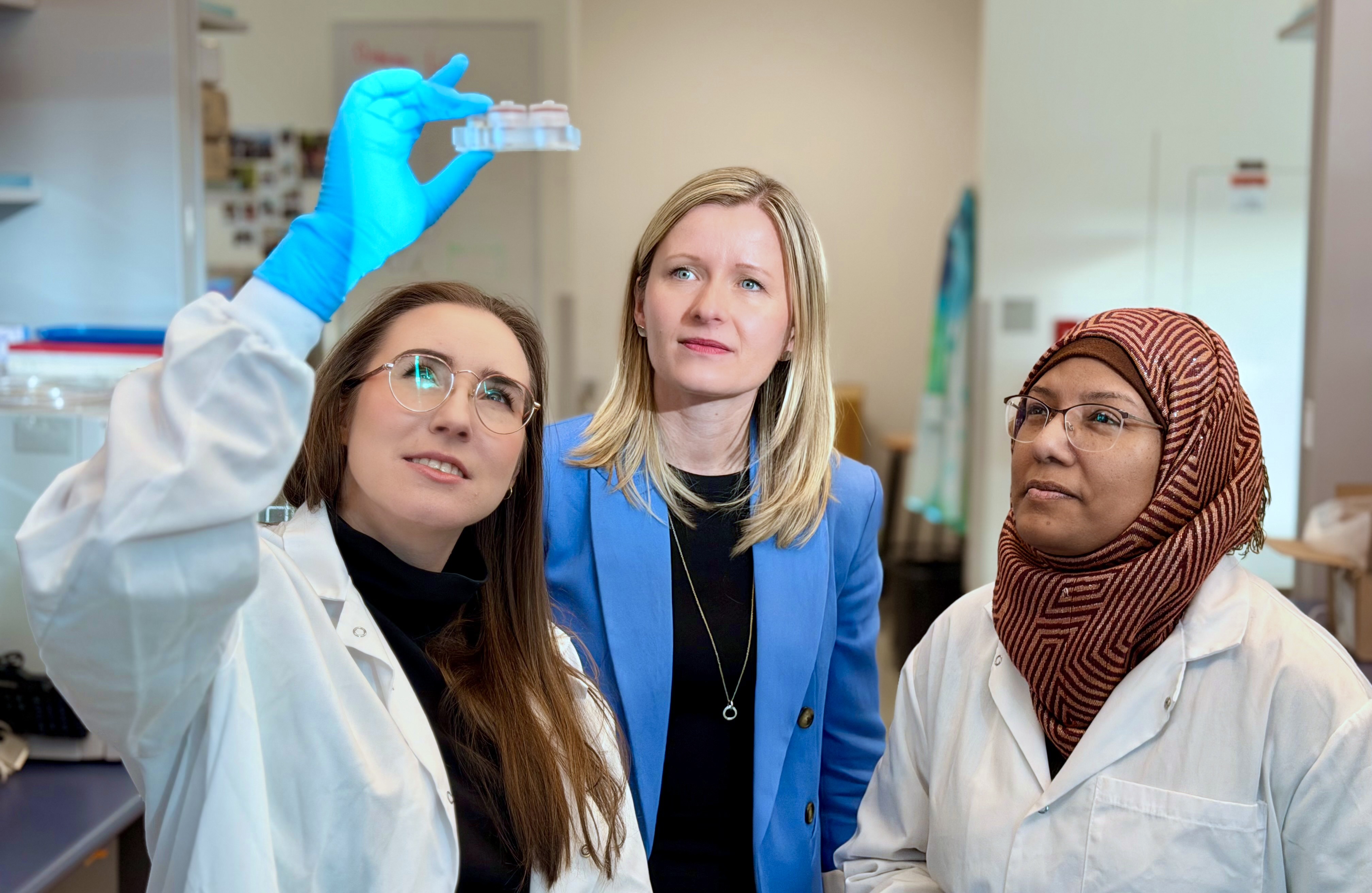
Researchers at the University of British Columbia are working on new technology that would use lasers to treat a range of incurable skin diseases.
The UBC team worked with researchers from Germany to develop a way to use gene-editing tools on skin diseases for the first time and published their findings in a paper in Cell Stem Cell, according to a press release from UBC issued Jan. 27.
The treatment uses a laser to make small, pain-free openings in the skin which allow lipid nanoparticles, which are like tiny bubbles of fat, to deliver gene editing technology that corrects the mutated DNA that causes skin diseases.
The gene editing technology is called CRISPR and it is already used to treat diseases, but this is the first time it has been used on skin disease.
“With this work, we show that it is possible to correct disease-causing mutations in human skin using a topical treatment that is safe, scalable and easy-to-use,” UBC associate professor and senior author of the study, Dr. Sarah Hedtrich, said in the release.
The technology could be used on rare, life-threatening conditions like autosomal recessive congenital ichthyosis, or common conditions like eczema and psoriasis.
“Importantly, the approach corrects the root cause of disease, and our data suggests that a one-time treatment might even be enough to provide a lasting and durable cure,” Hedtrich said.
Autosomal recessive congenital ichthyosis, or ARCI, affects one in 100,000 people and causes extremely dry, scaly skin, chronic inflammation and a high risk of infection. There is no cure or effective treatment so patients have to deal with their symptoms for life.
“For many patients, this condition is not only physically painful, but also deeply stigmatizing and isolating,” Hedtrich said.
The team studied models made from living human skin and it found that the treatment could restore up to 30 per cent of normal skin function, which could make a difference in getting skin to function normally.
Hedtrich said this treatment could be adapted to treat almost any skin disease.
“This is a highly targeted, localized approach,” said Dr. Hedtrich. “The treatment stays in the skin and we saw no evidence of off-target effects, which is a critical safety milestone.”
Now, the plan is to get the treatment ready for the real world and hopefully help people.
“Our goal now is to take this from the lab into first-in-human clinical trials,” Hedtrich said. “We hope this work will ultimately lead to a safe, effective treatment that can transform the lives of patients who currently have no real therapeutic options.”
News from © iNFOnews.ca, . All rights reserved.
This material may not be published, broadcast, rewritten or redistributed.

This site is protected by reCAPTCHA and the Google Privacy Policy and Terms of Service apply.
Want to share your thoughts, add context, or connect with others in your community?
You must be logged in to post a comment.