Elevate your local knowledge
Sign up for the iNFOnews newsletter today!
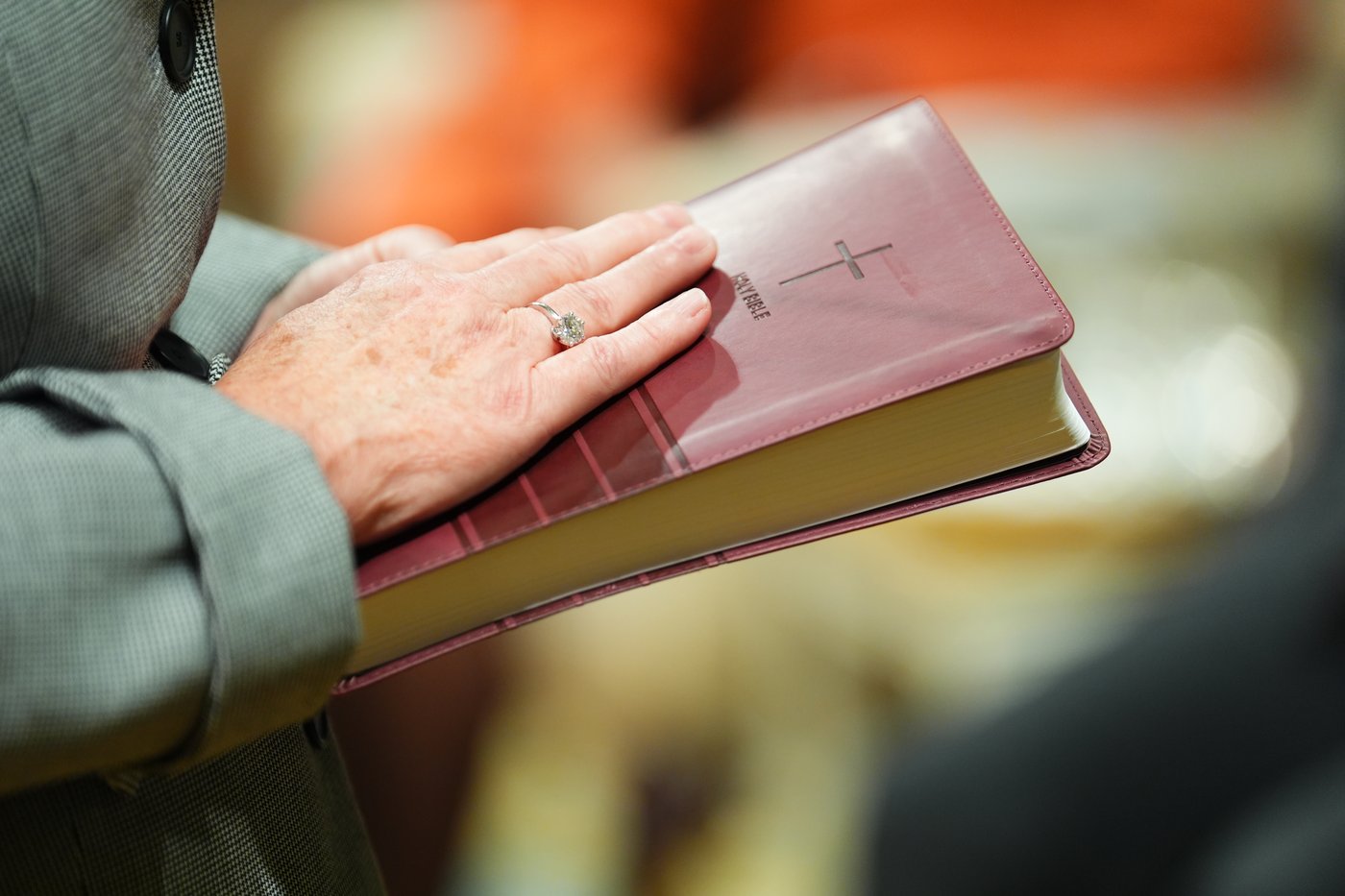
Multiple social media posts claim that federal legislation amending the Criminal Code to address hate-motivated crimes has made it a crime to quote the Bible. Experts say that under the bill, which hasn’t been passed into law yet, sharing passages from the Bible would not meet the threshold for hate speech.
THE CLAIM
“Canada just criminalized the Bible,” Terrence K. Williams, a conservative comedian and social media commentator, said in a post on Facebook last month.
The U.S. comedian’s post, which earned more than 160,000 likes, claimed Canadian pastors and “everyday Christians” face the risk of prosecution for expressing their faith.
In a similar post on X from last month with around 30,000 likes, American actor Kevin Sorbo claimed Canada had “criminalized reading the Bible.”
Both posts contained an image of Mark Carney with text that reads, “Canada just criminalized the Bible. Bill C-9 passed by Canada’s lawmakers. Now quoting Scripture on marriage, sin, or God’s design for sexuality can be prosecuted as ‘wilful promotion of hatred.'”
The claim, initially spread by conservatives in Canada and the United States, has spread beyond North America.
In a TikTok posted April 2, a religious leader addresses an event called the “Jalingo Healing and Deliverance Crusade,” in the Nigerian city of Jalingo.
“Did you people hear that they just passed a legislation in Canada?” the man asks the congregation. “Any Scripture you quote that is referencing man and woman, a husband and wife, is now becoming illegal and can take you to face the court,” he says. “Because it means you are discriminating against man who marry man and woman who marry woman.”
THE FACTS
The federal government’s hate crimes bill would define hatred in criminal law for the first time and make it a criminal offence to wilfully promote hatred through the use of hate symbols. Bill C-9 would also make it an offence to intimidate or stop someone from entering a religious or cultural building.
At issue for some opponents of the legislation is an amendment the Bloc Québécois successfully negotiated with the Liberals.
The amendment removes from the Criminal Code a religious exemption for hate speech that is deemed to be a good-faith expression, argument or opinion based on “a belief in a religious text.”
The Liberals argue they dealt with concerns about the change by clarifying in the legislation that religious statements on matters of public interest will not be criminalized as long as they do not wilfully promote hatred against an identifiable group.
The Conservatives and civil liberties groups continue to criticize the bill, which they say could attack freedom of religion and restrict the right to protest. The bill passed its third reading in the House of Commons on March 25 and now awaits approval from the Senate before becoming law.
Richard Moon, a professor emeritus in the faculty of law at the University of Windsor, said the legislation would not make it illegal to share passages from the Bible in person or on social media.
He said that what counts as hate speech under the bill must be “very extreme in character” and either vilify or express detestation against members of a specific group.
Moon referred to a Supreme Court of Canada case that laid out examples of what might count as extreme speech. That speech includes descriptions of members of a group as “subhuman, or animalistic, or as inherently violent or as dangerous to children,” he said.
Calling homosexuality sinful, for example, would not meet the threshold of extreme speech, Moon said. Neither would simply sharing a Bible passage, even if it’s interpreted by some to be promoting discrimination or hatred against a certain group.
“Simply making reference to Biblical text, given how it’s interpreted by different people in different ways, in different contexts, would not itself constitute hate speech,” he said.
Howard Sapers, executive director of the Canadian Civil Liberties Association, agreed that simply quoting the Bible isn’t going to become a crime.
“What may be criminalized is what would be criminalized today, which is if you’re using the quote in a way that wilfully promotes hatred, specifically against an identifiable group,” he said. “Hate speech is still hate speech, and hate speech is still a crime. And you cannot hide behind a religious identity to argue that it’s no longer a crime.”
Moon said he doesn’t believe religious groups should be concerned about Bill C-9, even with the removal of the religious exemption defence. He said “ordinary” conservative religious views about same sex marriage or sexual orientation aren’t an issue under the bill.
“None of that would run afoul of the Criminal Code ban on hate speech as it has been interpreted by the courts, without the defence,” he said.
However, Sapers said his association is concerned the exemption’s removal could limit freedom of religion and religious expression.
“Our concern about the removal of that exemption is that it hasn’t been replaced with anything that could be considered to be an adequate alternative,” he said. He added that it could potentially lead to the prosecution of a religious minority whose doctrine is judged to meet the threshold for hate speech.
This report by The Canadian Press was first published April 15, 2026.
News from © The Canadian Press, . All rights reserved.
This material may not be published, broadcast, rewritten or redistributed.

This site is protected by reCAPTCHA and the Google Privacy Policy and Terms of Service apply.
Want to share your thoughts, add context, or connect with others in your community?
You must be logged in to post a comment.