Elevate your local knowledge
Sign up for the iNFOnews newsletter today!
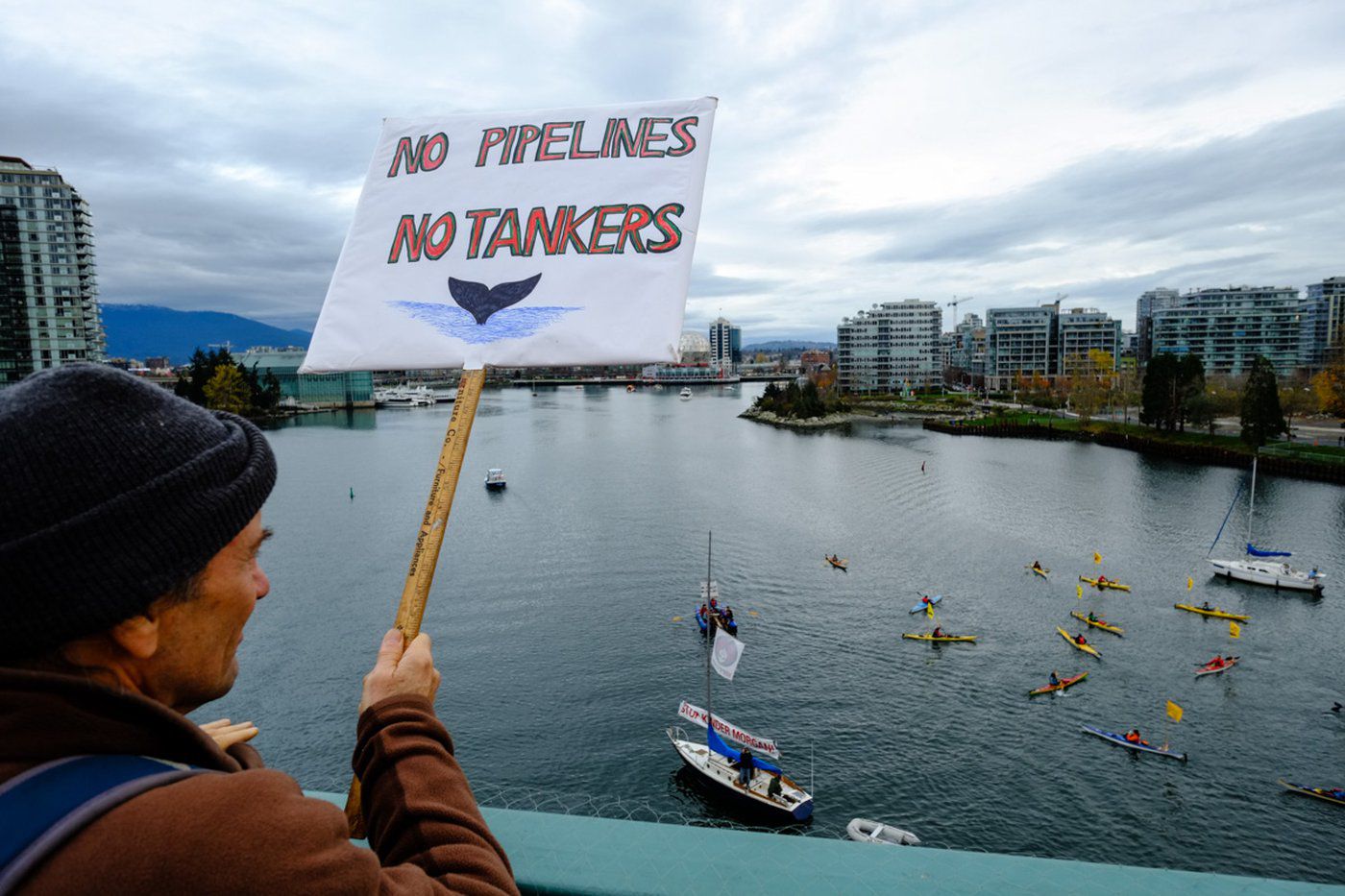
Another pipeline along the existing Trans Mountain corridor may be the most realistic route from Alberta to tidewater, but many agree the environmental risks still follow the oil.
The federal government is currently considering various pipeline routes from Alberta — to the Lower Mainland of BC near Vancouver, or a northern line to the port of Prince Rupert. The move comes as Ottawa and Alberta build on an MOU signed in November 2025 to potentially ship another million barrels daily to Asia.
But the prospect of another pipeline is prompting intense community and environmental resistance.
Richard Masson, former head of the Alberta Petroleum Marketing Commission, said in an interview the most realistic option from a planning and market standpoint would be to follow the right‑of‑way of the existing Trans Mountain pipeline — the pre‑approved corridor that already carries oil through the Rockies and into the Lower Mainland in BC.
He noted the environmental studies, engineering work and land agreements along that strip of land are already in place, making it “relatively easier.”
Experts dispute the narrative that a southern route would face less Indigenous and environmental opposition than a northern one.
“There would be equal, if not more vigorous opposition here,” said Andy (Anil) Hira, a political economist and professor at Simon Fraser University.
Even if it could avoid higher costs and political backlash in densely populated areas, Hira said the southern route — following the Trans Mountain pipeline where possible — would still run through a corridor already marked by regulatory battles, court challenges over Indigenous consultation and high-profile RCMP enforcement during the Trans Mountain expansion.
“Vancouver markets itself as a livable, environmentally conscious city with a “pristine harbour,” Hira said. A major spill in or near Burrard Inlet would threaten not only the harbour’s ecosystem but also the tourism, fishing and real estate sectors that rely on the city’s image of clean water and scenic coastlines.
“The idea that oil tankers would line up in Vancouver Port is a little hard to imagine,” he said.
Eugene Kung, a staff lawyer with West Coast Environmental Law, noted even the Trans Mountain expansion hit massive engineering roadblocks, citing a stretch between Hope and Chilliwack where they couldn’t blast the rock to install full-sized pipe, so they had to use a smaller line and add pumping stations.
“That was a huge engineering challenge, but they just barely squeezed by,” he said, noting that the project repeatedly ran into geotechnical issues that delayed construction and raised safety questions along the corridor.
“The idea of fitting another million barrels per day in that same corridor certainly will not work for the whole route,” Kung said.
A new route could be even more complex. Steep terrain, soil instability and a constrained right‑of‑way make it physically and economically unrealistic to double up in many stretches. Any new line would face similar conditions that would lead to regulatory variances, redrilled crossings and design changes, all of which drove up costs and raised concerns about safety and timelines for Trans Mountain, he added.
The cost of the Trans Mountain expansion ballooned from $5.4 billion when it was proposed in 2013 to more than $30 billion by the time it was built in 2024.
Masson sees it differently. He said the Trans Mountain pipeline’s 1,150-kilometre right-of-way from Edmonton to Burnaby is already well-studied with environmental assessments and agreements in place, making it relatively easier to expand by twinning or looping an additional pipeline along the existing corridor, a method demonstrated as feasible and safe by the recent expansion.
He said engineers know how to handle it section by section, although some narrow spots might need deviations, and added there aren’t any major safety concerns since the expansion proved it can be done and has been operating safely.
Oil currently leaves Burnaby’s Westridge terminal on smaller Aframax tankers, which can only load about 80 per cent of their capacity due to shallow waters under the Second Narrows rail bridge. These tankers often have to sail to California, unload and reload onto bigger ships for the trip to Asia — a slow and expensive workaround, Masson added.
The Vancouver Fraser Port Authority is planning to dredge the Second Narrows channel so Aframax‑class oil tankers can operate at full capacity at Westridge, he noted.
Deepening channels and expanding storage along the southern route would be more straightforward than overcoming the north coast tanker ban, which Masson said would likely face years of court challenges from Indigenous groups.
Others say neither a new line alongside the Trans Mountain route nor a different, southern one would offer a safe or climate‑friendly alternative.
Emilia Belliveau, energy transition program manager at Environmental Defence Canada, said the proposed new Alberta–BC pipeline, regardless of route, is fundamentally at odds with Canada’s climate goals. She said the oil and gas sector is already Canada’s largest source of climate pollution, and increasing production to carry an additional million barrels a day would be “like pouring gasoline on a burning house.”
She said the project doesn’t remove environmental or safety risks, it simply shifts them elsewhere, with impacts felt at every stage, from oilsands expansion that fragments land, harms caribou habitat and creates toxic tailings, to pipelines and marine shipping that pose ongoing spill risks to ecosystems and coastal communities.
Kung said more oil would mean more tankers moving through Burrard Inlet, where navigation is already constrained by tides, bridges and narrow channels. Many large ships can only move at high tide and in daylight.
“If you have more ships and a smaller window, that generally increases the risk, not decreases it,” he said.
Belliveau noted a southern route would thread through denser populated areas, likely requiring new off-take facilities, dredging and port expansions that intensify pressure on ecosystems and Indigenous rights.
‘No matter which route it takes, it’s crossing Indigenous territory,” she said.
Belliveau said the Tsleil‑Waututh Nation, which has territory along the Burrard Inlet, has long opposed the Trans Mountain expansion, and warned that a new southern pipeline proposal would further threaten the Nation’s sacred sites and food‑harvesting grounds.
A Tsleil‑Waututh Nation spokesperson told Canada’s National Observer that the nation’s leadership is not commenting on the issue at this time.
Terry Teegee, regional chief of the BC Assembly of First Nations, said a southern route would face the same opposition from First Nations as a northern route would. That’s because either path would run through unceded Indigenous territories — lands that First Nations never gave up through treaties, he said. “Whether it’s northern or southern, it’s essentially the same issue.”
He noted BC First Nations were excluded from the Mark Carney-Danielle Smith MOU and recent fast-tracking bills, which bypass court precedents on the duty to consult.
These “rushed” laws are setting up projects for failure — like the Enbridge Northern Gateway pipeline, he added. That $16-billion project to carry oil from Alberta through BC to Kitimat collapsed in 2016 after strong First Nations and environmental opposition.
“I doubt any First Nation wouldn’t challenge this in court — because it’s bypassing a lot of court rulings already in existence,” Teegee said.
Marilyn Slett, Coastal First Nations-Great Bear Initiative president, told Canada’s National Observer on Wednesday in an email statement that her group welcomes and affirms the BC provincial government’s assertion that the North Coast is no place for crude oil tankers.
“The North Pacific Coast sustains a vibrant, diverse and sustainable economy that is worth billions of dollars, supports thousands of jobs and puts food on our tables every day.”
She said her group is committed to keeping the Oil Tanker Moratorium Act in place to protect coastal waters for all Canadians.
Hira said while the global economy shifts from fossil fuels, Canada is falling behind other major oil producers already diversifying their economies.
Nations such as China, India, Japan and Korea are investing heavily in clean energy, while even oil‑rich states like Saudi Arabia, the UAE and Norway are using their hydrocarbon revenues to build diversified economies in renewables, tech, finance and services, instead of relying only on future oil exports. “Canada is too late to be doubling down on fossil fuels when others are already moving ahead,” he said.
Hira added that the world’s energy transition and the growing volatility of oil prices mean a 30‑to‑40‑year pipeline project may not pay off and Canada is making choices even Middle Eastern producers are avoiding.
Belliveau said importers are learning from Middle East conflicts and Strait of Hormuz disruptions, which spiked oil prices and global inflation, that supplies remain volatile. Nations from China to South Africa are already accelerating renewables, battery storage and electrification to reduce such risks.
“There’s such a collective global effort to steer toward a climate-safe future, and Canada’s just sitting in a little rowboat trying to pull it back the other way,” she said.
— This article was originally published by Canada’s National Observer
News from © iNFOnews.ca, . All rights reserved.
This material may not be published, broadcast, rewritten or redistributed.

This site is protected by reCAPTCHA and the Google Privacy Policy and Terms of Service apply.
Want to share your thoughts, add context, or connect with others in your community?
You must be logged in to post a comment.