Elevate your local knowledge
Sign up for the iNFOnews newsletter today!
BEIRUT (AP) — The leader of Lebanon’s militant Hezbollah group called on the government on Tuesday to withdraw from direct talks with Israel this week in Washington, calling them a concession and instead urged for indirect negotiations.
Lebanon and Israel are scheduled to hold two days of talks in Washington, starting Thursday, in an attempt to end the latest Israel-Hezbollah conflict that broke out two months ago, following the Iran war, and discuss the future of relations between the two countries, which have officially been at war since Israel was created in 1948.
Hezbollah leader urges indirect talks
Naim Kassem said in a letter directed to the group’s officials that direct negotiations benefit Israel and that they are “concessions by Lebanese authorities.” He said Lebanon’s government should instead resort to indirect negotiations, as it has done in the past, such as when a ceasefire was reached in November 2024.
Indirect talks are usually done through a third party.
Kassem also said the dispute over Hezbollah’s weapons was an internal affair and should not be part of the talks with Israel. The Lebanese government has sought the disarmament of the militant group after the latest round of fighting broke out in early March, calling all military activities by the group illegal.
Lebanese authorities have also demanded the cessation of hostilities, Israeli withdrawal from Lebanon, deployment of Lebanese troops south of the Litani River, the release of Lebanese prisoners held in Israel and the return of displaced people to their homes.
Kassem said Hezbollah is ready to cooperate to help achieve the five points demanded by the Lebanese government.
Israel and Lebanon trade attacks despite a ceasefire
Despite the U.S.-brokered ceasefire, which went into effect on April 17, Israel and Hezbollah have continued carrying out daily attacks. The latest war started on March 2, when Hezbollah fired rockets into northern Israel two days after the United States and Israel attacked Iran.
On Tuesday, Hezbollah fired several drones at northern Israel, according to Israel’s military. The military said it intercepted several drones before they crossed the border, but some explosive ones detonated in Israel, near the border, though no injuries were reported.
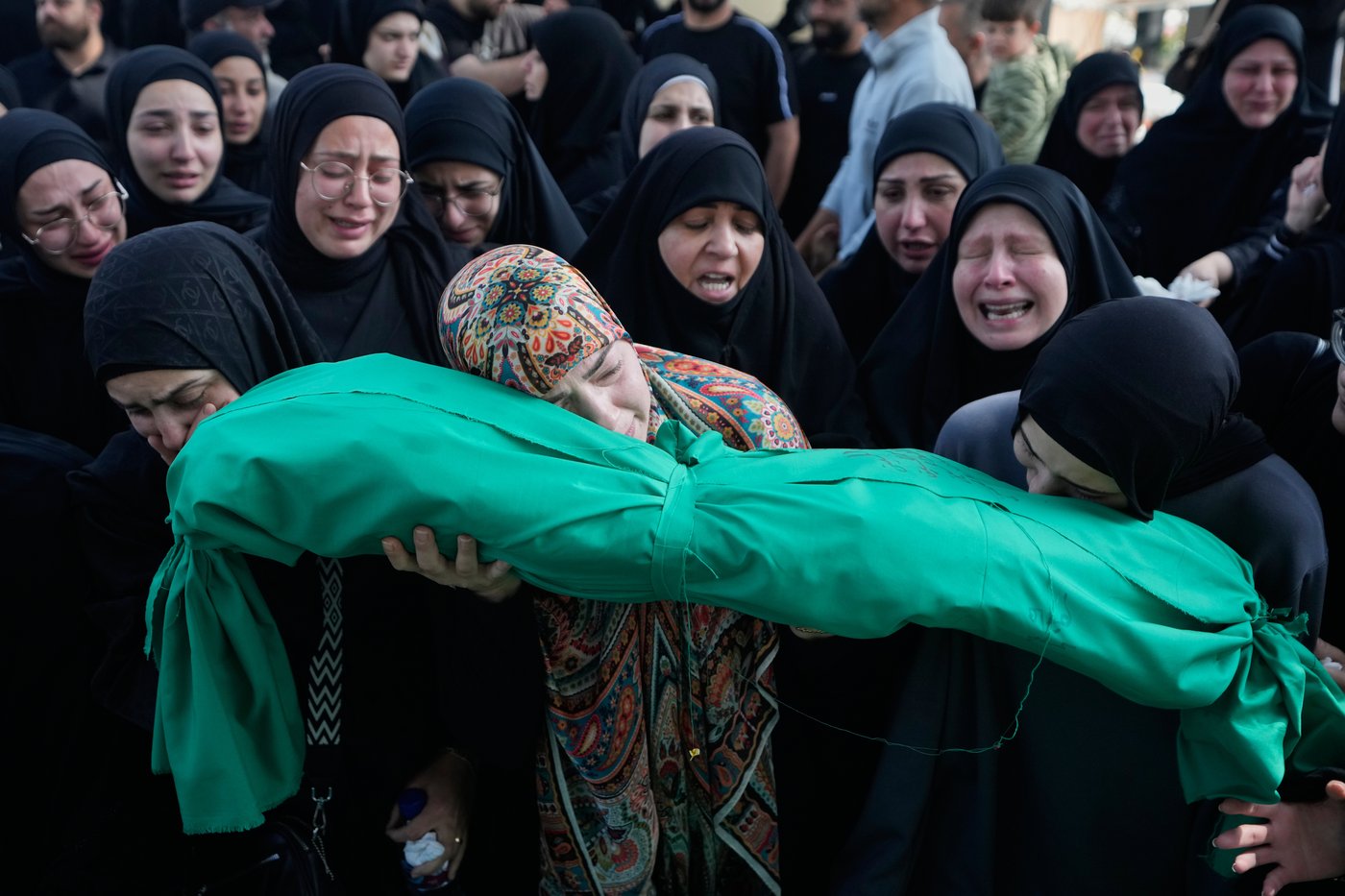
Lebanese Health Minister Rakan Nassereddine told reporters that since the ceasefire went into effect, 380 people have been killed and 1,122 have been wounded. That brings the toll since the war began to 2,882 killed and 8,786 wounded.
From the early hours of Tuesday, Israel’s air force carried out strikes in different parts of southern Lebanon, as well as the village of Sohmor in the eastern Bekaa Valley, state-run National News Agency reported. The agency said airstrikes on the village of Jibchit killed three people and wounded four.
The Israeli military had earlier issued an evacuation warning to the residents of Sohmor and four villages in southern Lebanon.
The National News Agency said Israeli forces entered parts of the southern village of Deir Mimas on the Litani River and blew up a water pumping station that uses solar energy and supplies the village with fresh water. The agency said that the pre-dawn blast at the station caused widespread damage.
The Israeli military posted photos of troops along the Litani River, without providing exact location details.
Hezbollah issued a statement, saying its fighters struck Israeli troops on Tuesday morning near the river in the village of Deir Seryan with rockets. It gave no further details.
Also Tuesday, Hezbollah confirmed that one of its military commanders was killed in an airstrike near Beirut last week. The group released a photo of Ahmed Ghaleb Balout, describing him as a commander who spent much of his life on the battlefield.
Balout was killed May 6 in an airstrike on a southern suburb of Beirut, the first aistrike near the Lebanese capital since the ceasefire went into effect.
The Israeli military said Thursday it had killed Balout, identifying him as a commander in Hezbollah’s elite Radwan Force, along with two other militants.
News from © The Associated Press, . All rights reserved.
This material may not be published, broadcast, rewritten or redistributed.

This site is protected by reCAPTCHA and the Google Privacy Policy and Terms of Service apply.
Want to share your thoughts, add context, or connect with others in your community?
You must be logged in to post a comment.