Elevate your local knowledge
Sign up for the iNFOnews newsletter today!
OTTAWA — A United Nations panel is calling on Ottawa to make it a priority to eliminate the second-generation cutoff in the Indian Act.
In a technical advice paper published last week, the United Nations’ Expert Mechanism on the Rights of Indigenous Peoples said the federal government has an opportunity to address “forced assimilation” inherent in the legislation, along with sex- and race-based discrimination.
Current law uses a formula to determine whether an individual qualifies for “full” or “half” First Nations status, and some First Nations leaders say the formula punishes people over their choice of marriage partners.
Changes to the Indian Act introduced in 1985 prevent the transfer of status to a person who has at least one grandparent and one parent who don’t have status — a rule known as the second-generation cutoff.
Some chiefs say if the law is not changed, it could leave their communities with no federally recognized members in the next generation — essentially eliminating their rights as a distinct people.
A bill being studied by a House of Commons committee seeks to remove that second-generation cutoff. Indigenous Services Minister Mandy Gull-Masty has indicated her government will not support it.
The United Nations paper says the second-generation cutoff in the Indian Act “has the effect of forcibly assimilating Indigenous individuals … [because] it will lead to diminishing numbers of persons with legal Indian status who are recognized by Canada as having treaty, Aboriginal and inherent rights, as well as being persons to whom Canada owes a fiduciary duty.”
The bill was introduced in the Senate as S-2 and initially had support from the governing Liberals.
The bill was drafted to eliminate some gender inequities in the Indian Act and allow some 3,500 people to become eligible for First Nations status.
Some senators and First Nations leaders said the bill didn’t go far enough. Senators voted to extend eligibility requirements to allow status to be transferred to children if one of their parents is registered, and sent the legislation to the House of Commons.
The Senate committee studying the legislation heard from nearly 50 witnesses, all of whom said the second-generation cutoff needs to be eliminated. Senators said those voices represent more than half of First Nations in Canada.
All four opposition parties in the House of Commons supported the Senate’s amendments. Gull-Masty signalled her government was looking for another approach and wanted to continue consultations on the issue, which have been ongoing since 2023.
Lori Idlout, now the Liberal MP from Nunavut, spoke in favour of the amendments and was a vocal critic of the government’s stance on S-2 before she left the NDP to join the Liberal caucus in March.
Last week, Idlout told reporters she “definitely learned a lot more about the approach” to the Indian Act her new party is looking to take.
She did not share what that approach would look like, pointing instead to consultations.
Conservative MP Billy Morin, who supports amending the Indian Act through S-2 to remove the second-generation cutoff, told The Canadian Press on Tuesday that Idlout’s remarks were “disappointing.”
“I’ve got to believe that floor crossing means that she just has to toe the party line now,” he said.
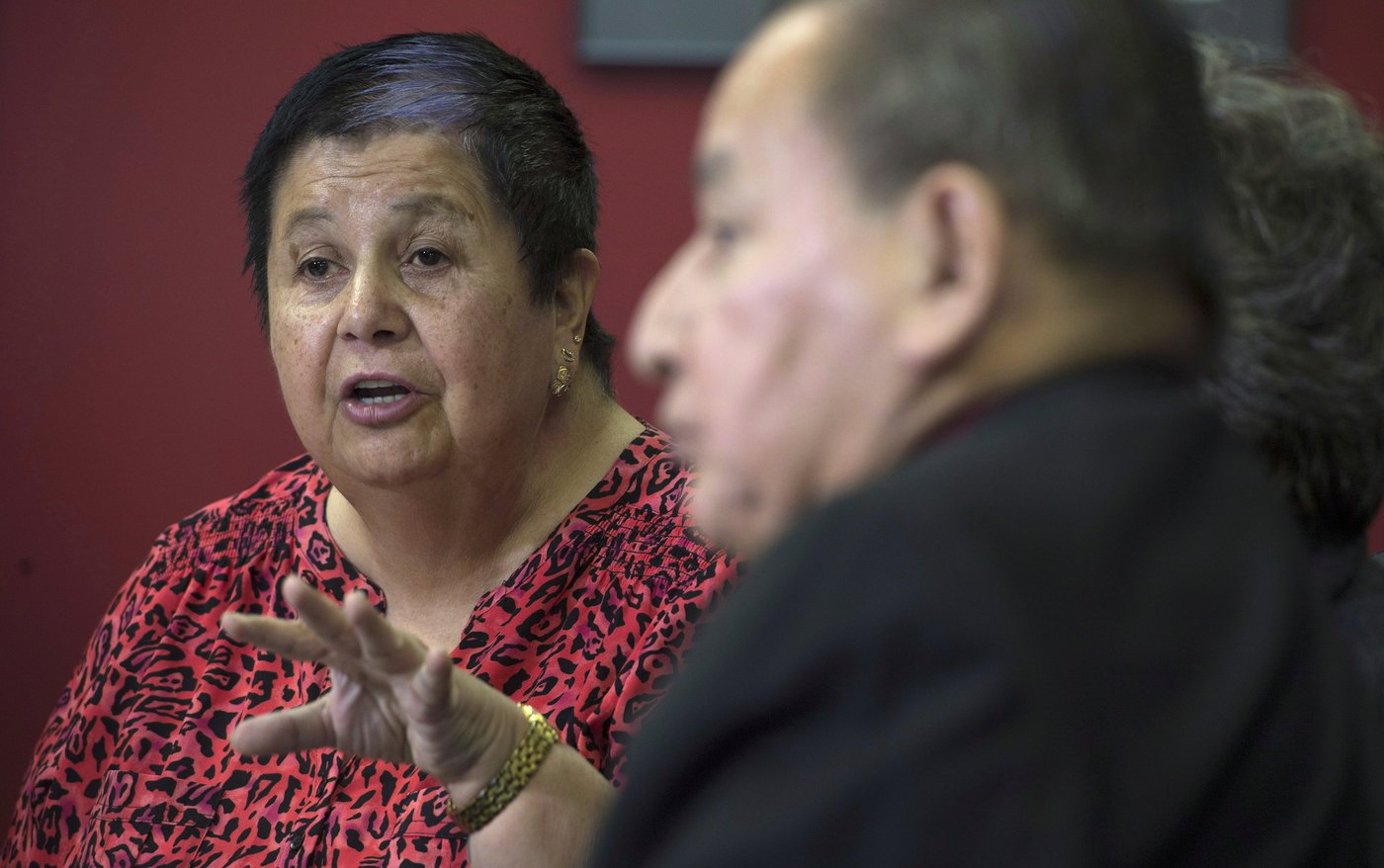
Sharon McIvor, a longtime critic of the Indian Act, said at a virtual news conference Tuesday that Gull-Masty and the federal government are using consultations as cover to further delay eliminating the cutoff and restoring First Nations status to the children of rights-holders.
She said the minister needs to decide whether the government is “willing to finally do the right thing, or continue standing on the wrong side of history.”
“Canada does not get to say anymore that it does not know what the solution is. It does know. They’ve admitted it’s discriminatory,” McIvor said.
In an emailed statement, Gull-Masty’s office told The Canadian Press the federal government is committed to removing the second-generation cutoff, but is not certain how those reforms will look.
“It is a critical and deeply personal issue for many individuals, families and communities, and addressing it meaningfully is an important part of advancing reconciliation,” wrote spokesperson Livi McElrea.
She said the minister has accelerated the consultation process, and that the government has an obligation to consider all proposed solutions.
“Indigenous Services Canada remains committed to ensuring that all remaining inequities in the Indian Act are addressed with robust and timely solutions in consultation and co-operation with First Nations,” McElrea wrote.
Morin said the federal government is acting in a manner inconsistent with reconciliation by stonewalling changes to the Indian Act.
“They’re consulting on the extinction of Indigenous Peoples,” he said. “They seem to not want to uphold human rights.”
Zoe Craig-Sparrow, the director of national advocacy for Justice for Girls, spoke alongside McIvor at the virtual news conference.
She said the Indian Act Sex Discrimination Working Group has been requesting a meeting with Gull-Masty for more than a year, but “those calls have gone unanswered.”
Craig-Sparrow said she is about to be married and worries about the life her future children will have, since she is subject to the second-generation cutoff.
She said she questions how her future children will be able to inherit her home on-reserve, partake in cultural activities like fishing and join on-reserve sports teams and programming without federal recognition.
“They’re going to be sitting on the sidelines of exercising their right to fish, of playing soccer with their cousins and their families, of being able to vote in our elections, of being able to access Jordan’s Principle or health care,” she said.
“And that’s unfathomable for me to understand. And I’m prepared to fight for my whole life, like Sharon has, to make sure that doesn’t happen.”
Former Montreal Canadiens goalie Carey Price also warned members of Parliament last week against leaving the Indian Act as-is.
Price, who is a member of Ulkatcho First Nation, told the committee studying the bill his children were denied status under the Indian Act, which he called a “case of inequality and discrimination.”
This report by The Canadian Press was first published May 12, 2026.
News from © The Canadian Press, . All rights reserved.
This material may not be published, broadcast, rewritten or redistributed.

This site is protected by reCAPTCHA and the Google Privacy Policy and Terms of Service apply.
Want to share your thoughts, add context, or connect with others in your community?
You must be logged in to post a comment.