Elevate your local knowledge
Sign up for the iNFOnews newsletter today!
BRUSSELS (AP) — NATO’s top military officer said Tuesday that he does not expect any more drawdowns of American troops from Europe — at least not anytime soon — beyond the 5,000 that U.S. President Donald Trump announced would leave the continent.
The remarks by U.S. Lt. Gen. Alex Grynkewich follow Trump’s surprise announcement of the move early this month, which came as the U.S. leader has bickered with allies over the Iran war and called for changes.
The Pentagon has canceled deployments to Poland and Germany to draw down thousands of troops in Europe as opposed to yanking out forces already stationed there.
“It will be 5,000 troops coming out of Europe,” Grynkewich told reporters at NATO headquarters in Brussels, where top officers from the 32-nation military organization met. “lt’s all that I’m expecting in the near term.”
Remarks could allay fears of more cuts
Grynkewich’s remarks could allay initial fears that more cuts might be coming. The reductions have drawn blowback from both Democratic and Republican U.S. lawmakers, who said the move sent the wrong message to close allies and that Congress was not consulted about the changes.
Chief Pentagon spokesman Sean Parnell said Tuesday that the military reduced the number of brigade combat teams assigned to Europe from four to three, “resulting in a temporary delay of the deployment of U.S. forces to Poland, which is a model U.S. ally.”
The Pentagon “will determine the final disposition of these and other U.S. forces in Europe based on further analysis of U.S. strategic and operational requirements, as well as our allies’ own ability to contribute forces toward Europe’s defense,” Parnell said on social media.
He said Defense Secretary Pete Hegseth spoke to Polish Defense Minister Władysław Kosiniak-Kamysz on Tuesday and that the U.S. will ensure it “retains a strong military presence in Poland.”
US military changes surprised allies in Europe
Trump’s announcement blindsided NATO allies and came despite U.S. promises to coordinate military moves with its allies and avoid creating security gaps.
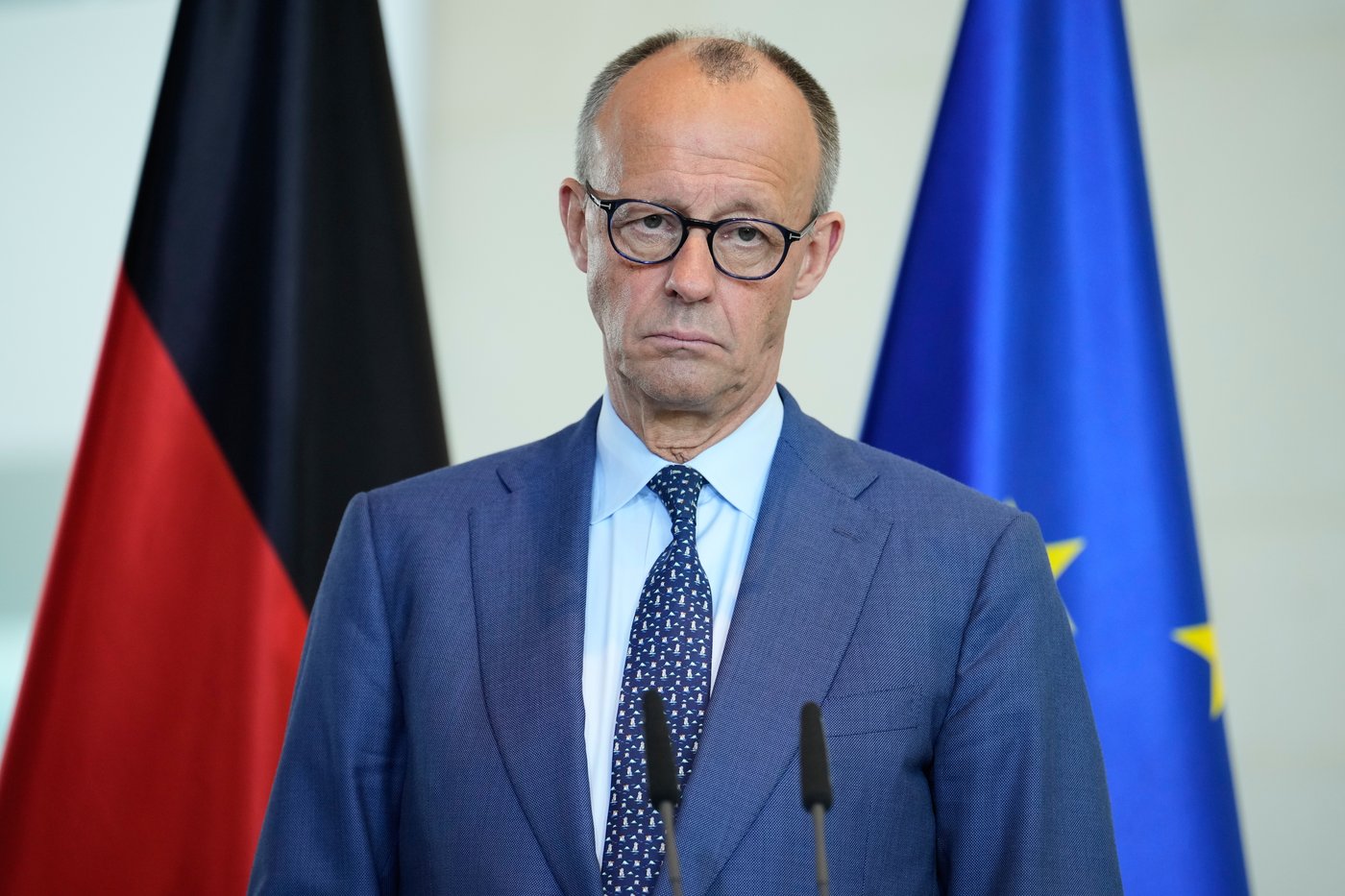
Trump was notably angry at Germany, after Chancellor Friedrich Merz said the United States was being “humiliated” by the Iranian leadership and criticized what he called a lack of U.S. strategy in the war.
Some 4,000 troops from the Army’s 2nd Armored Brigade Combat Team, 1st Cavalry Division are no longer going to Poland as planned, and the deployment to Germany of personnel trained to fire long-range rockets and missiles has been halted. Much of the detail is still being worked out.
Some U.S. troops from the brigade bound for Poland were told not to get on a plane to Europe shortly before departure. About 1,000 soldiers and 1,700 pieces of equipment from that brigade had already arrived in Europe shortly before their deployment was canceled, a U.S. military official told The Associated Press on Tuesday, speaking on condition of anonymity to discuss military deployments.
Grynkewich said he spoke earlier in the day to military chiefs from Estonia, Latvia, Lithuania and Poland about “some of the options and how we might array capabilities on the eastern flank,” along NATO’s border with Russia.
Concerns arise about effects on the Baltic states
The cancellation of the deployment to Poland has wider effects because some U.S. troops based in the Baltics, including Estonia, were supposed to come from the brigade meant to arrive in Poland, said Jonatan Vseviov, secretary-general at Estonia’s Foreign Ministry.
He described the development as “a hiccup,” but one that “in and of itself is not going to collapse NATO deterrence in the Baltic states.”
Alluding to the sudden decision to pull troops, Estonia’s Defense Minister Hanno Pevkur told Estonian media Tuesday that “there is not much information” about what is happening.
“What we do know is that U.S. forces are in Estonia and will remain there,” he said, adding that “no one has told me that any kind of lowering of the U.S. flag in Estonia is going to happen.”
Lithuania’s Foreign Minister Kęstutis Budrys, told AP that the deployment of 1,000 U.S. troops to Lithuania is also linked to the canceled rotation. He said he viewed any issues connected to the deployment to be a “technical issue,” which hopefully will be resolved with American troops remaining in Lithuania.
The U.S. military official said officials are looking at how to bridge any gaps in the Baltic nations with other forces already deployed in Europe.
Grynkewich insisted that security in Europe would not be compromised but warned that allies should expect more drawdowns in coming years.
“Over the long term, we absolutely should expect additional redeployments as Europe continues to build capability and capacity and step up to provide more of the conventional defense of Europe,” Grynkewich said.
“It’s going to be an ongoing process for several years,” he said, but added, “We’re going to stay well-synchronized with our allies moving forward.”
___
Burrows reported from Tallinn, Estonia.
News from © The Associated Press, . All rights reserved.
This material may not be published, broadcast, rewritten or redistributed.

This site is protected by reCAPTCHA and the Google Privacy Policy and Terms of Service apply.
Want to share your thoughts, add context, or connect with others in your community?
You must be logged in to post a comment.