Elevate your local knowledge
Sign up for the iNFOnews newsletter today!

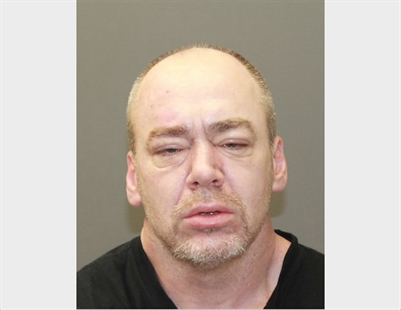
The lack of police follow-up after a Penticton break-in has seen the main suspect walk free, even though his fingerprints were found at the scene.
After breaking the glass of the back patio door, a cell phone, a Christmas card, a box of chocolates and a gift bag were swiped from a Penticton home, only for everything except the phone to be discarded in the yard.
According to a May 15 BC Supreme Court decision, Joseph George Robert Kirkey’s fingerprints were found on the Christmas card.
However, that wasn’t enough to convict him of the break-in.
Justice John Gibb-Carsley ruled that the Crown had failed to prove that the fingerprints were put on the Christmas card during the offence.
“It is not sufficient for me to conclude that the accused probably committed the offence or likely committed the offence,” Justice Gibb-Carsley said. “Human experience informs me that often greeting cards are displayed on racks at stores in a way to allow the public to examine them before purchase.”
The decision says the property owner was asleep on her bedroom floor with her two children when her home was broken into in January 2023.
“She awoke to a person inside her room shining a cell phone light,” the Justice said.
The woman didn’t see the person, as it was dark and they were only in her room briefly.
The police were called, and the box of chocolates, the gift bag and the Christmas card were found discarded in the yard.
“After securing the scene and gathering evidence in the early morning hours… the police did not visit the residence again as part of the investigation,” the Justice said.
The next morning, the husband took photos of a discarded beer can, a plastic table that had a visible shoe impression on it, and a screen that had been pulled from a window.
He sent the photos to the RCMP.
The police called and left a message about arranging a follow-up visit, but for reasons not explained, the message wasn’t returned. The property owners said they would have happily cooperated with police if asked.
“As such, the police did not investigate the crime scene after (the night of the break-in),” the Justice said. “There were no attempts to obtain fingerprints from the doors, windows, discarded screen, beer can or from other locations in the house. There were no other attempts by the police to collect more physical evidence than what was collected on (the night).”
While a forensic examination found Kirkey’s fingerprints on the Christmas card, that wasn’t enough for the judge.
“I am satisfied that the Christmas Card was inside the house prior to the break and enter and found shortly after by the police on the premises of the residence… whoever broke into the residence discarded the Christmas Card on the ground when they left,” the Justice said.
How Kirkey’s fingerprints got on the card was a different issue.
The Justice said in circumstantial cases, when only one piece of evidence links an accused, it greatly weakens a case.
“The police did not attempt to obtain fingerprints or DNA from the beer can, the frames of the windows or doors or the door handle where the perpetrator entered the house,” the Justice said.
The Justice was also critical of the lack of details about the Christmas card.
There was no evidence presented about where it was purchased and whether it was bought from a rack of cards that others might have touched.
“Using ordinary human experience and logic, I accept that greeting cards are often presented for sale at stores in a manner that not only allows, but encourages, the public to interact with the card to examine the message expressed on the inside of the card,” the Justice said. “In this regard, it is not a fanciful inference that a greeting card may come into contact with a member of the public before it is ultimately purchased.”
The Justice said the Crown had not provided evidence to counter the argument that the accused’s fingerprint was deposited on the Christmas card at a time other than the break and enter.
“The Court must make its determination as to the guilt of the accused based on the evidence, or lack of evidence, before it,” the Justice said.
The Justice said the break and enter was a terrifying experience for the homeowner and changed her feelings of security and safety in her own home.
“It has impacted her negatively in several significant ways. However, the impact on the victims must not have any bearing on my determination of the accused’s guilt,” the Justice said.
Ultimately, Kirkey was acquitted.
News from © iNFOnews.ca, . All rights reserved.
This material may not be published, broadcast, rewritten or redistributed.

This site is protected by reCAPTCHA and the Google Privacy Policy and Terms of Service apply.
Want to share your thoughts, add context, or connect with others in your community?
You must be logged in to post a comment.