Elevate your local knowledge
Sign up for the iNFOnews newsletter today!

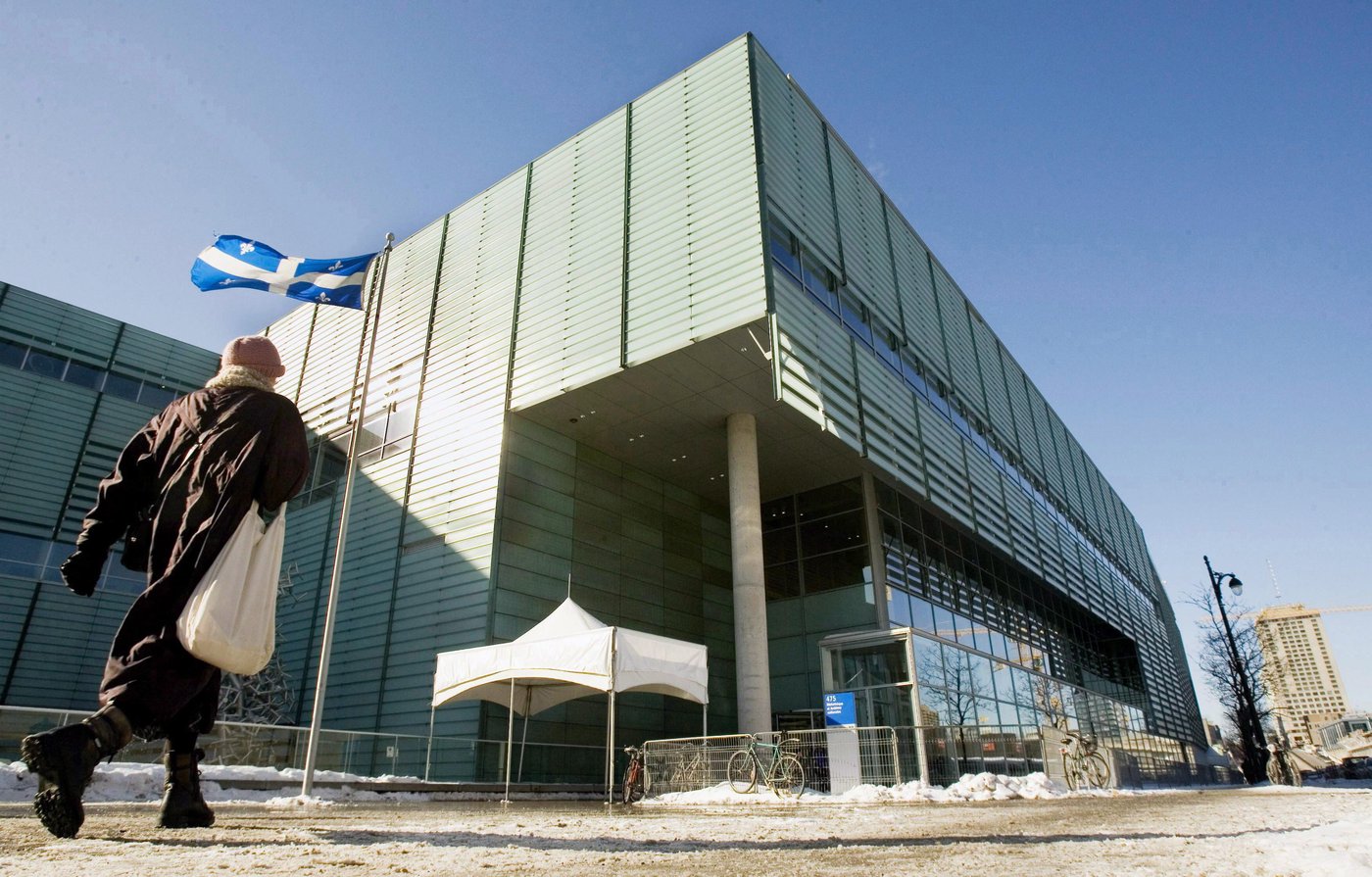
MONTREAL — Quebec’s national library is moving ahead with plans to create a database of cultural and government content that could be used to train artificial intelligence systems and improve their understanding of Quebec society, culture and Indigenous languages.
Bibliothèque et Archives nationales du Québec, or BAnQ, the province’s national library and archives institution, has launched the experimental phase of its proposed government and cultural databank in French and Indigenous languages after completing a feasibility study earlier this year.
The project aims to address concerns that major generative AI systems often struggle to provide reliable information about Quebec society, economy and culture because of the limited amount of Quebec-related data available to them.
“All scenarios are a little bit on the table right now,” Valérie D’Amour, who led the feasibility study, said in an interview. “We have a lot of ideas and we want to validate the possibilities with cultural stakeholders, as well as with data owners and providers, who will be involved in the discussions.”
BAnQ says the future platform would not serve as a public distribution channel for creative works and that access to the data would be tightly controlled.
Marie Grégoire, president and chief executive officer of BAnQ, said the goal is to ensure that AI systems better reflect Quebec society and culture.
“That means having Quebec references, whether in small models or large models, whether they come from research or from the business community,” she said.
Similar initiatives have emerged elsewhere, including in Sweden, where large collections of Nordic-language texts have been assembled to help develop generative AI models for Scandinavian languages.
BAnQ plans to begin with its own collections before considering data from other sources.
The initiative stems from a recommendation made in a 2024 report by Quebec’s innovation council. The report attributed the problem in part to the “very small quantity of data on Quebec” available in AI training datasets.
Destiny Tchéhouali, co-holder of a Quebec-based research chair focused on French-language artificial intelligence and digital technologies, said Quebec culture remains “underrepresented in the corpora currently circulating in the AI world.”
“And we run the risk of reproducing linguistic biases and cultural biases. And when we also talk about Indigenous peoples, we run an even greater risk of all these biases,” said Tchéhouali, a professor in the communications department at Université du Québec à Montréal.
He said the proposed database would represent “strategic infrastructure” that could help establish guidelines for how local content is identified, catalogued and tracked within today’s AI systems.
Copyright concerns have emerged as a major issue for the cultural sector as BAnQ develops the proposed database.
But Grégoire argued the proposed platform could offer creators greater protection than the current system. “Right now, it’s a bit like the Wild West,” she said. “Data is being harvested for free, and that should not be the case.”
She said the database could act as a centralized gateway that would make it easier to compensate creators whose works are used.
Grégoire said that by working collectively, cultural organizations would be better positioned to ensure creators are paid and that the sector remains sustainable over the long term.
Still, some artists worry that contributing their work to AI training systems could ultimately undermine their own livelihoods.
“The main criticism we hear in the field is that, even if artists earn income from it, they are still feeding the beast that will eventually be used to replace contracts they may lose because of AI,” said Maxime Harvey, a postdoctoral researcher at the National Institute of Scientific Research and a member of the same research chair.
The feasibility study envisions the platform becoming operational by 2029, although D’Amour said the timeline will be reassessed following the experimental phase.
The study estimates a five-year budget of nearly $10.5 million through 2030, including operating and capital costs. BAnQ has received $340,000 from the Quebec government for the feasibility study and a further $750,000 to support the project’s 12-month experimentation phase.
This report by The Canadian Press was first published May 31, 2026.
News from © The Canadian Press, . All rights reserved.
This material may not be published, broadcast, rewritten or redistributed.

This site is protected by reCAPTCHA and the Google Privacy Policy and Terms of Service apply.
Want to share your thoughts, add context, or connect with others in your community?
You must be logged in to post a comment.