Elevate your local knowledge
Sign up for the iNFOnews newsletter today!
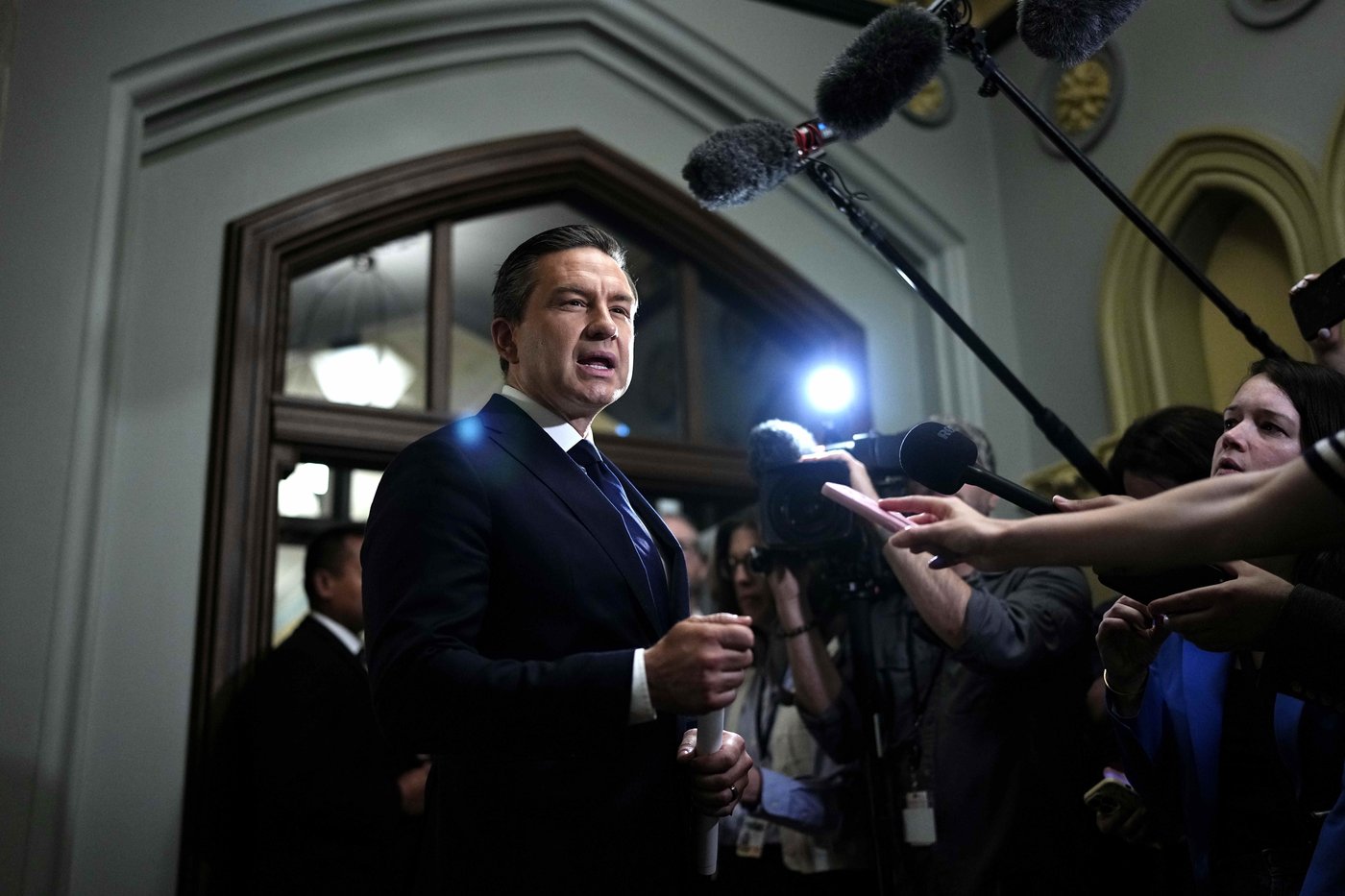
OTTAWA — The Bloc Québécois is taking issue with Conservative Leader Pierre Poilievre’s claim that support for Quebec separatism was “wiped out” under Stephen Harper’s government.
The Tory leader insists separatist sentiment in both Alberta and Quebec is being driven by the Liberals and their policies. On Monday, he told reporters support for separation “was zero” when Harper was in power between 2006 and 2015.
“Under Stephen Harper, the separatist movement was wiped out. The Parti Québécois and the Bloc Québécois were on their last leg,” he said.
Bloc Québécois House leader Christine Normandin pointed out that Quebec elected a minority Parti Québécois government in 2012.
“I couldn’t agree less with (Poilievre’s) statement,” she said in an interview.
The PQ lost power to the provincial Liberals in 2014 and then pledged in the 2018 election campaign not to hold a referendum on sovereignty for at least four years. The PQ suffered a historic defeat and lost official party status when the Coalition Avenir Québec took power in 2018.
The Bloc lost official party status after the 2011 federal election, dropping 43 seats as the NDP swept through Quebec in the “orange wave.”
In 2006, the Bloc introduced a motion in the House of Commons calling on MPs to recognize Quebecers as a nation. Harper replied with a motion of his own that recognized the “Québécois form a nation within a united Canada.” The motion received overwhelming support from MPs of all parties.
Despite the ups and downs of sovereigntist parties, polls show that support for sovereignty among Quebecers has remained fairly stable.
Leger released a poll last month that tracks 15 years of support for Quebec sovereignty. Over that time, the percentage of people who said they would vote yes to separating from Canada hovered between 29 per cent and 45 per cent.
That 45 per cent peak was reached the year of the PQ win in 2012. The low was recorded in March of this year.
Normandin said the sovereignty movement in Quebec is stable because it is not “in reaction” to what’s happening in Ottawa.
“It’s based on the fact that Quebec has a different language, a different culture, the fact it is a nation,” she said.
“And that will not change, notwithstanding what colour the government in Ottawa is.”
There has been talk of growing support for separatism in Quebec over the last 18 months after the sovereigntist Parti Québécois surged in the polls as the electorate turned against former premier François Legault and his Coalition Avenir Québec.
The PQ has pledged that if it wins the election in October, it will hold a referendum on separation within its mandate. And while Leger’s May poll suggests the party holds a slim two point lead over the provincial Liberals, the poll put support for secession at 35 per cent in April and 32 per cent in May.
Separatist sentiment has been rising in Alberta, where Premier Danielle Smith has scheduled a referendum in October that will ask whether Albertans want to hold a “binding referendum” on separation from Canada or if they want the province to remain part of the country.
Poilievre said that is a direct result of “divide-and-conquer, centralist Liberal government that seeks to control everything in Ottawa.” He noted that all three referendums to separate from Canada have happened under federal Liberal governments.
Normandin said she thinks Poilievre is trying to dodge thorny questions about what would constitute a “clear majority” in an Alberta separation referendum.
“Either he doesn’t really have a good understanding of Quebec or he really was trying to change the topic of the conversation with such a bold but false statement,” she said.
Prime Minister Mark Carney drew the ire of Quebec provincial politicians and the Bloc last week when, citing the Clarity Act, he said that any secession referendum would need more than 50-per-cent-plus-one support to be considered valid.
That legislation, which was passed in the aftermath of the 1995 Quebec referendum and the 1998 Supreme Court ruling on separation, gives the House of Commons the power to decide whether a proposed referendum question on separation is clear and whether a clear majority voted in favour of it.
The Bloc said Tuesday it would put forward a bill in the House of Commons to repeal the Clarity Act.
Reporters asked Poilievre repeatedly on Tuesday about the Clarity Act and the Bloc’s proposed bill. He did not answer.
This report by The Canadian Press was first published June 2, 2026.
News from © The Canadian Press, . All rights reserved.
This material may not be published, broadcast, rewritten or redistributed.

This site is protected by reCAPTCHA and the Google Privacy Policy and Terms of Service apply.
Want to share your thoughts, add context, or connect with others in your community?
You must be logged in to post a comment.