Elevate your local knowledge
Sign up for the iNFOnews newsletter today!
This is where cold hard facts give way to the hottest of takes, mostly mine I suppose. I’m the editor, Marshall Jones.
Want to include yours? Listen, this isn’t the comment section, this isn’t social media. Discussion and debate requires context and a wee bit of bravery — we need your name and where you’re writing from. Include it in your account or email me anytime.
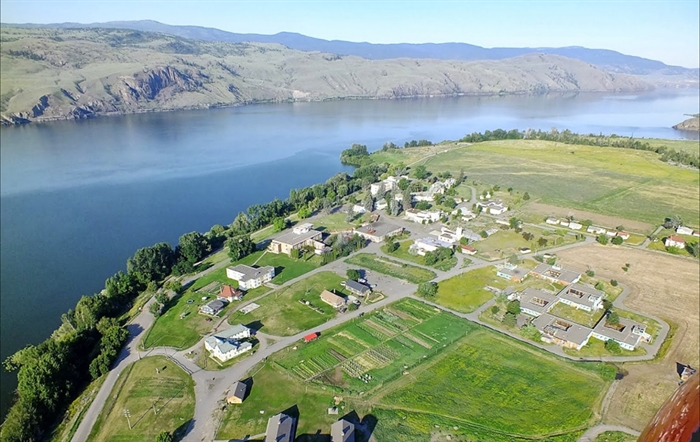
That’s what Dan Fritz of Ignition Tranquille Developments Ltd told us. His company spent six years preparing a massive site in Kamloops for largely residential development before finally throwing up their hands.
We’re supposed to be streamlining developments like this in BC. The NDP likes to chastise local governments for obfuscating housing projects but Kamloops’ hands are clean. It’s the NDP government that’s in the way of this one, the developer says.
The company couldn’t satisfy the Agricultural Land Commission. First Nations objected and caused further delays and according to Fritz, “paralyzed” the government.
That’s how millions of dollars in investment goes — POOF.
I’m not saying the land commission was wrong. I’m not even saying the First Nations were wrong.
I’m saying Ignition isn’t wrong.
If I had two nickels and needed to make a third, it would be tough to convince me to do it here. Why would you invest that money and time you can’t get back where you are largely unsupported? Actually, the heck with support, just some certainty in a process to get stuff done and a government with the power and willingness to do that.
I know, no one’s going to cry for “rich” developers. But when enough of them and other businesses get fed up with the hoops, the handouts, the clawbacks, the demands, the taxes, the fees — and head for greener grass, then we might be interested in addressing the problem.
That’s the view from here. How do you see it? Email me at mjones@infonews.ca
Mj
Marshall Jones
Managing Editor
Costs mount for Okanagan orchardists as unused fruit forced to landfills was what we went with. Rejected headlines: Farmers buried in red tape can’t bury cherries. Also Fine! Fine! Fine! Compostable fruit can’t be buried.
I mean, it’s a British Columbia story in a *nutshell — over-regulation that makes no sense and drives everyone mad.
We poke around for this kind of bureaucratic silliness all the time. Sadly, strangely, it’s often farmers on the wrong end. Not wearing a seatbelt on a tractor, is one of my favourites as a former Alberta boy.
This time it was a $15,000 fine for a farm because it got caught burying below-grade cherries agricultural byproducts for a second time. Such waste must be “managed accordingly” which I would have thought meant burying it so it doesn’t stink and attract pests but actually means they have to pay to truck it to a landfill. (Read between the lines in the decision and it basically says: Pay this because you don’t respect our authority, by guys who carry rulers in their pants pockets.)
The farm said workers in the field made the decision but were unauthorized to do so. I can just imagine that conversation on the importance of following meaningful government regulations.
Ah, maybe I’m wrong. I found no evidence but maybe there is some outside chance a river of cyanide could leach into our water supply to kill us all! Maybe the seedlings that sprout will demand we feed them…. I have a feeling I have wiped greater risks off my shoes at a horse and cattle ranch. Or on a farm with chickens. Heck, geese in a city park.
And really, trucking it to a landfill is the best solution? Most landfills don’t have rates for agriculture, it’s a basic commercial rate. We followed up with fruit growers — as expected, this is a huge expense.
I think it’s awful how farmers are treated around here, particularly orchardists. We’re all going to want and need them back soon, I think.
Cherries and apples and pears don’t make great bumper stickers and movements like ostriches, but if you put googly eyes on them, you know — they can be pretty cute. We can support them.
I hope I am wrong, that dozens of bureaucrats didn’t all look at this and said: Yep, this is reasonable. Let me be missing something. Please someone make it make sense? Email me at mjones@infonews.ca.
Mj
Marshall Jones
Managing Editor
The NBA champions were crowned the night before. The Memorial Cup in Kelowna was handed to the best junior team in the country two weeks ago.
Oh, and there’s some sort of soccer tournament going on, I hear. Are you aware of this?
They call it the World Cup. Apparently, most of the planet are fans of — it says here they call it football — and that’s what all this FIFA news has been about.
I kid, of course, but only slightly. I’m not a big footie guy and most times I can’t stand watching it on TV. What can I say, hockey has spoiled me. Like many Canadians, apparently, because it seems to me like no one is talking about it.
Somehow the hype is missing me. How about you? Are you into it or missing it? Who are you supporting? How are you connecting with other fans? Email me at mjones@infonews.ca.
Mj
Marshall Jones
Managing Editor
iN RESPONSE to Wednesday’s newsletter opinion-editorial over regulation in B.C.
Marshall, are you making a mountain out of a mole hill as usual? The article says they were fined for burying cherries without a permit for the second time. The way I read it, all they needed to do was get a permit before burying the cherries. What’s the big deal? Follow the rules and you don’t get fined for breaking them. Rules are in place because not everybody has common sense or is honest. Or sometimes they just may not know the risk of what they’re burying. This time it was cherries. What might they bury next time? Every industry has regulations to follow. Agriculture is no different just because it’s food.
— Kathy Russell, Kamloops via email
Not that I know much about this or have studied it to any degree, but the first thing that struck me when the “no evidence of a river of cyanide” was mentioned, was the question, how long have they been required to do this? Apparently it’s been decades which might explain why no evidence has been found. As well I didn’t see any mention of deterring infestations of pests that can arise from fruit disposed of incorrectly on the ground given that the pests do migrate. Just sayin’.
Warren Caruk, Lake Country via email
iN RESPONSE to Monday’s newsletter opinion-editorial on the World Cup hype
Have you heard what John Cleese said about Football and why it hasn’t caught on in the USA? It does say a lot about Canadian society.
— Bill Jackson via email
Having read your column in yesterday’s online newspaper, “World Cup tough sell in hockey country”, I want to put my hand up as one of the dissenters. I’m entirely invested (I purchased a TSN subscription solely for the tournament) in the World Cup, but as a bit of background context, I recognize that my sporting tastes probably differ from the average Canadian: I don’t watch the NHL, NFL, NBA, MLB, or any other major North American sports. That has arisen from a lifetime of travel and a growing distaste for the shallowness and cheesiness of North American sports broadcasting and rule changes. In my opinion, the hockey season should be over by April, and the league should shorten the Stanley Cup playoffs to the top four teams ONLY. I can’t be bothered that the New York Knicks won the NBA championship. How is that relevant to Canada as a nation, apart from the few Canadian athletes that make the NBA, a league that is full of diving and travelling? Today’s announcement on the CBC’s “divorce” from HNIC (Hockey Night in Canada) signals a loss of the connection with hockey to the Canadian culture, doesn’t it?
To not have some awareness of the World Cup is to ignore the largest sporting event in the world, and where our attention should be as a nation. Prime Minister Mark Carney has pointed out a general departure from our reliance on the United States on an economic basis; that departure should be on a cultural level, too, towards Europe, where football (real football, not NFL trash) is the number one sport in most countries, on a quasi-religious level, actually. The fact that we’re one of the hosts of the tournament should be akin in people’s minds to the Olympics.
Anyhow, rant over. I’m into it, watching matches every day, showing matches in my classroom (when appropriate), started my Panini sticker book, participating in my fantasy league – yes, there are fantasy leagues for soccer – and eagerly anticipating every match. I think it’s great that the matches are being shown at Riverside Park every night, and I intend to watch at least a few there once the school year is over. I seek out others in Kamloops who are the same, but as you say, it’s a minority of the population.
Hope you find the time to watch and appreciate at least some of the major talents of the sport in the next six weeks. What else are you gonna watch?
— Michael Chambers via email
10-year anniversary of MAID in Canada invites love, pain and shame
I think this question is like so many others. You don’t believe in gay marriage, don’t do it. You don’t believe in abortion, don’t do it. You don’t have the right to make this decision for others.
— Bonnie Derry via iNFOnews.ca
B.C. murder suspect says he attempted suicide after victim ‘slipped’ down embankment
How did they not pursue first degree murder charges in this matter? There is lots of good evidence of pre-planning here and impossible to suggest that he didn’t believe the actions would kill her?? In any case his testimony is preposterous and won’t fly two feet.
In any case he has done all kinds of damage to himself with this story. He’s going to get a life bit and only the eligibility point for parole will be at issue. The Court is going to set that eligibility point high due to the lack of remorse amid obvious pre-planning. What he probably does not realize is that the parole board will take a similarly dim view of his failure to take responsibility and his obvious pre-planning against a partner with whom he had been separated for an extended period and had children with. The parole board is highly unlikely to grant him parole when he becomes eligible to apply. Just because he will be eligible does not mean he will get it. Life is life.
— William Mastop via iNFOnews.ca
iN RESPONSE to the June 9 newsletter opinion-editorial on Kamloops Indian Residential School
Greetings editor Marshall Jones,
Thank you for speaking truth to ignorance.
More than ever we need journalists who have the courage to call out racism at all levels in our society, and uphold active reconciliation.
We must move forward together to build strength and understanding between settler and Indigenous neighbours in this country.
— Teresa Marshall via email
It is sad and entirely misplaced that there is focus on the number of potential graves. The idea that there is some obligation to prove that these are in fact graves is all the more misguided. It cannot be contested that families were required to send their children to residential schools. No one, including those who ran the residential schools, is able to dispute that some children never returned home. If even one child did not return home that is too many. There was a lot more than one that did not return home. The Kamloops band says there may be 215 graves at that site. If in fact there are 2 graves, or 1, or 5 or even none the fact remains that some children never returned to their families. That fact is inescapable and should be the focus of attention.
— William Mastop via email
The author Marshall Jones argues that the media’s reporting on the Kamloops Residential School site was largely accurate and that critics are demanding an unreasonable standard of proof. However, this view overlooks a fundamental principle of journalism such as reporting allegations, suspicions, and evidence as facts can have significant consequences.
The issue is not whether children died at residential schools. Historical records clearly demonstrate that many Indigenous children suffered, died, and were often buried far from home. Nor is the issue whether Tk’emlúps te Secwépemc had legitimate reasons to investigate the former residential school grounds. They did, and they were transparent that ground-penetrating radar identified 215 anomalies or soil disturbances requiring further investigation.
The problem arose when many media organizations, politicians, activists, and public institutions transformed “potential graves” into “215 children found buried.” Headlines around the world presented an unverified conclusion as established fact. Those who questioned the accuracy of the reporting were often dismissed as racists, deniers, or conspiracy theorists rather than engaged in a factual discussion.
The Globe and Mail’s recent reflection is not an attack on Indigenous communities. It is an acknowledgment that journalism failed to maintain the distinction between evidence and certainty. Good journalism requires precision, especially on emotionally charged subjects. If reporters would not report a criminal conviction without a trial, they should not report the discovery of graves without confirming evidence.
The writer suggests that demanding proof is a “double standard.” In reality, verification is journalism’s standard. It is the same standard applied to every serious claim. The public can acknowledge the tragedy of residential schools while also insisting that extraordinary claims be supported by verifiable evidence.
The consequences of inaccurate reporting were enormous. Public monuments were altered, churches were vandalized or burned, reputations were damaged, and public discourse became polarized. Those outcomes make accuracy more important, not less.
Compassion and truth are not competing values. Respect for Indigenous history and suffering should strengthen our commitment to factual reporting, not weaken it. The public deserves empathy, transparency, and evidence. Journalism’s role is not to advance a preferred narrative but to pursue the truth wherever the facts lead.
This version focuses on media accountability and evidentiary standards rather than challenging the broader history of residential schools, making it stronger and more difficult to dismiss as partisan.
— Garry Davies, Kamloops via email
Weytk Marshall,
I wanted to say thank you for a very well-written article. I am tk’emlupsemc and it was refreshing to see someone lay out the inconsistencies and double standards so succinctly.
I’d like to highlight one part of the article that I found was a glaring omission, or perhaps oversimplification. It’s at the end of the article, “The First Nations that sent their children to that school owe neither me nor you anything.”
I would say this does not fairly or accurately depict that way in which these kids came to be at the school. My grandfather for example, was “Sent” to the school, only because his his parents, my great grandparents were presented with two options: we take him now, or you refuse, we send you to jail, and take him anyway.
Anyway, the point of the email was mostly to commend you on a well written article despite that sentence.
Kukstsemc for your work.
— Devan Swaine via email
While I don’t disagree with the majority of your comments about the controversy over the suspected graves on the site of the former residential school for indigenous children, I disagree entirely with your final comment about the parents who sent their children to the school.
From my understanding of the history of residential schools, not only the one in Kamloops but across the country, parents did not send their children to the schools.
The Canadian Government of the day decreed that all children under a certain age would go to the schools. Those children were taken from their parents and their homes by officials of the provincial governments, and placed in the residential schools quite some distance from their former homes. The parents had no choice in the matter.
— Bob Mason, Summerland via email
Disclaimer: Any views, thoughts, and opinions expressed on this page are solely those of the writer and does not necessarily reflect the views, opinions, policies, or position of the editor, iNFOnews.ca, iNFOTEL MULTIMEDIA, its partners, principals or advertisers.
News from © iNFOnews.ca, . All rights reserved.
This material may not be published, broadcast, rewritten or redistributed.

This site is protected by reCAPTCHA and the Google Privacy Policy and Terms of Service apply.
Want to share your thoughts, add context, or connect with others in your community?
You must be logged in to post a comment.