Elevate your local knowledge
Sign up for the iNFOnews newsletter today!
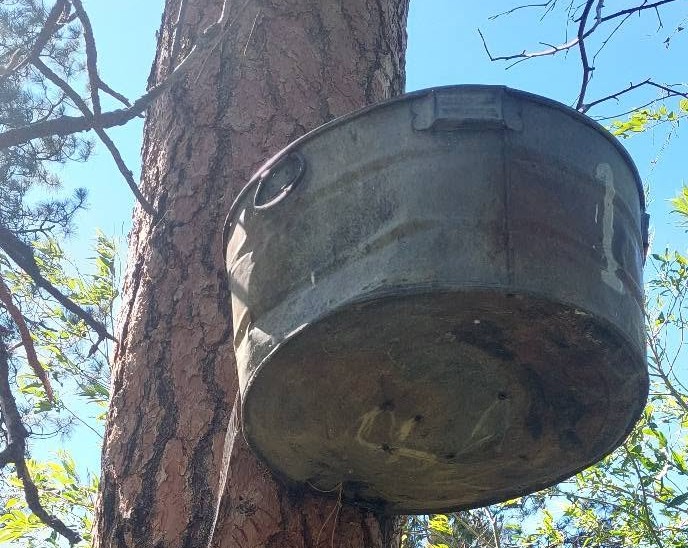
Peachland resident Yvette Trombley was out exploring around Vaseux Lake just south of Okanagan Falls last week when she spotted something unusual stuck high up in the trees, two old washtubs with numbers on them.
Not knowing what the tubs were for, Trombley posted photos of them to social media asking for answers. Guesses from the public were all over the place including race markers for rowing, parts of a pinecone study and baths for monkeys.
Al Peatt is the executive director of the Southern Interior Land Trust and a former wildlife biologist with the Ministry of Environment.
In an email to iNFOnews.ca, he confirmed the tubs were once used as artificial nests for Canada geese in past decades. The geese typically nest on the ground near water sources but also successfully nest in higher places.
“Wildlife managers preferred elevated nesting platforms like tubs for geese because it got the birds above any potential flooding issues and was more defensible against predators that otherwise would harass the goose sitting on eggs,” Peatt said. “Fewer flooded nests and less nest predation meant more goose production.”
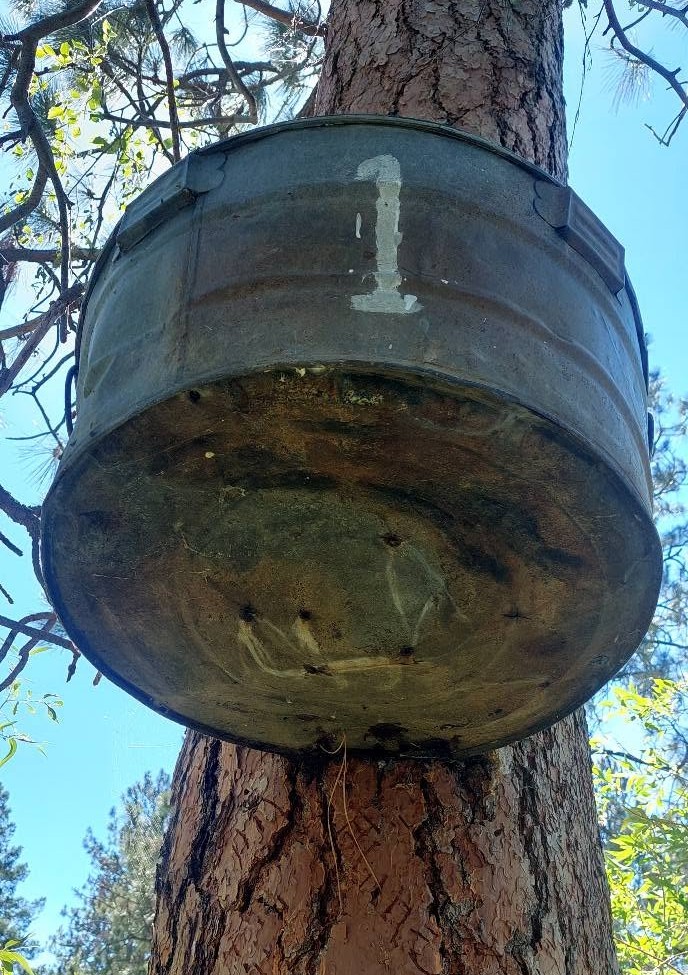
The goose tubs at Vaseux Lake were already installed by 1981 when Peatt transferred to the Fish and Wildlife Branch in Penticton. He doesn’t know their exact history, but suspects there were installed by the South Okanagan Sportsmen Association which was really active in wildlife management projects in the 1970s and 1980s.
Similarly, in 1958, the Enderby Fish and Game Club made efforts to protect local Canada geese by installing and maintaining numerous elevated goose tubs mainly in the Ashton Creek area along the Shuswap River for a couple of decades.
According to a 2023 social media post by the Enderby & District Museum, in 1976 a Canada goose mounted on a rock was erected by the Enderby Rock Hounds and Natural History Group in Barnes Park to commemorate the efforts made to encourage Canada geese to nest in tubs in the area. The rock group disbanded and the monument was removed in 1995 after public work crews accidentally broke it. Pieces from the rock the goose monument are on display at the local museum.
In 1989, Peatt wrote a detailed report on the early history of geese in the valley and the environmental and human causes for the increase in their numbers. At the time of the report, there were roughly 5,000 resident geese in the Okanagan Valley.
According to literature he extracted from “Birds of the Okanagan Valley, British Columbia”, Canada geese populations began with a small migrant group at the south end of the valley.
They were concentrated in prime habitat that included Hatfield Island, a privately-owned island located in the southern end of Vaseux Lake still known today as a nesting area for more than 200 Canada geese. In the mid 1960s, more geese started overwintering and the breeding population grew and spread northward.
It’s suspected the rapid population increase was due to environmental change in the valley in the 1950s when a dike was built on the Okanagan River channel and there was no more flooding of the valley lowlands south of Okanagan Lake. This meant fewer nests were being destroyed by flooding.
Agricultural development and advances in irrigation made lush green orchards and fields that were perfect for the geese. Parks, golf courses and beaches made for the tourism industry, mild winters and low threat from predation and hunting also supported their populations.
The iconic Canada geese are now considered by many as nuisance birds because of their large numbers and tendency to leave feces all over public parks and beaches. Every spring, members of the Okanagan Goose Management Committee addle some of the eggs, that is shake them or coat them with vegetable oil in order to kill the embryos to reduce goose populations.
Peatt said the goose tubs were not the reason for the huge populations we see today.
“Goose tubs were not the reason, except perhaps for some influence in the Enderby area which would have been in addition to the habitat changes happening there as well,” he said.
“I am not aware of any nesting data from the tubs, but Hatfield Island would have overshadowed any production a few tubs might have generated.”
News from © iNFOnews.ca, . All rights reserved.
This material may not be published, broadcast, rewritten or redistributed.

This site is protected by reCAPTCHA and the Google Privacy Policy and Terms of Service apply.
Want to share your thoughts, add context, or connect with others in your community?
You must be logged in to post a comment.