Elevate your local knowledge
Sign up for the iNFOnews newsletter today!
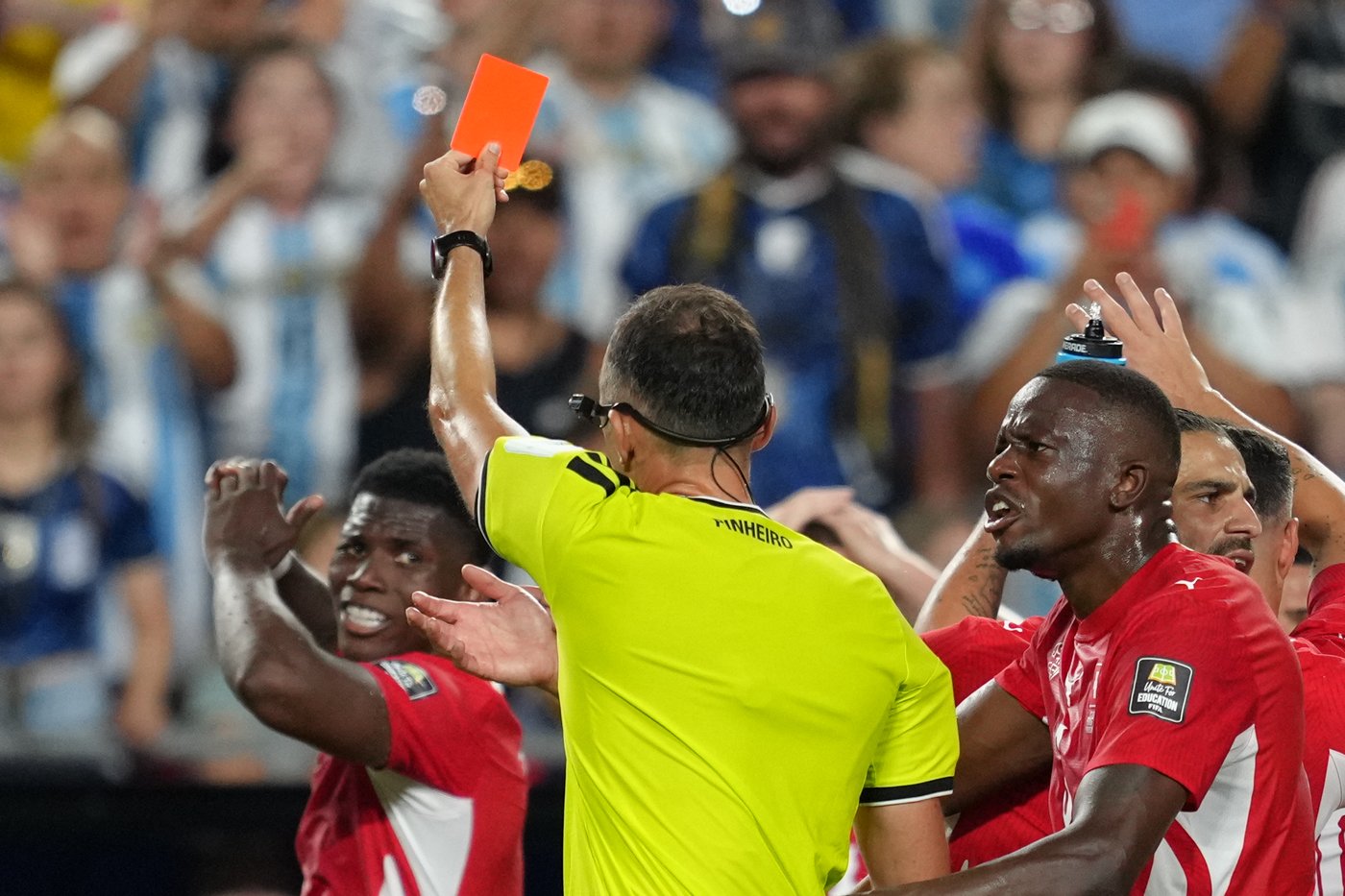
ATLANTA (AP) — It was another game-changing moment at the World Cup that had more to do with television replays in a room far away than a moment of brilliance on the field.
The sending off of Switzerland’s Breel Embolo in Saturday’s quarterfinal game against Argentina was the latest call that may have left fans scratching their heads, not least because of the confusing name of the newly implemented law that swung the match.
It is called the “mistaken identity” rule. Yet, technically, Embolo was not shown a second yellow card — resulting in a red — for a case of mistaken identity. It was because the referee Joao Pinheiro did not see in real time that the forward had simulated a foul under a challenge from Argentina’s Leandro Paredes.
Paredes was initially shown a yellow card, which is a key factor. Under FIFA rules, because Paredes was shown a card, the video assistant referee (VAR) can intervene and recommend that the onfield official reviews the sideline monitor.
After review the referee deemed Embolo to have committed a “clear simulation” and showed him a second yellow card and sent him off.
The rules state that the VAR can assist when the referee penalizes the “wrong team for an offense that results in a red or yellow card being shown to the wrong player.”
It was a pivotal point in the match, coming five minutes after Switzerland had made it 1-1. Argentina won 3-1 after extra time.
“The referee made the wrong decision,” Switzerland coach Murat Yakin said. “I know they will protect their referee but this rule destroyed our game today, and it’s very painful, and to be eliminated in that way hurts a lot.”
It is not the first time at this World Cup that teams have hit out against new rules or technology.
Germany infuriated by disallowed goal
Newly tightened regulations contributed to Germany’s shock elimination in the round of 32.
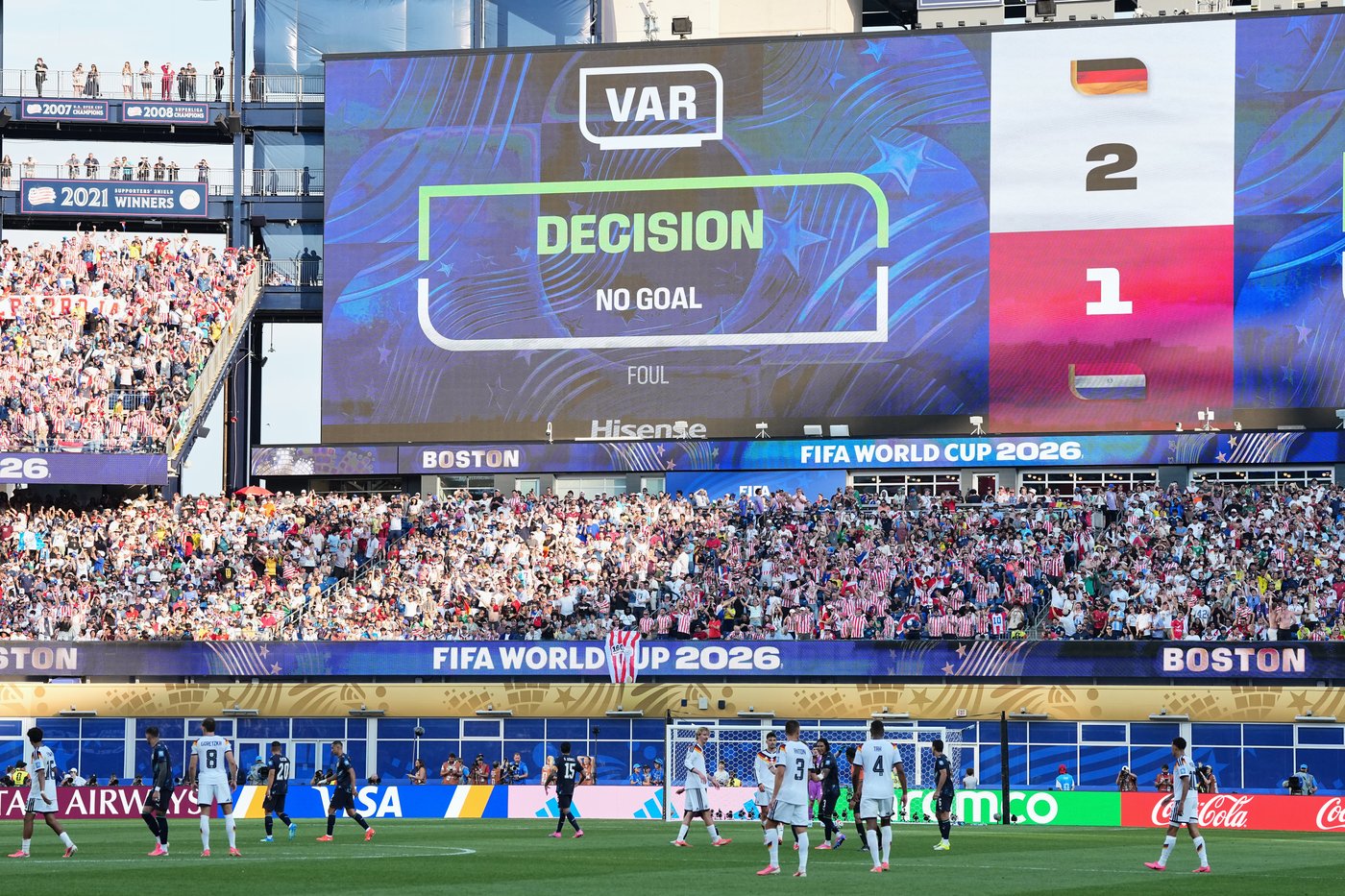
Defender Jonathan Tah’s potentially game-winning goal in extra time against Paraguay was ruled out after VAR review for a foul on goalkeeper Orlando Gill.
Replays showed Germany’s Waldemar Anton push Gill to the ground, but the minimal contact led to criticism of the decision. FIFA’s referees chief Pierluigi Collina said officials had been told to punish incidents when players try to block opponents and make no attempt to play the ball, especially where goalkeepers are concerned.
Germany went on to lose the game in a penalty shootout, with Tah firing a decisive spot kick over the bar.
Elimination could have a seismic effect on German soccer, with coach Julian Nagelsmann resigning and Jurgen Klopp expected to take over.
High tech ball costs Croatia
The words “connected ball technology” will likely haunt Luka Modric and Croatia for years to come.
The high-tech soccer ball fitted with “advanced sensors” used at this World Cup cost Croatia a dramatic late equalizer against Portugal in the round of 32.
Josko Gvardiol thought he’d scored in added time to make it 2-2, but the goal was ruled offside after VAR review because the in-ball sensors picked up the slightest of touches from Croatia’s Igor Mantanovic in the buildup that was undetectable to the naked eye or even video replays.
FIFA said the in-ball sensors, which capture data 500 times per second, were so finely tuned to be “capable of determining any slight contact … allowing officials an unprecedented level of data to make fast, accurate decisions.”
Croatia coach Zlatko Dalić, who has since stepped down, was not impressed.
“All these decisions take the joy out of football,” he said.
Egypt heartbroken against Argentina
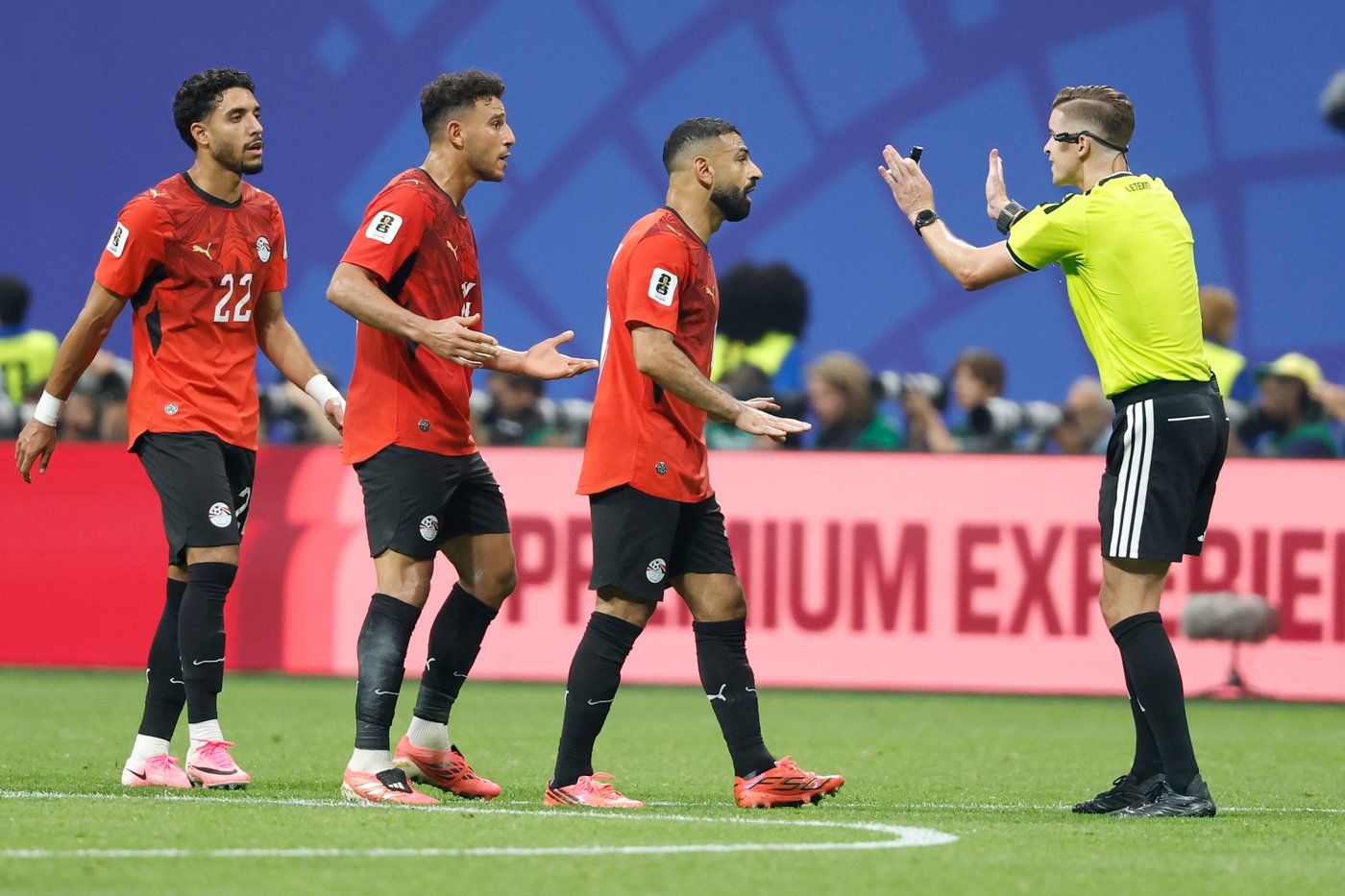
It was shaping up to be one of the great World Cup upsets. Egypt led 2-0 against defending champion Argentina in the round of 16 and might have been 3-0 up if not for VAR.
With the score at 1-0 in the second half, Egypt’s Mostafa Zico finished off a sweeping attack. But wild celebrations were cut short when a foul on Argentina’s Lisandro Martinez earlier in the move was confirmed on video review and the goal was disallowed.
Argentina staged a spectacular late comeback to win 3-2.
Egypt coach Hossam Hassan launched a furious tirade.
“We have suffered injustice,” he said.
The Egyptian soccer federation went further.
“Several key incidents raised serious concerns and left profound questions about the consistency and fairness of decisions that directly influenced the course of the game,” it said.
Questions were raised about the amount time between the foul on Martinez, which happened deep in Egypt’s half, and the goal at the other end of the field.
FIFA referees chief Collina responded to criticism to say there was “no defined limit regarding either the distance from goal or the amount of time between the incident and the goal.”
“Nobody can question the integrity of the FIFA World Cup match officials,” he added.
A double blow for Norway against England
The high tech sensor was called into action again as England beat Norway 2-1 in the quarterfinals.
Norway’s players and staff were adamant the ball hit a cable that suspends overhead cameras in the buildup to Jude Bellingham’s equalizing goal in the first half. If it had, play would have been stopped.
But FIFA insisted there was no contact, saying the sensor “showed no peak in the ‘heartbeat of the ball’ when in the air, and therefore no evidence that the ball touched the overhead wire.”
Norway also had a goal disallowed when the score was 1-1 after VAR spotted a foul by Erling Haaland on England’s Elliot Anderson. The infringement came before the corner was taken and, under new rules to try to limit fouls by attacking teams during corner routines, VAR is allowed to intervene regarding incidents that happen even before the ball is kicked.
___
James Robson is at https://x.com/jamesalanrobson
___
See more of AP’s World Cup coverage here

News from © The Associated Press, . All rights reserved.
This material may not be published, broadcast, rewritten or redistributed.

This site is protected by reCAPTCHA and the Google Privacy Policy and Terms of Service apply.
Want to share your thoughts, add context, or connect with others in your community?
You must be logged in to post a comment.