Elevate your local knowledge
Sign up for the iNFOnews newsletter today!
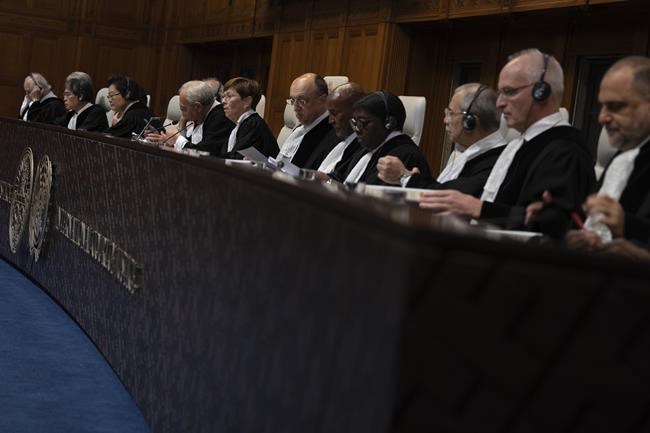
THE HAGUE, Netherlands (AP) — Lawyers for Armenia asked the top United Nations court on Monday to throw out a case filed by Azerbaijan over the Karabakh region that accuses Armenia of ethnic cleansing.
Azerbaijan launched proceedings at the International Court of Justice in 2021 in the case, less than a week after Armenia brought its own case against Azerbaijan stemming from a 2020 war over Karabakh that killed more than 6,600 people. Azerbaijan asked the court to throw out Armenia ’s case last week.
In the case brought by Azerbaijan, Armenia is contesting The Hague-based court’s jurisdiction. The case is based on the International Convention on the Elimination of All Forms of Racial Discrimination, or CERD, which Azerbaijan ratified in 1996. According to Armenia, most of the complaints date from the first Karabakh war, which ended two years prior.
“Azerbaijan cannot be allowed to sit on its alleged grievances under CERD for nearly 30 years, only to finally pursue them after many witnesses are long gone and the evidence has disappeared,” Yeghishe Kirakosyan, Armenia’s representative, told the court.
Karabakh is within the territory of Azerbaijan but was under control of ethnic Armenian forces backed by Armenia from 1994 until last year.
After longstanding tensions erupted in 2020, Azerbaijan gained control over parts of the region as well as some adjacent territories as part of a Russia-brokered ceasefire. In 2023, Azerbaijan waged a lightning military campaign in Karabakh that resulted in the vast majority of the region’s 120,000 residents fleeing.
During hearings in 2021, Azerbaijan told judges Armenia has sown the area with landmines and has refused to help with clearance efforts.
Armenia denies it engaged in racial discrimination and says Azerbaijan’s claims are false.
The court has twice ordered the pair to take steps to reduce tensions. In 2021, judges told Armenia to “prevent the incitement and promotion of racial hatred” targeting Azerbaijanis while ordering Azerbaijan to prevent the mistreatment of prisoners of war. In a second emergency order last year, the court ordered Azerbaijan to end a blockade and allow in humanitarian supplies.
The convention against racial discrimination has a clause allowing disputes to be resolved by the world court if bilateral negotiations fail to broker a settlement.
In December, the two sides agreed to begin negotiations on a peace treaty. However, many residents of Armenia’s border regions have resisted the demarcation effort, seeing it as Azerbaijan encroaching on areas they consider their own.
Armenia’s Prime Minister Nikol Pashinyan said last month that the Caucasus nation needs to define its border with Azerbaijan quickly to avoid a new round of hostilities.
News from © The Associated Press, . All rights reserved.
This material may not be published, broadcast, rewritten or redistributed.

This site is protected by reCAPTCHA and the Google Privacy Policy and Terms of Service apply.
Want to share your thoughts, add context, or connect with others in your community?
You must be logged in to post a comment.