Elevate your local knowledge
Sign up for the iNFOnews newsletter today!
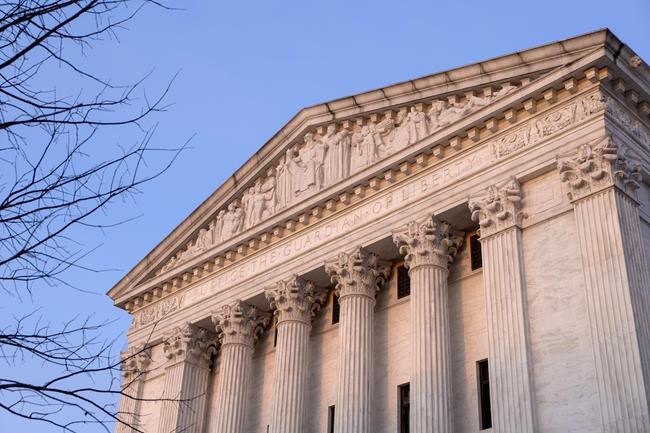
WASHINGTON (AP) — The Supreme Court on Tuesday refused to block a Texas law requiring pornographic websites to verify the age of their users.
The justices rejected an emergency appeal filed by the Free Speech Coalition, a trade association for the adult entertainment industry. The provision of House Bill 1181, signed into law by Gov. Greg Abbott, remains in effect even as the association’s full appeal is weighed by the Supreme Court.
There were no noted dissents from the court’s one-sentence order.
Similar age verification laws have passed in other states, including Arkansas, Indiana, Kansas, Louisiana, Mississippi, Montana, Oklahoma, Utah and Virginia.

The Texas law carries fines of up to $10,000 per violation that could be raised to up to $250,000 per violation by a minor.
Last year, a federal judge blocked the law’s age verification requirement and health warnings, finding that they likely violated the Constitution. But in March, a divided panel of the 5th U.S. Circuit Court of Appeals reversed the age verification ruling, although it upheld the health warnings ruling that adult sites can’t be forced to publish statements with which they disagree.
The health warnings, disputed by the industry, included that pornography is addictive, impairs mental development and increases the demand for prostitution, child exploitation and child sexual abuse images.
News from © The Associated Press, . All rights reserved.
This material may not be published, broadcast, rewritten or redistributed.

This site is protected by reCAPTCHA and the Google Privacy Policy and Terms of Service apply.
Want to share your thoughts, add context, or connect with others in your community?
You must be logged in to post a comment.