Elevate your local knowledge
Sign up for the iNFOnews newsletter today!

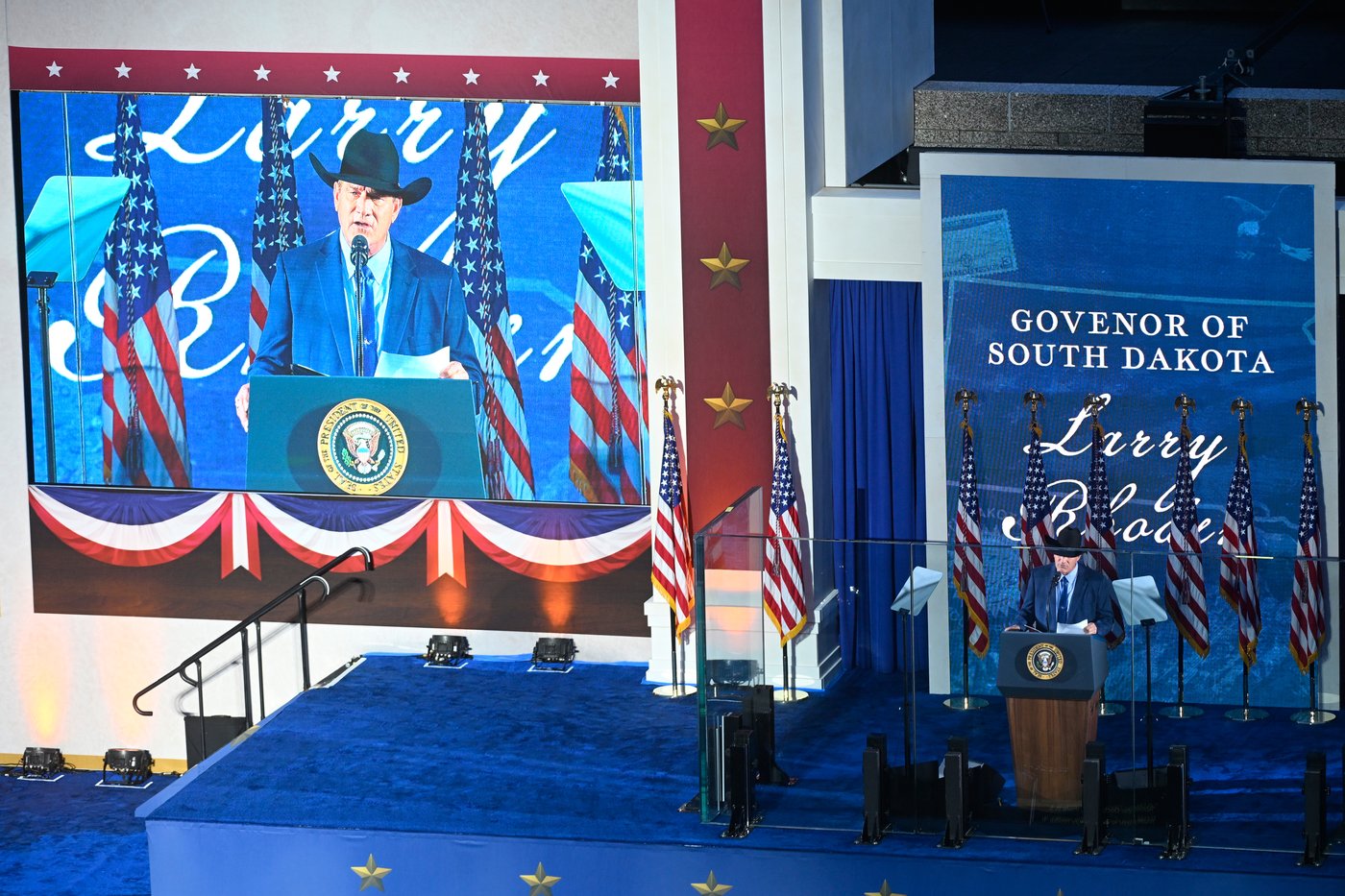
WASHINGTON (AP) — South Dakota Republicans will decide in a primary runoff Tuesday whether to nominate Gov. Larry Rhoden for a full term or to instead tap businessman Toby Doeden to represent the party on the ballot in November. The two were the top vote-getters in the June 2 primary, but neither candidate reached the 35% vote threshold needed to win the nomination outright.
The winner of the runoff will enter the general election against Democratic former state Sen. Dan Ahlers with a significant advantage in the reliably Republican state that hasn’t had a Democratic governor since the 1970s.
Rhoden was lieutenant governor when he assumed the top job in early 2025 after then-Gov. Kristi Noem stepped down to join President Donald Trump’s Cabinet. In addition to Rhoden and Doeden, the primary field included U.S. Rep. Dusty Johnson and state House Speaker Jon Hansen.
Doeden placed first in the primary with about 31% of the vote with a close three-way race for the second runoff slot. Rhoden received about 25% of the vote, followed by Johnson at 23% and Hansen at about 21%.
Two key counties to watch are on opposite ends of the state. Minnehaha County on the eastern border is home to Sioux Falls. Pennington County on the western border is home to Rapid City. Together, they are home to a third of the state’s registered Republicans and helped Doeden secure his first-place primary showing.
Doeden narrowly edged Johnson in Minnehaha County and had about a 7-point lead over second-place Rhoden in Pennington County. Doeden also carried most of the small, rural counties across eastern South Dakota.
Rhoden helped secure a runoff berth with his wins across central and northwestern South Dakota, including key leads in Meade, Lawrence and Hughes County, which includes Pierre, the state capital. The three counties combined are home to about 10% of the state’s registered Republicans.
Lincoln County in the suburbs south of Sioux Falls could be another key battleground in the runoff. It’s the state’s third-most populous county and has the highest population of any county where neither Doeden nor Rhoden placed first or second.
Here are some of the key facts about the election and data points the AP Decision Team will monitor as the votes are tallied:
When do polls close?
Polls close at 7 p.m. local time, which is 8 p.m. and 9 p.m. ET. Polls in most of the state are in Central time and close at 8 p.m. ET, but some polls are in Mountain time and close at 9 p.m. ET.
What’s on the ballot?
The Associated Press will provide vote results and declare winners in the Republican primary runoff for governor.
Who gets to vote?
Only registered Republicans may vote in the Republican primary runoff for governor. Republicans who did not vote in the June 2 state primary may still vote in the runoff.
How many voters are there?
As of June 1, there were about 676,000 registered voters in South Dakota, including about 322,000 active registered Republicans, about 137,000 active registered Democrats, about 157,000 active independent voters or those not affiliated with any political party, and about 57,000 inactive voters not identifiable by party. The rest were affiliated with other parties.
How many people actually vote?
About 136,000 votes were cast in the Republican gubernatorial primary on June 2.
How much of the vote is cast early or by absentee ballot?
About 19% of the 2024 primary vote and about 20% of the 2022 primary vote was cast before primary day.
When are early and absentee votes released?
In South Dakota, counties tend to release results from all voting methods together over the course of the night. Roughly four out of every five counties in South Dakota release at least some in-person Election Day results in their first vote updates, along with results from mail voting and early in-person voting.
How long does vote-counting usually take?
In the June 2 Republican primary for governor, the AP first reported results at 9:01 p.m. ET, or one minute after polls closed. About half the total vote had been counted by 10:57 p.m. ET. The last vote update of the night was at 3:36 a.m. ET with almost every vote counted.
When will the AP declare a winner?
The AP does not make projections and will declare a winner only when it’s determined there is no scenario that would allow a trailing candidate to close the gap. If a race has not been called, the AP will continue to cover any newsworthy developments, such as candidate concessions or declarations of victory. In doing so, the AP will make clear that it has not yet declared a winner and explain why.
How do recounts work?
Recounts in South Dakota are automatic only in cases of tie votes. Losing candidates for statewide office may request a recount if the vote margin is 0.25% or less of the total votes cast. The AP may declare a winner in a race that is subject to a recount if it can determine the lead is too large for a recount or legal challenge to change the outcome.
Are we there yet?
As of Tuesday, there will be 98 days until the 2026 midterm elections.
___
Follow the AP’s coverage of the 2026 election at https://apnews.com/projects/elections-2026/.

News from © The Associated Press, . All rights reserved.
This material may not be published, broadcast, rewritten or redistributed.

This site is protected by reCAPTCHA and the Google Privacy Policy and Terms of Service apply.
Want to share your thoughts, add context, or connect with others in your community?
You must be logged in to post a comment.