Elevate your local knowledge
Sign up for the iNFOnews newsletter today!
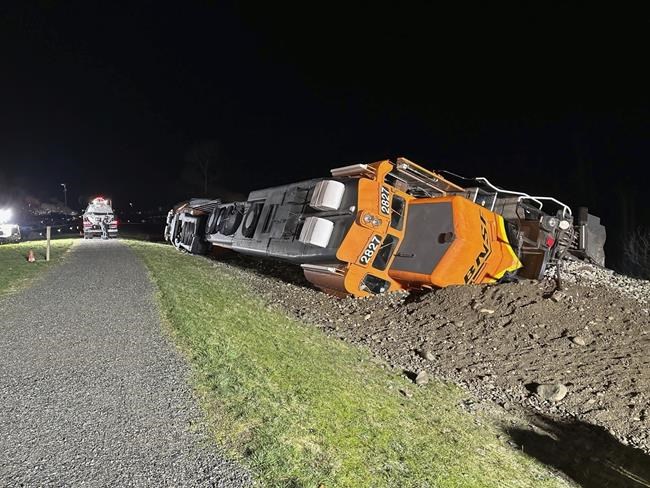
SEATTLE (AP) — BNSF Railway must pay nearly $400 million to a Native American tribe in Washington state, a federal judge ordered Monday after finding that the company intentionally trespassed when it repeatedly ran 100-car trains carrying crude oil across the tribe’s reservation.
U.S. District Judge Robert Lasnik initially ruled last year that the the railway deliberately violated the terms of a 1991 easement with the Swinomish Tribe north of Seattle that allows trains to carry no more than 25 cars per day. The judge held a trial earlier this month to determine how much in profits BNSF made through trespassing and how much it should be required to disgorge.
The tribe sued in 2015 after BNSF dramatically increased, without the tribe’s consent, the number of cars it was running across the reservation so that it could ship crude oil from the Bakken Formation in and around North Dakota to a nearby facility. The route crosses sensitive marine ecosystems along the coast, over water that connects with the Salish Sea, where the tribe has treaty-protected rights to fish.
Bakken oil is easier to refine into the fuels sold at the gas pump and ignites more easily. After train cars carrying Bakken crude oil exploded in Alabama, North Dakota and Quebec, a federal agency warned in 2014 that the oil has a higher degree of volatility than other crudes in the U.S.
News from © The Associated Press, . All rights reserved.
This material may not be published, broadcast, rewritten or redistributed.

This site is protected by reCAPTCHA and the Google Privacy Policy and Terms of Service apply.
Want to share your thoughts, add context, or connect with others in your community?
You must be logged in to post a comment.