Elevate your local knowledge
Sign up for the iNFOnews newsletter today!
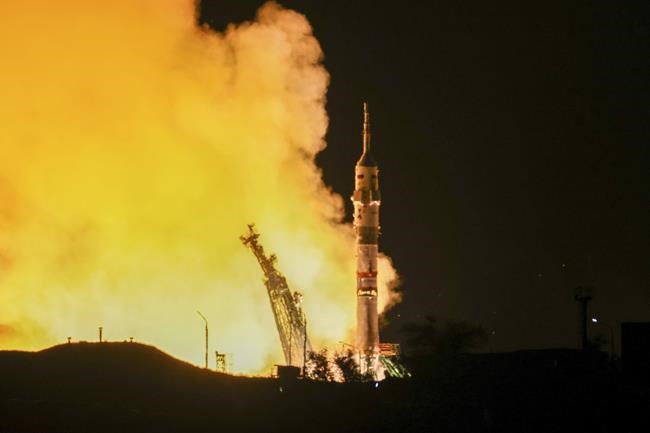
MOSCOW (AP) — A Soyuz spacecraft carrying two Russians and an American docked at the International Space Station on Wednesday, a little more than three hours after its launch.
The capsule atop a towering rocket set off from a Russian launch facility in Baikonur, Kazakhstan, and docked with the space station after two orbits of the Earth, a fast trip compared with some that have lasted for days.
The crew already aboard the station were performing a lengthy series of system checks before those in the capsule can enter.
The mission commander is Alexei Ovchinin, with Russian compatriot Ivan Vagner and American Donald Pettit in the crew.
The launch took place without obvious problems and the Soyuz entered orbit eight minutes after liftoff, a relief for Russian space authorities after an automated safety system halted a launch in March because of a voltage drop in the power system.
On the space station, Pettit, Vagner and Ovchinin will join NASA’s Tracy Dyson, Mike Barratt, Matthew Dominick, Jeanette Epps, Butch Wilmore and Suni Williams, and Russians Nikolai Chub, Alexander Grebenkin and Oleg Kononenko.
Wilmore and Williams have remained on the station long past their scheduled return to Earth. They arrived in June as the first crew of Boeing’s new Starliner capsule. But their trip to the orbiting laboratory was marred by thruster troubles and helium leaks, and NASA decided it was too risky to return them on Starliner.
The two astronauts will ride home with SpaceX next year.
News from © The Associated Press, . All rights reserved.
This material may not be published, broadcast, rewritten or redistributed.

This site is protected by reCAPTCHA and the Google Privacy Policy and Terms of Service apply.
Want to share your thoughts, add context, or connect with others in your community?
You must be logged in to post a comment.