Elevate your local knowledge
Sign up for the iNFOnews newsletter today!
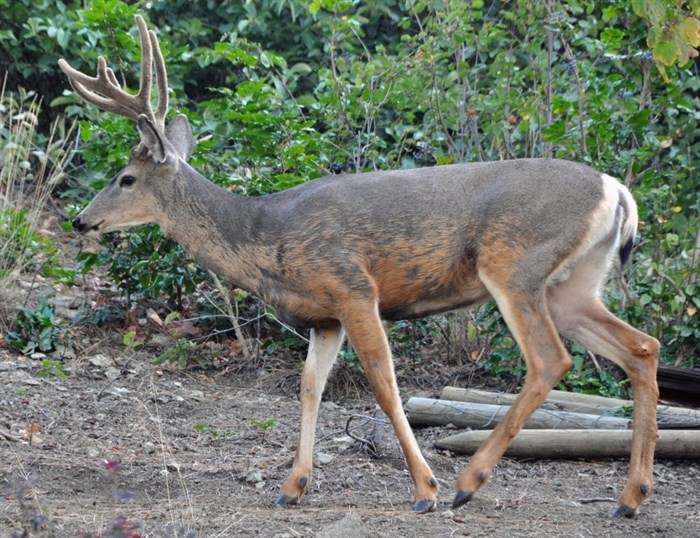
A mule deer buck wandering around the Aberdeen neighbourhood in Kamloops is covered with festering bumps, and some residents are concerned about its health.
“I’ve never seen this before and it made me wonder what the heck it is and if it’s going to affect anything else,” said Kamloops resident Bethalina Bethesda who spotted the buck at the end of July.
She immediately reported it to the BC Conservation Service but hasn’t received a response yet.
She posted photo of the animal in a neighbourhood Facebook page, Aug. 1.
“I wanted anyone who spots this buck to report him as well, he looks really infected,” she said.
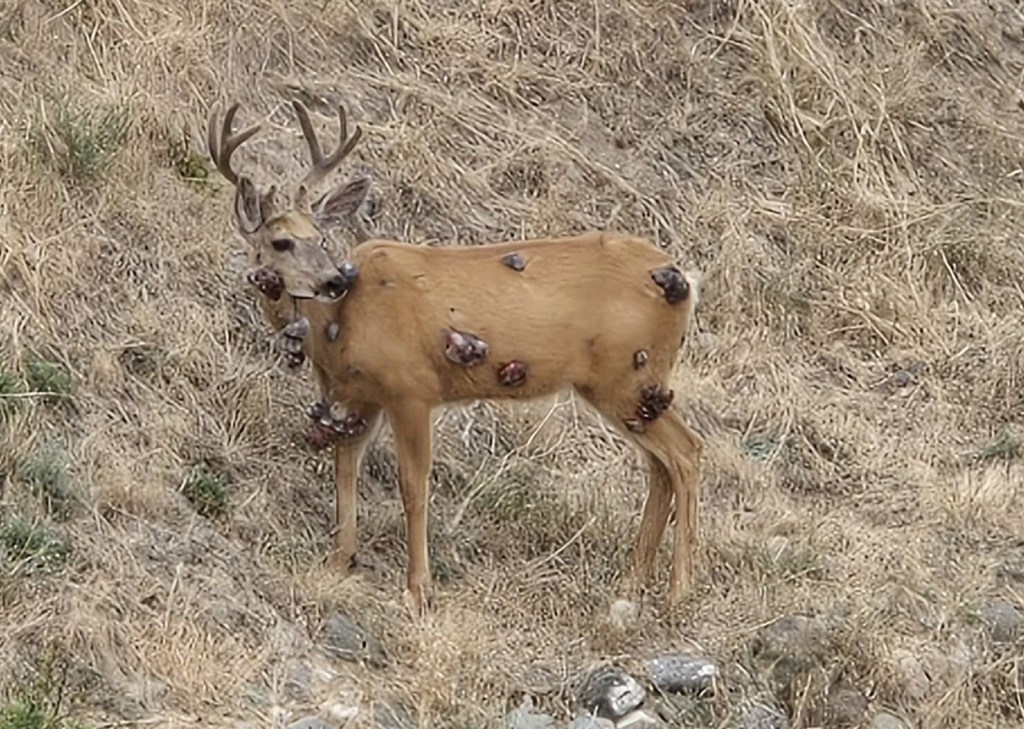
“All the hunters I showed the photo to were surprised and disgusted, it’s something they’ve never seen before.”
Other residents expressed concern for the deer, sharing the locations of where they spotted it on the page.
Gareth Dunn’s security camera captured the animal trotting across his lawn.
He told iNFOnews.ca the lump covered deer has been around the neighbourhood for a couple of months.
Despite the alarming appearance of the condition, it isn’t as dangerous as it looks.
iNFOnews.ca sent Bethesda’s photograph to the Ministry of Water, Land and Resource Stewardship and received an emailed response stating the growths are called papillomas, which are hairless growths like warts, which are caused by a virus and they don’t pose a risk to other deer, people or pets if the infected animal is otherwise healthy.
According to a report from the University of British Columbia, the papillomas are non-cancerous tumours caused by the papillomavirus group of viruses.
The papillomas have been found in at least 50 mammal species around the world.
In BC, the condition most commonly affects moose, but is occasionally seen in white-tailed, black-tailed and mule deer.
The animals can be covered with a few to many of the lesions that range in size from a couple of millimetres to 10 centimetres, and vary in colouration and texture.
While it is not an immediate concern for animals in good body condition, like the mule deer in Kamloops, the condition can debilitate an animal if the tumours compromise its vision or ability to eat.
The meat of infected animals can be eaten safely by humans and pets as long as the infected parts are trimmed off.
The papillomavirus is not transmissible to humans, but the tissue inside and around the lesions can have other bacterial infections.
“The deer looks healthy which is great,” Bethesda said. “I do feel bad for it though. It could’ve had this for a long time.”
News from © iNFOnews.ca, . All rights reserved.
This material may not be published, broadcast, rewritten or redistributed.

This site is protected by reCAPTCHA and the Google Privacy Policy and Terms of Service apply.
Want to share your thoughts, add context, or connect with others in your community?
You must be logged in to post a comment.