Elevate your local knowledge
Sign up for the iNFOnews newsletter today!
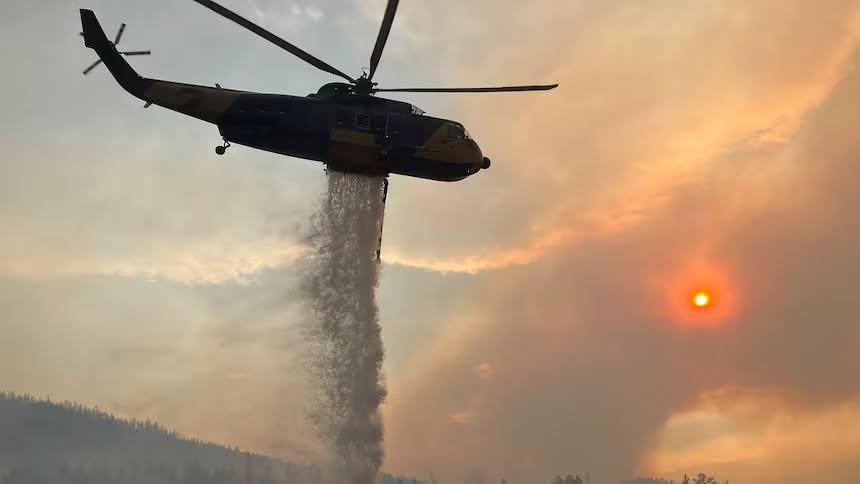
The ban prohibiting off-road vehicles from the backcountry is missing the mark when it comes to preventing human-caused wildfires, says one BC conservation group.
BC Wildlife Federation executive director Jesse Zeman told iNFOnews.ca that a complete ban of people and all vehicles from the backcountry is what is needed in the parts of the province that are a tinderbox.
“If the things that are going to cause wildfires are campfires and arsonists, having an ATV ban does not deal with those,” Zeman said. “If the intention is to reduce the number of wildfires, you’re going to have to remove everybody (from the backcountry).”
Statistics from BC Wildfire Service show that human-caused wildfires are more likely to be caused by open burning and campfires, 8% and 6.5%, respectively. A 10-year average found that arson counted for 3.8% of wildfires, the same figure as vehicles.
Banning off-road vehicles doesn’t prevent people from driving into the backcountry. While open burning and campfires are prohibited, allowing people access to the backcountry means there’s the potential for fires to still happen.
Zeman said that prohibiting ATVs and off-road vehicles doesn’t change that outcome.
“So our view on this is let’s use evidence to inform regulations and policy,” he said.
“Everybody is super anxious… people are losing their homes… if we need to keep people out of the backcountry for a couple of weeks and that’s what we do,” Zeman said. “But keeping people out means people don’t go in, and that means everybody.”
Conservative MLA for Salmon Arm-Shuswap David Williams said that in areas of extreme fire danger stiffer restrictions should be in place.
“It should be no motorized vehicles,” Williams said. “Anything that there would be a chance of either having a spark or ignition… and that includes e-bikes.”
Williams said in areas of extreme conditions we have to be proactive in preventing fires.
“I don’t believe in heavy-handedness at government, I do believe in autonomy for people… but there is also common sense,” he said.
The province’s ban on off-road vehicle use for recreational purposes came in August 10, but one off-road group was advising its members not to venture into the backcountry almost a week earlier.
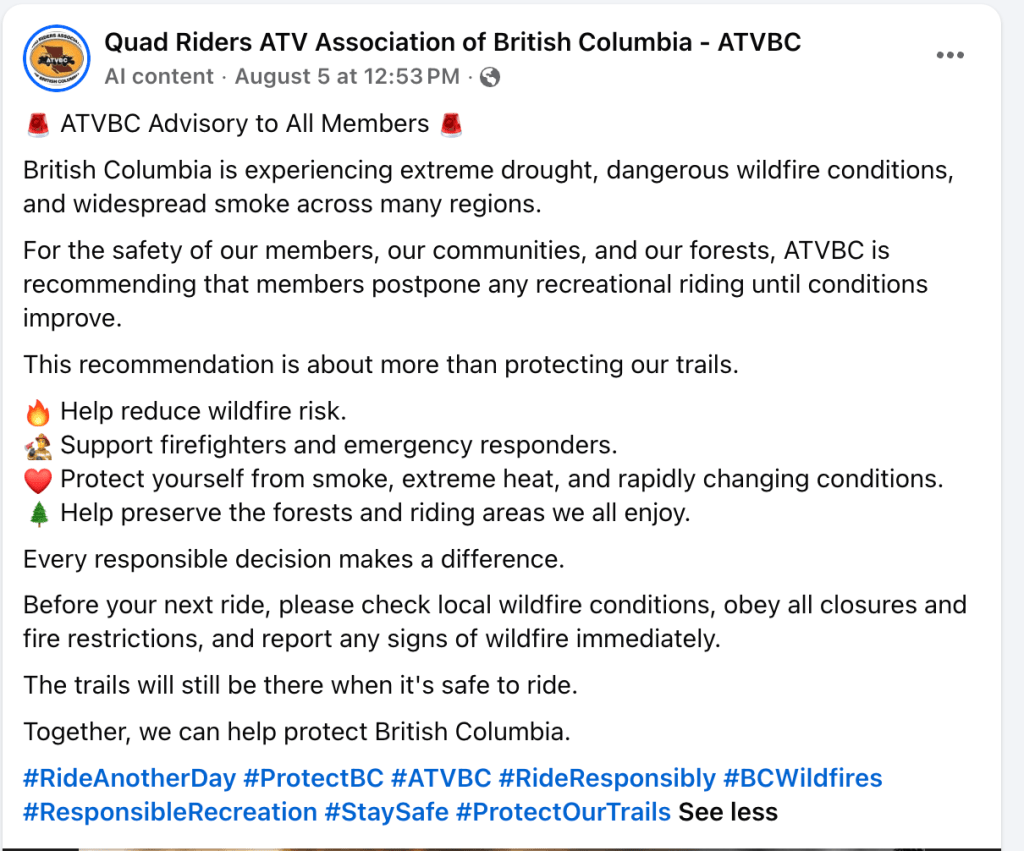
On Aug. 5, the Quad Riders ATV Association of BC put out its recommendation that members postpone any recreational riding until conditions improved.
“Every responsible decision makes a difference,” the group said on social media. “The trails will still be there when it’s safe to ride.”
At a provincial government press conference, Aug. 11, BC Wildfire Service director Cliff Chapman defended the off-road vehicle ban, explaining that restrictions are brought in gradually, starting with open burning and moving to campfires and so on.
“We don’t take these decisions lightly, but we do put them in place for a reason,” Chapman said.
iNFOnews.ca wanted to ask why the government didn’t impose a ban on all vehicles and people, but we weren’t selected to ask a question during the press conference.
UBC Okanagan wildfire scientist Dr. Jen Baron said she understands why the government’s restriction only goes so far.
“Backcountry bans are incredibly unpopular… the government generally would lean away from imposing a backcountry ban unless it is absolutely necessary because it also is going to cause a lot of anger and potentially further degrade trust in government officials,” Dr. Baron said.
She said declines in government trust, especially following the COVID-19 pandemic, mean restrictions like the off-road vehicle ban only come in when they’re absolutely necessary.
And placing restrictions on access to the backcountry doesn’t happen very often.
Restrictions on the backcountry were put in place during the 2017 wildfire season, with a previous ban in 2003.
In 2025, the Nova Scotia government banned hiking and the use of vehicles in the backcountry. It was the fourth time in almost 25 years that Nova Scotia had implemented a ban.
However, if the BC government wants to put restrictions in place its very easy for it to do.
“The government absolutely has several routes by which they could ban all types of vehicles, by which they could ban all people… from going into the back country,” BC lawyer Kyla Lee told iNFOnews.ca.
The provincial state of emergency gives the government the power to impose travel bans or area restrictions, but even under the BC Wildfire Act the government could do the same.
“This is the same legislation they rely on for the campfire bans and the open fire bans,” Lee said. “They can use that to ban everybody if they really wanted to.”
Lee said bringing in restrictions after declaring a state of emergency gives the government more latitude than if somebody were to challenge an outright ban brought in under the Wildfire Act.
News from © iNFOnews.ca, . All rights reserved.
This material may not be published, broadcast, rewritten or redistributed.

This site is protected by reCAPTCHA and the Google Privacy Policy and Terms of Service apply.
Want to share your thoughts, add context, or connect with others in your community?
You must be logged in to post a comment.