Elevate your local knowledge
Sign up for the iNFOnews newsletter today!
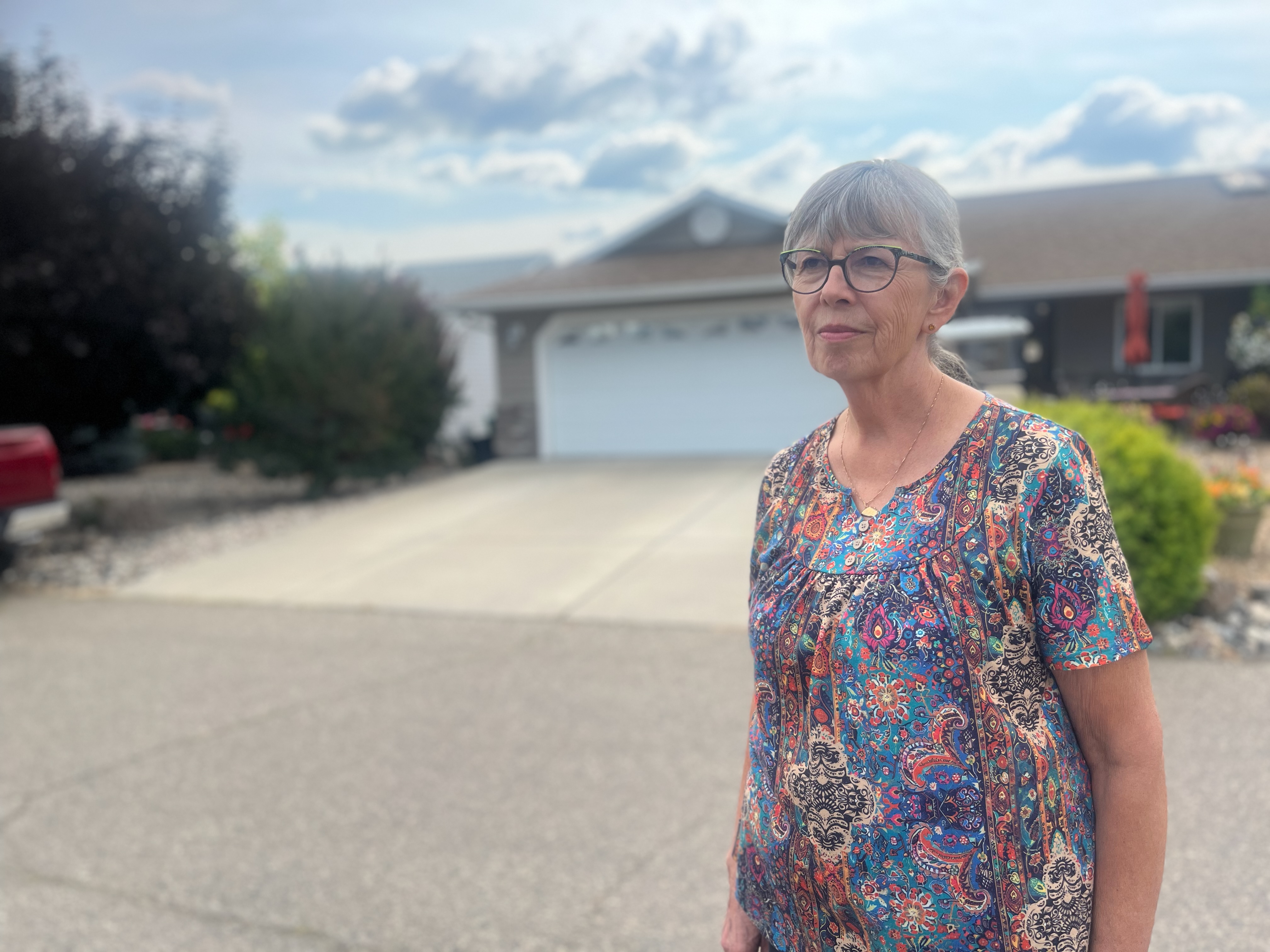
Denise Harper fled as flames rose on the hills surrounding her North Okanagan home last week, but now she’s back safe and sound in her home she feels a pang of guilt.
“Everyone is back and everyone is expressing the same emotion,” Harper said. “They’re grateful to be home, but many are tearful in sympathy to the 230 (homes lost).”
She says she’s feeling survivor’s guilt.
“Even while we were evacuated, people didn’t want to complain about their situation because they knew they had someplace to go back to,” Harper said.
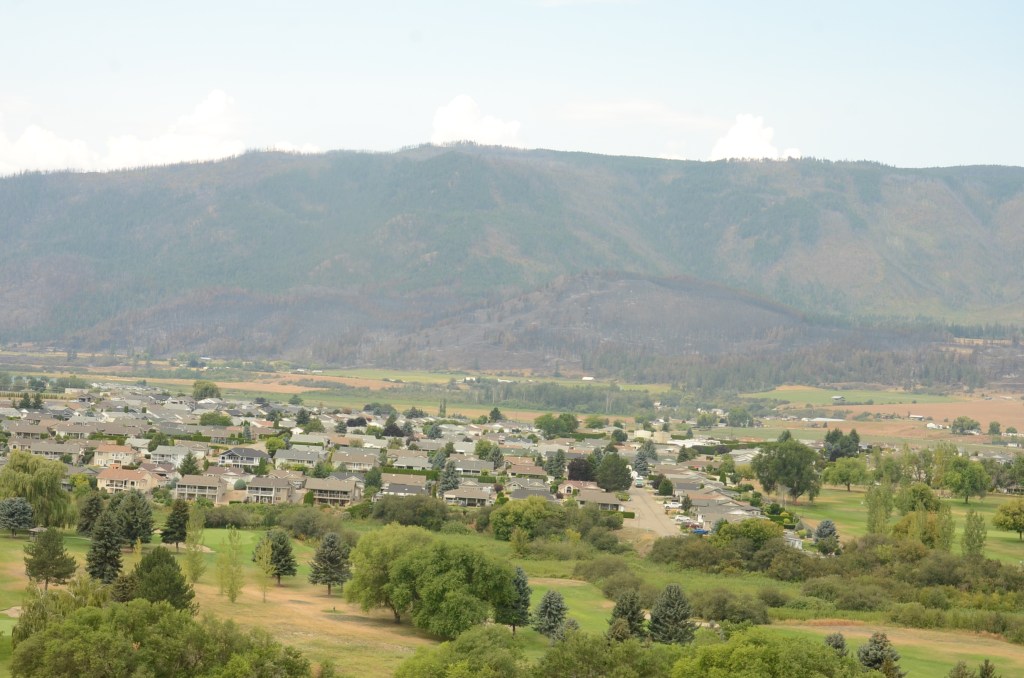
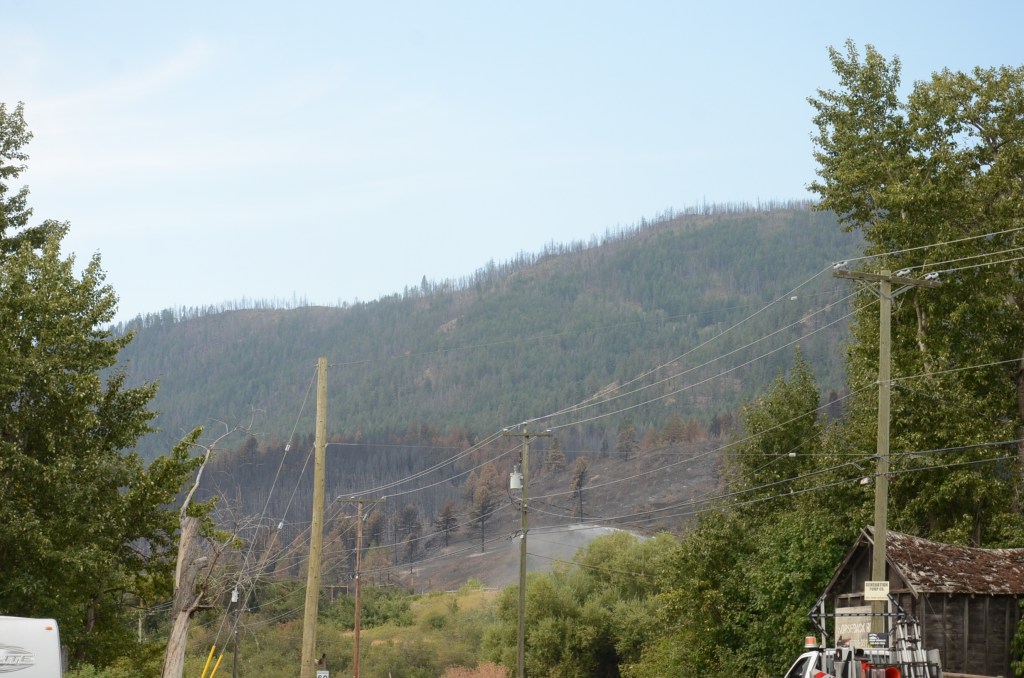
Harper and her husband hooked up their travel trailer and fled the small community of Desert Cove on the periphery of the Okanagan Indian Band. As the crow flies, the flames were roughly a kilometre away and the hillside is now brown after being scorched by the Bradley Creek wildfire.
They camped out at the evacuation centre in the parking lot of Kal Tire Place in Vernon, where they met a lot of people who had lost everything.
“So we just felt a huge sense of gratitude,” Harper said.
One woman who had lost everything sticks out in her memory.
“She was just vibrating. Her hands were shaking,” Harper said. “She was… in a state of shock.”
The experience was heartbreaking.
Harper is one of only a few evacuees who have been allowed back after the Bradley Creek Wildfire broke out July 31. The fire grew to 2,852 hectares before fire crews got a handle on it. It’s now classified as being held, but most people are still out of their homes.
Harper’s neighbour Lory Penner was out for the day when the evacuation order came through. She called her kids to come and get her dogs, knowing she might not get back in time before the area was closed off.
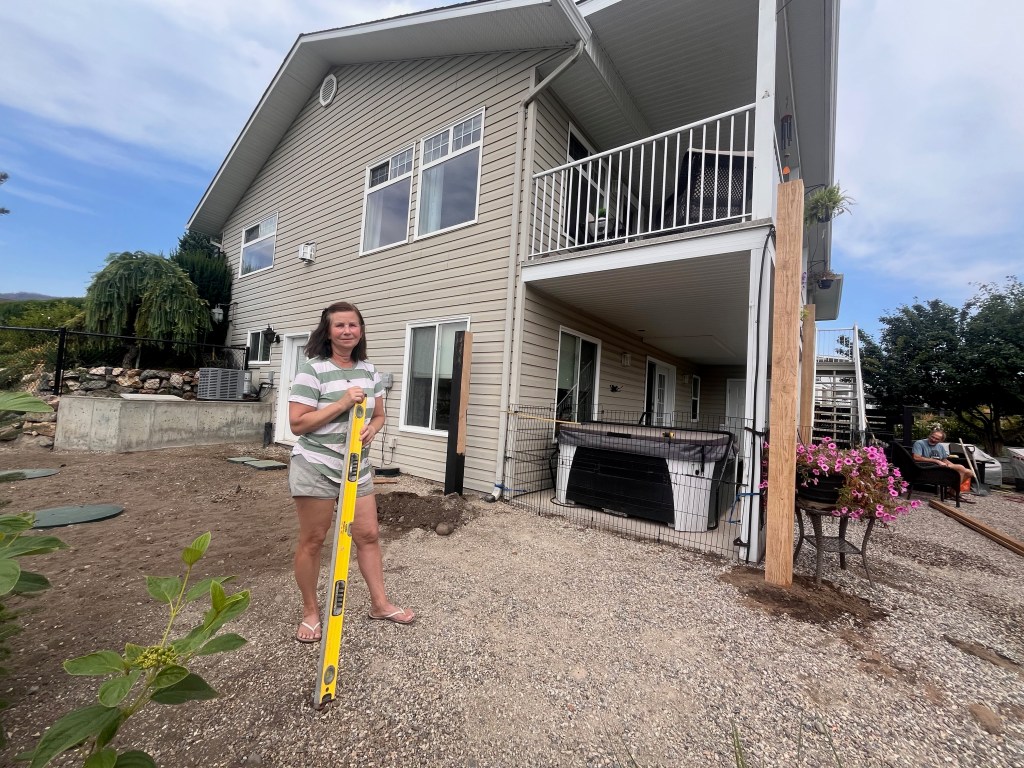
By the time her kids safely retrieved her dogs, trees on the hills were candling in flame.
“If the wind had turned this direction we probably wouldn’t be here,” she said.
Penner and her husband stayed at their kids’ place in SilverStar resort and babysat their grandchildren.
“We had one pair of clothes for a week,” she says, while reiterating, “We were lucky.”
Like everyone iNFOnews.ca spoke to, she’s very happy to still have a home and to be back in it.
“I don’t think anybody should feel guilty about anything, but I do feel bad,” she said. “I do feel horribly bad for the people who lost homes.”
Under a clear blue sky, Desert Cove resident Gary Elford sits on his front deck quietly reading the paper.
“We’re so glad to be back home,” Elford said.
Elford and his wife stayed with several friends over the week they were evacuated.
He said it was scary driving out and seeing the flames, but due to the direction of the wind, he wasn’t that worried about losing his home.
In the peace and quiet of his front yard, it’s hard to fathom that just a few days ago, the sky was thick with smoke, and hills around were on fire, and the place was deserted.
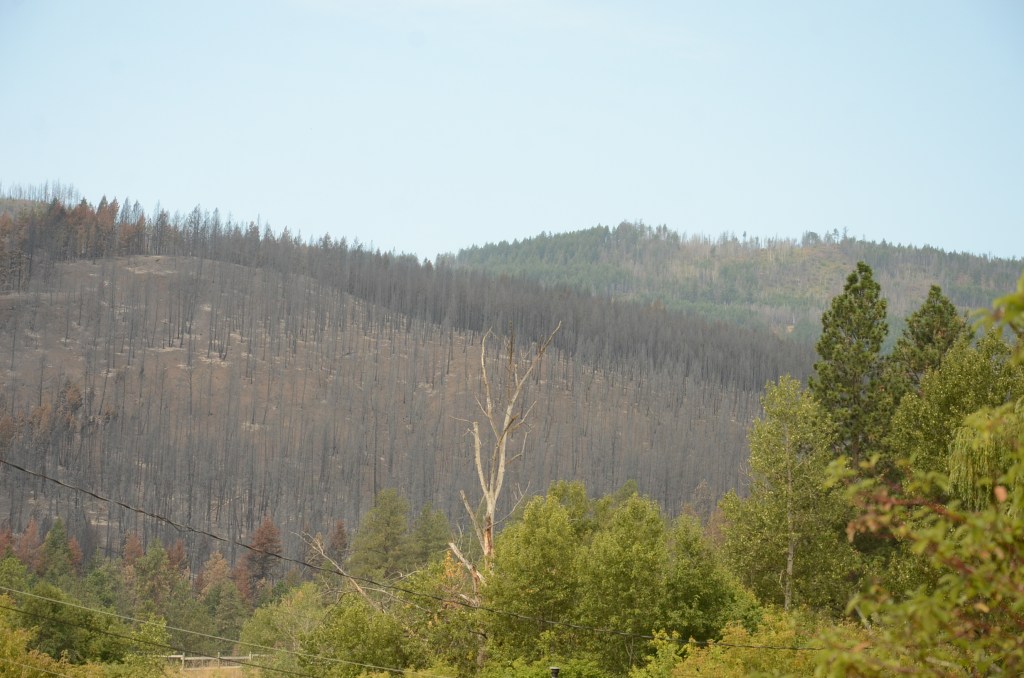
From her deck overlooking Desert Cove and the Okanagan Indian Band, Val Hicks points to the hills in the distance where the fire ripped through.
“The wind was fairly high that day… (the fire) just took off,” Hicks said, reminiscing about the 2021 White Rock Lake wildfire and how then the sky turned black at 5 p.m. in the afternoon. This fire didn’t seem as menacing, and she stood for a couple of hours watching the flames.
“I was more scared in (2021), this time it was, ‘Oh, shucks, here we go again,’” she said. “I know the drill, I have the to-go bag.”
She and her husband headed to the Lower Mainland. She’s glad her property is still standing, and they’re back home.
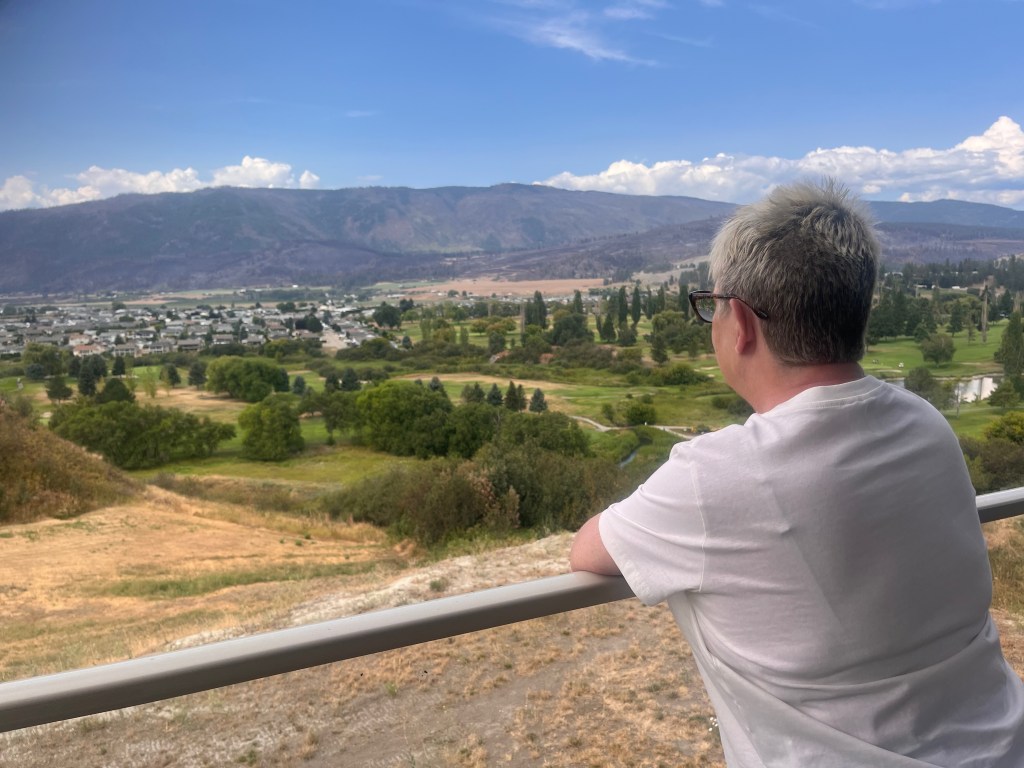
For Hicks, life is back to normal, only her view has changed. The once green hillside is scorched and burnt.
Harper thinks people in Desert Cove are kinder since the fire.
“People here are very kind, but I think that they’re just appreciating more than perhaps they did before what we have here in our lovely little community,” Harper said. “People desperately want to help.”
She said the wildfires are a harsh reminder of climate change.
“We know it’s a reality, and this could very well continue,” she said.
Penner shares a similar outlook.
“We live in a dry, hot valley and it’s going to get worse,” she said. “It’s just going to get worse.”
News from © iNFOnews.ca, . All rights reserved.
This material may not be published, broadcast, rewritten or redistributed.

This site is protected by reCAPTCHA and the Google Privacy Policy and Terms of Service apply.
Want to share your thoughts, add context, or connect with others in your community?
You must be logged in to post a comment.