Elevate your local knowledge
Sign up for the iNFOnews newsletter today!
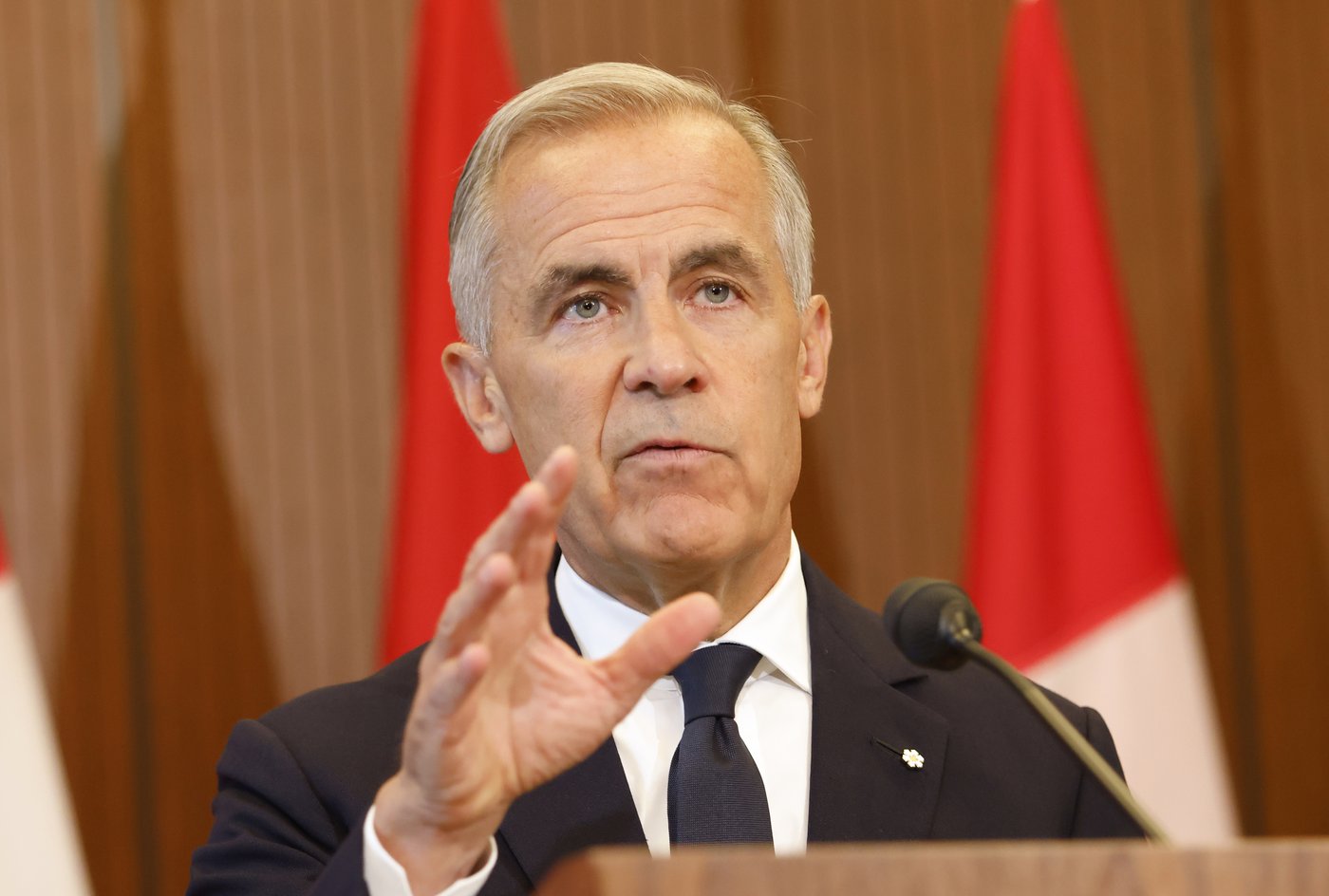
OTTAWA — The French language and Quebec and Canadian culture might be trade irritants for the Americans but in Canada they are fundamental rights, Prime Minister Mark Carney said Monday.
Trade talks with the United States broke down Friday, which meant new 50 per cent tariffs on a host of Canadian products took effect Saturday just after midnight.
Carney said among the reasons for the suspension of trade negotiations were demands from the U.S. that would have affected Canada’s ability to protect its culture, including the French language.
He said the U.S. put pressure on Canada to adjust its position on discoverability rules, which if implemented would affect what options Canadians see when they use streaming services. He said French-language labels were also on the list of American irritants.
U.S. Trade Representative Jamieson Greer said Monday that the issue in the trade talks wasn’t the French language, calling that a “funny fake story.”
Speaking in French, Carney reacted by saying he didn’t think it was funny at all noting an enormous gap between Canada and the U.S. when it comes to French language rights.
But Greer said the problem for the talks was Canadian rules requiring U.S. streaming companies to make financial contributions toward Canadian content.
As part of its work to implement the Online Streaming Act, the CRTC imposed Canadian content financial contributions for streamers like Netflix and began work on discoverability requirements.
But the Liberal government already moved in June to eliminate the financial contribution requirements. The U.S. had already previously identified the Online Streaming Act as a trade irritant.
After the broadcast regulator increased contributions to 15 per cent of Canadian revenues, Ottawa said it would issue a new policy directive to the CRTC and instead directly provide the industry with $600 million in annual funding.
The CRTC has not yet implemented specific rules around discoverability. In a May decision, the regulator said online streamers will have to take steps to ensure Canadian and Indigenous content is available and visible to audiences, but that the details of those requirements would be determined at a later time.
Scott Shortliffe, the CRTC’s vice-president of broadcasting, said at the time the regulator wouldn’t impose “a system-wide series of requirements now” but would instead work with platforms individually to see how they’re fulfilling the principles the CRTC set out.
While Quebec passed a provincial law also dealing with discoverability in 2025, specific rules won’t come into effect until regulations are developed. There are also questions around whether Quebec will be able to implement such a law, given that the federal government has jurisdiction over broadcasting policy.
The Canadian Association of Broadcasters said in an online post Monday that Ottawa’s decision to end the trade talks “underscores an important principle for our sector: no deal is better than a bad deal, especially when the stakes include Canada’s media sovereignty and the future of our domestic broadcasting system.”
The Coalition for the Diversity of Cultural Expressions, which represents organizations in sectors including film, television and music, praised the government’s “firm stance” in a press release Monday.
It urged Ottawa to change course on eliminating the financial contributions for streamers, saying the “cultural ecosystem relies on two inseparable pillars: the discoverability of Canadian content and its funding.”
The group said it “expects the government’s actions to reflect the line it has drawn. The forthcoming policy direction to the CRTC provides an opportunity to restore its full authority to implement the Online Streaming Act. The announced rollback can still be avoided.”
Earlier this month, dozens of Canadian cultural sector organizations already called on Carney not to eliminate streamers’ financial contributions.
That included the Canadian Media Producers Association, which said in an emailed statement Saturday the government “stood up for Canada by refusing to agree to an inequitable trade deal.”
“We look forward to working with the government to ensure that, whatever happens next, the Online Streaming Act, a key pillar of Canadian cultural and digital sovereignty, is defended.”
On Monday, the Bloc Québécois said the government should keep the streamers’ financial contributions in place, and also bring back the digital services tax on tech giants.
The digital services tax would have required companies such as Amazon, Google, Meta, Uber and Airbnb to pay a three-per-cent levy on revenue from Canadian users.
Canada went ahead with the tax after work at the Organization for Economic Co-operation and Development to set up a multilateral tax approach stalled. In 2025, Trump stopped trade talks because of the tax and Carney cancelled it just one day before the first payment was due.
Also on Monday, Finance Minister François-Philippe Champagne said Canada would not give up on the cultural exemption that is currently part of the Canada-United States-Mexico Agreement.
“We’re not going to compromise, we have never compromised,” he said. “I’ve been part of other trade negotiations. What we call the cultural exemption, everyone who has done trade agreements with Canada understands very much that this is a red line for Canada, because this is who we are as a nation.”
This report by The Canadian Press was first published Aug. 24, 2026.
News from © The Canadian Press, . All rights reserved.
This material may not be published, broadcast, rewritten or redistributed.

This site is protected by reCAPTCHA and the Google Privacy Policy and Terms of Service apply.
Want to share your thoughts, add context, or connect with others in your community?
You must be logged in to post a comment.