Elevate your local knowledge
Sign up for the iNFOnews newsletter today!
OTTAWA — Ottawa’s retaliatory tariffs on American goods — a response to the 50 per cent tariffs Washington hit Canada with last month — took effect just after midnight EDT on Tuesday.
Here’s the latest. All times eastern.
—
11 p.m.
U.S. Trade Representative Jamieson Greer says Washington’s decision to ramp up its trade war with Canada was a “natural consequence” of the latter’s “discriminatory treatment of crucial American exports.”
Greer says Canada walked away from a near-final trade deal and instead chose “senseless retaliation.”
He says U.S. President Donald Trump plans to defend the interests of American workers and exporters, and restore reciprocity in their bilateral trade relationships.
—
9:30 p.m.
The Canadian Chamber of Commerce says the United States is punishing Canada by punishing itself.
President and CEO Candace Laing calls the Trump administration’s latest trade escalations “a tornado of changes at once, intended to overwhelm.”
Laing says the U.S. government will need to justify to American businesses, workers and communities the price of them going it alone.
—
9:20 p.m.
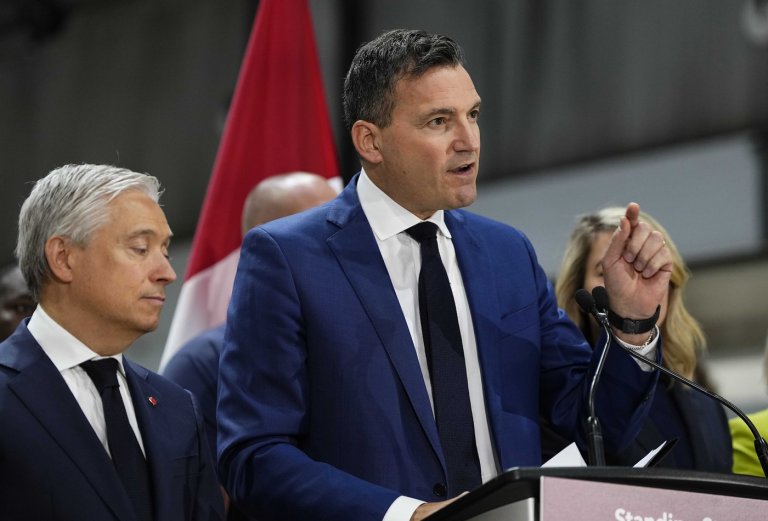
Canada-U.S. Trade Minister Dominic LeBlanc says Ottawa is assessing the latest U.S. tariff measures.
LeBlanc says he is in contact with U.S. Trade Representative Jamieson Greer.
He says that once the United States is ready to engage, the federal government will work in good faith toward a mutually beneficial trade relationship that respects Canadian sovereignty.
—
9:10 p.m.
The head of a U.S. trade group representing distillers is urging leaders in Canada and the United States to reach a deal that gets American alcohol back onto store shelves.
Chris Swonger, president and CEO of the Distilled Spirits Council of the United States, says American distillers have borne the brunt of the trade dispute for more than a year and a half.
Swonger says the removal of U.S. spirits from store shelves in most provinces has caused exports of those products to Canada to fall by more than 70 per cent.
Canadian alcohol was among the goods targeted by executive orders signed by U.S. President Donald Trump on Tuesday.
—
7:15 p.m.
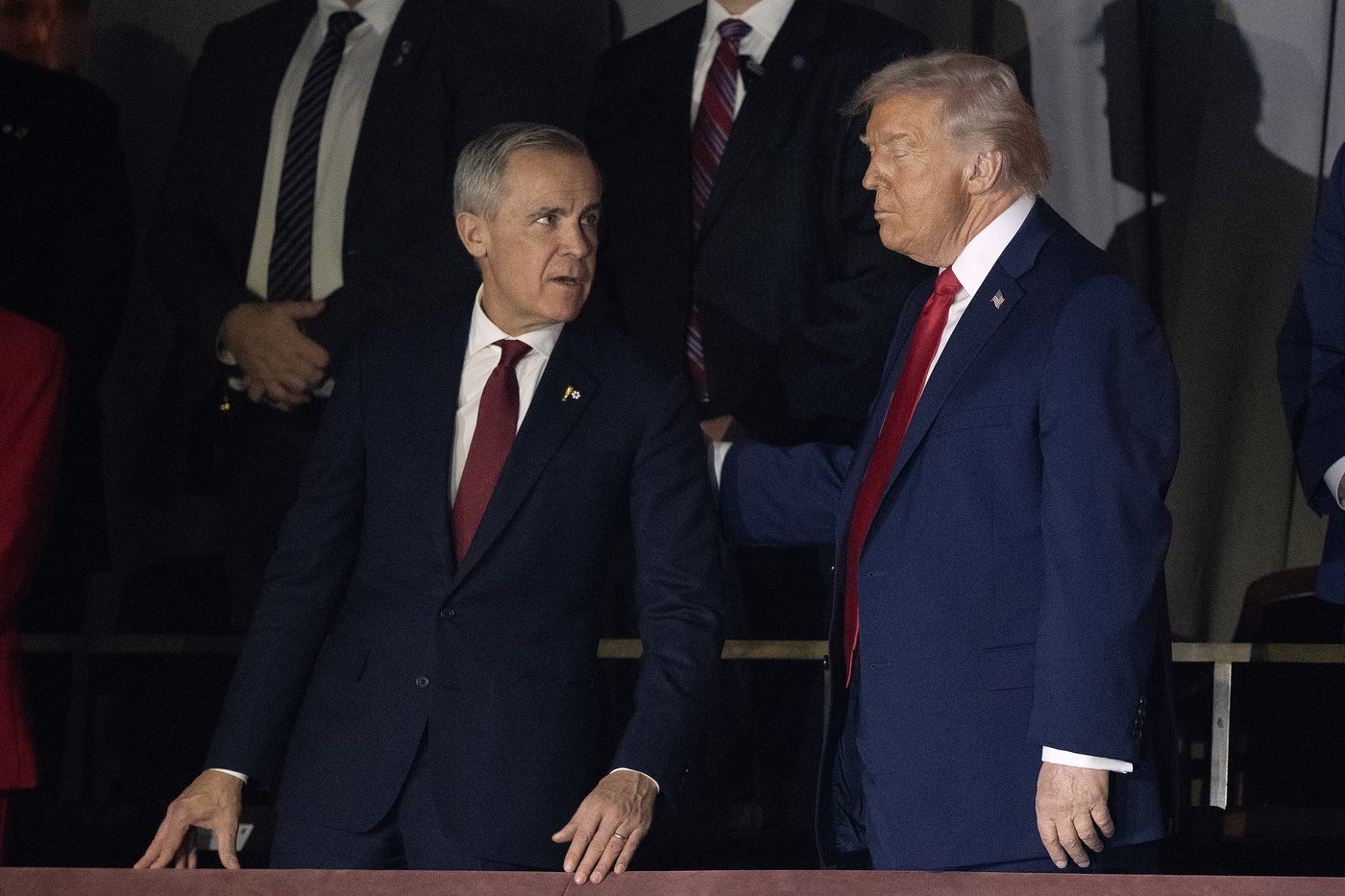
U.S. President Donald Trump signs executive orders ramping up retaliation after Canada imposed duties.
The orders, which take effect later this month, completely bar the import of certain Canadian goods, including motorcycles and alcoholic beverages.
—
5:45 p.m.
A statement from the Prime Minister’s Office says Prime Minister Mark Carney convened a group of business leaders from Quebec to discuss recent developments in the Canada-U.S. trade relationship.
It says he also shared the government’s priorities and invited attendees to offer the perspectives of their respective industries and businesses.
The statement says the companies that took part in today’s meeting include Saputo, Metro, Aluminerie Alouette, Desjardins Group and Innergex Renewable Energy.
—
5:25 p.m.
Alberta Premier Danielle Smith says her province will continue to work with the federal government to take care of the people and businesses hurt by tariffs.
She points to her government’s new business advisory committee and an online portal allowing businesses to tell the province how tariffs and counter-tariffs are affecting their operations, jobs and growth.
“I continue to caution against further escalation in this trade dispute. Tariffs and counter-tariffs are harmful to both Americans and Canadians,” she says.
Smith is urging Canadian leaders to double down on diplomatic efforts by speaking directly with American people and lawmakers about the benefits of fair and free trade between the two countries.
—
4:40 p.m.
British Columbia Premier David Eby says Canadians stepped up to help the U.S. after the “horrific” 9/11 terrorist attacks 25 years ago and they’d do so again, despite Trump hurling “insults, unfair tariffs” and threatening Canada’s independence.
The premier says the U.S. tariffs will hurt working families on both sides of the border and his government is working with Ottawa to support those hit by tariffs.
He is asking B.C. residents to buy Canadian products and services, from homegrown food to choosing a local accountant, and says his government won’t rule out additional countermeasures, on top of continuing its ban on American alcohol in provincially run liquor stores.
Eby also unveils plans for new signs at border crossings bearing a message saying welcome to B.C., Canada: “strong, proud and will never be the 51st state. Sorry!”
—
4:30 p.m.
U.S. President Donald Trump says he is directing the federal agency that oversees government procurement to remove all Canadian-origin products from its “awards schedule” after Ottawa’s retaliatory tariffs take effect.
—
3:42 p.m.
B.C. Premier David Eby invokes the memory of 9/11 in expressing his support for Canada’s counter tariffs.
Eby, dressed in a red checked overshirt, says British Columbians and Canadians came to the aid of the U.S. 25 years ago and, despite President Donald Trump’s “insults,” would do so again.
He says Canadians are kind, loyal and compassionate and that should not be mistaken for weakness.
—
3:01 p.m.
U.S. Treasury Secretary Scott Bessent tells right-wing Breitbart News he thinks “we will get through this.” He repeats his claim that the U.S. offered Canada the best trade deal and he’s not sure why Carney walked away.
He also downplays the impact of the Canadian tariffs on the American economy.
“If I were the Canadians, I would be careful because they wanted the benefits of being a state without being a state,” Bessent says. “Now that the arrangements may be splintering, everyone’s going to be coming to our side.”
—
2:51 p.m.
Manitoba Premier Wab Kinew and federal Northern Affairs Minister Rebecca Chartrand say they’re standing for Team Canada.
The two pose together in a social media video holding a sign for Montreal-based aircraft maker Bombardier. On Monday, U.S. President Donald Trump suggested he would bar Bombardier sales in the United States and demanded that the company build in the U.S.
Bombardier says it has thousands of American employees in more than 20 cities across the United States.
Kinew and Chartrand say provincial and federal governments stand together — whether it’s on foot, by car or by plane.
—
11:39 a.m.
Conservative Leader Pierre Poilievre is repeating his calls for Parliament to reopen early to debate Canada’s retaliatory tariffs on the United States.
Poilievre says Canadians are already struggling with the cost of living and are being left in the dark by Prime Minister Mark Carney on how much economic harm those tariffs will have on the country.
He’s also repeating calls for the text of the failed trade deal between Canada and the United States to be released.
—
11:03 a.m.
Saskatchewan Premier Scott Moe says Canada’s retaliatory tariffs are “necessary to respond to the unjustified tariffs” from the United States.
But he also says both countries must not forget that tariffs and counter-tariffs increase costs for businesses and consumers on both sides of the border.
He says Saskatchewan didn’t ask for this trade fight but will stand up for its people and industries, including opening new markets and strengthening trade relationships.
Moe is also urging negotiators for both countries to return to the table to get the best deal.
—
10:22 a.m.
CBC News reports that U.S. Trade Representative Jamieson Greer will consider imposing retaliatory tariffs on Canadian goods as early as today.
The outlet also reports Greer is set to speak with U.S.-Canada Trade Minister Dominic LeBlanc today.
—
10:15 a.m.
Quebec Premier Christine Fréchette is urging Quebecers to shop local and warns the coming months are likely to be tough for the province’s economy.
In a social media post, Fréchette says the provincial government will also prioritize local businesses “like never before” in its contracts and purchases.
She says Quebecers’ money must put Quebecers to work and that there are only two choices when faced with a bully: bow down or stand tall.
—
10 a.m.
The Canadian American Business Council says it is deeply concerned by the escalation of the tariff war.
The non-partisan council says tariffs disrupt long-standing business relations on both sides of the border and increase costs and uncertainty.
The council says it’s encouraging both governments to return to constructive negotiations and reach a deal on trade.
—
9 a.m.
Prime Minister Mark Carney is warning Canadians the country’s pivot away from the United States will come at a cost — but insists the alternative would be far worse.
In a national video address released hours after Canada’s retaliatory tariffs kicked in, Carney discussed Canada’s plan to respond to the U.S. trade war by striking new trade deals with other countries.
The video is the latest in a series Carney launched last spring to update Canadians on the government’s polices and its response to U.S. trade actions.
Carney said the goal of those policies is to make Canada stronger and more resilient so that “no country can ever hold us hostage, and that we can live how we want to live.”
This report by The Canadian Press was first published Sept. 8, 2026.
News from © iNFOnews.ca, . All rights reserved.
This material may not be published, broadcast, rewritten or redistributed.

This site is protected by reCAPTCHA and the Google Privacy Policy and Terms of Service apply.
Want to share your thoughts, add context, or connect with others in your community?
You must be logged in to post a comment.