Elevate your local knowledge
Sign up for the iNFOnews newsletter today!
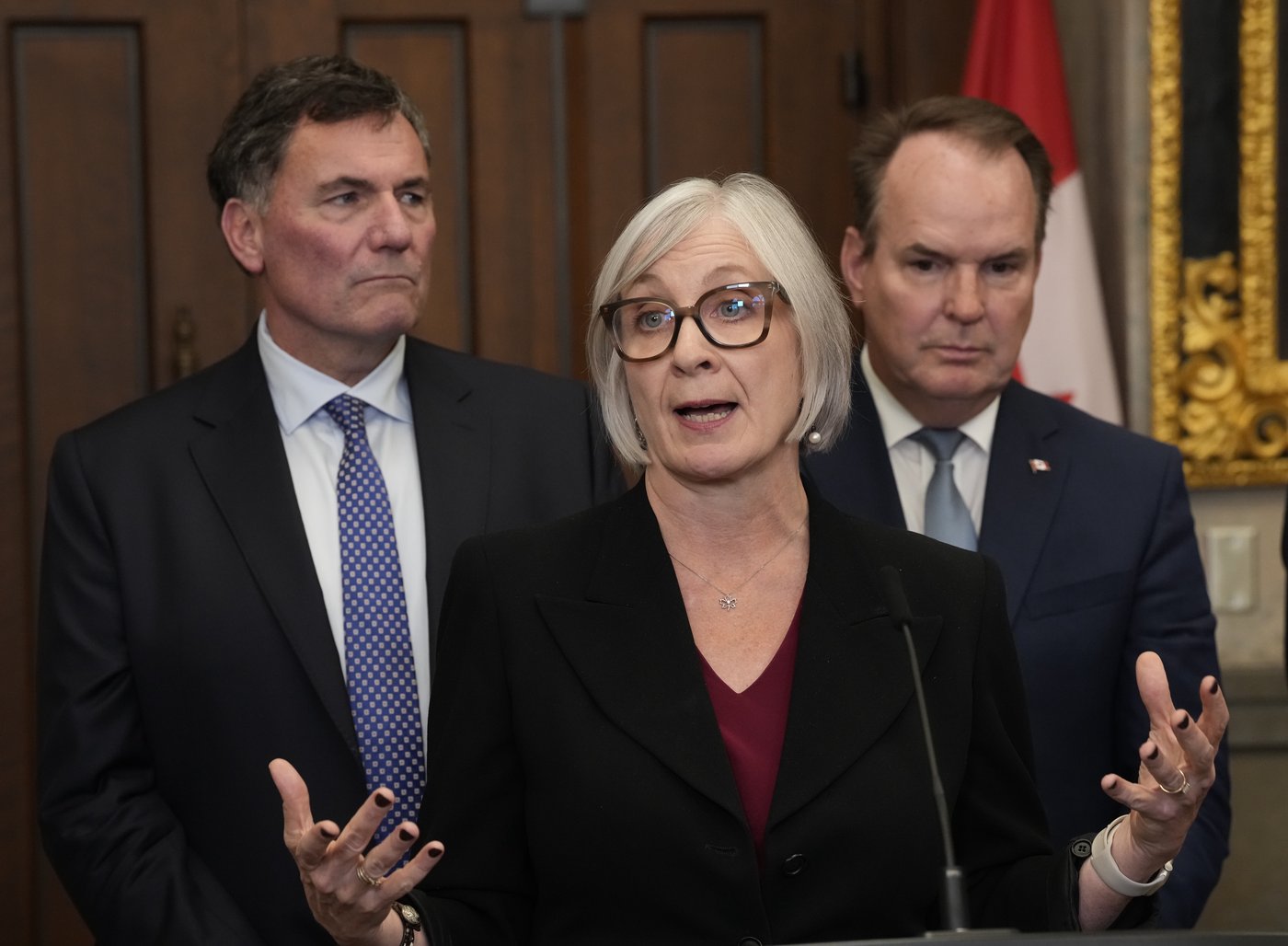
OTTAWA — Labour leaders are denouncing what they call a direct attack on the right to strike in the sweeping economic bill the Liberal government tabled Monday.
The Canadian Labour Congress on Tuesday accused the federal government of enshrining in the proposed legislation new powers allowing the federal government to quash strikes on a minister’s whim.
The Liberals claim the bill would place “guardrails” around a minister’s power to end work stoppages in federally regulated industries. Jobs Minister Patty Hajdu argues the changes in Bill C-39 are aimed at improving labour relations and reducing the number of times negotiations hit a boiling point.
According to the proposed Building Canada Strong Act, a work stoppage must be affecting the “national interest” before the minister can trigger Section 107 of the Canada Labour Code to end a strike or lockout.
The government says it must balance threats to the national interest — which could include economic impacts or social disruptions — with the need to protect the right to free association and to strike.
Section 107 has been used repeatedly by the federal labour minister in recent years to refer deadlocked parties to the Canada Industrial Relations Board to declare an impasse, end a work stoppage and move talks into binding arbitration.
But those actions have been the subject of numerous court challenges which argue that Section 107 never gave the minister the power to end a strike.
Bea Bruske, president of the Canadian Labour Congress, told reporters in Ottawa on Tuesday that the proposed amendments would formalize the government’s power to break strikes.
“The government said it would protect the workers’ right to strike, but instead this bill explicitly gives government the power to end legal strikes when a minister decides that a strike is or could become contrary to the national interest,” she said.
Bruske said labour leaders are considering legal avenues to address the proposed changes but suggested those conversations are still in the early stages.
Unifor National president Lana Payne also accused the government of compromising workers’ right to strike in a media statement on Tuesday.
“At a time when we should be standing together as a country to fend off attacks from the Trump trade war, workers and their unions must now also defend the right to fair and free collective bargaining,” she said.
In an interview after the bill was tabled on Monday, Hajdu said the government is trying to make it harder to use Section 107 so that it becomes an “in-emergency-break-glass kind of tool.”
The minister said there’s no set timeline on when the federal government would move to end a strike or lockout under the new labour legislation.
“It is a high bar to establish a national interest,” Hajdu said. “What I would say is that each strike in each industry is different and so it’s very hard to answer that with a blanket answer.”
The federal government has leaned on Section 107 in recent years to end walkouts at Canada Post, the CN and CPKC railways, and at the B.C. and Montreal ports. Air Canada flight attendants defied an attempt to use the measure to end their strike in 2025.
Hajdu said strikes could still happen under the proposed legislation and acknowledged the point of a work stoppage is to inflict economic pressure in a labour dispute.
But she said that pressure can mount quickly when, for example, a work stoppage hits the transportation sector and puts perishable goods at risk. She said the government will be evaluating each strike individually.
A senior government official briefing reporters on Monday on Bill C-39 said the jobs minister would gain no additional powers through the legislation.
The Canadian Labour Congress and some legal experts disagree with that reading.
Brent Marks, a lawyer in the labour and employment division at Nelligan Law, said Tuesday that Bill C-39 would introduce language to the Canada Labour Code that implies “a new express power” is being given to the minister.
“One of the things the minister can direct the Canadian Industrial Relations Board to do is order the resumption of operations or services. So, in clearer words, end a strike,” he said.
The government may argue that it always had that power, Marks said.
But he said Ottawa has received a lot of pushback when it has attempted to use that section to end strikes in recent years, and this may be a way “to make that road easier for them.”
Bruske said the government already has an option available to it to end strikes in federally regulated sectors — tabling and passing back-to-work legislation in Parliament. That avenue would see debate and a recorded vote to show Canadians where their MPs stood on workers’ rights, she said.
“That is how these issues should be resolved, not by the stroke of the minister’s pen,” Bruske said.
Asked whether the government was trying to avoid the public scrutiny of back-to-work legislation, Hajdu said there may be situations where Section 107 is the only option available to a minister because Parliament isn’t sitting or can’t be easily recalled. The legislative route is also subject to parties playing politics, she said.
Other proposed changes to the labour code in the bill include the introduction of a special mediator to publish a report outlining both sides’ positions in an impasse. The minister must consider that report before using Section 107 to end a labour disruption.
Bruske said labour leaders can support many features of the proposed legislation. She welcomed additional resources for the Canada Industrial Relations Board and for workplace safety inspections, as well as efforts to crack down on wage theft and contract flipping.
This report by The Canadian Press was first published Sept. 22, 2026.
News from © The Canadian Press, . All rights reserved.
This material may not be published, broadcast, rewritten or redistributed.

This site is protected by reCAPTCHA and the Google Privacy Policy and Terms of Service apply.
Want to share your thoughts, add context, or connect with others in your community?
You must be logged in to post a comment.