Elevate your local knowledge
Sign up for the iNFOnews newsletter today!
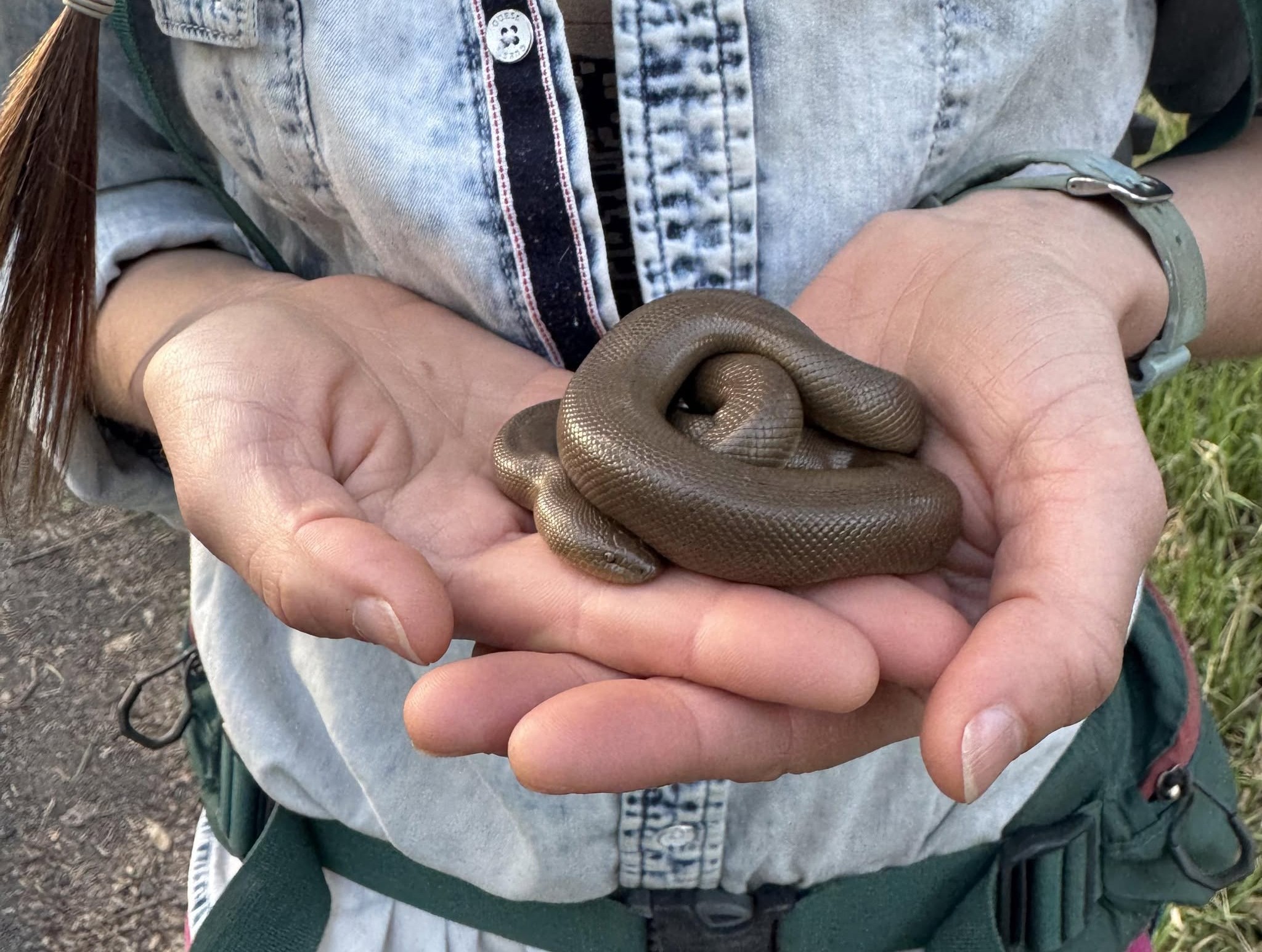
The northern rubber boa is a fascinating, odd-looking snake that is hard to find and under researched in the province, and it’s the subject of an extensive study led by a Thompson Rivers University graduate student.
Maria Collins is the team lead of the BC Boa Project, a ground-breaking exploration on the elusive snakes, spearheaded by Wildlife and Ecology Management professor Karl Larsen.
“Not much is known about the rubber boa, and it’s hard to find them,” Collins said. “Because we don’t know much about the animal, it affects how we’re able to protect it. More information allows us to make better management decisions.”
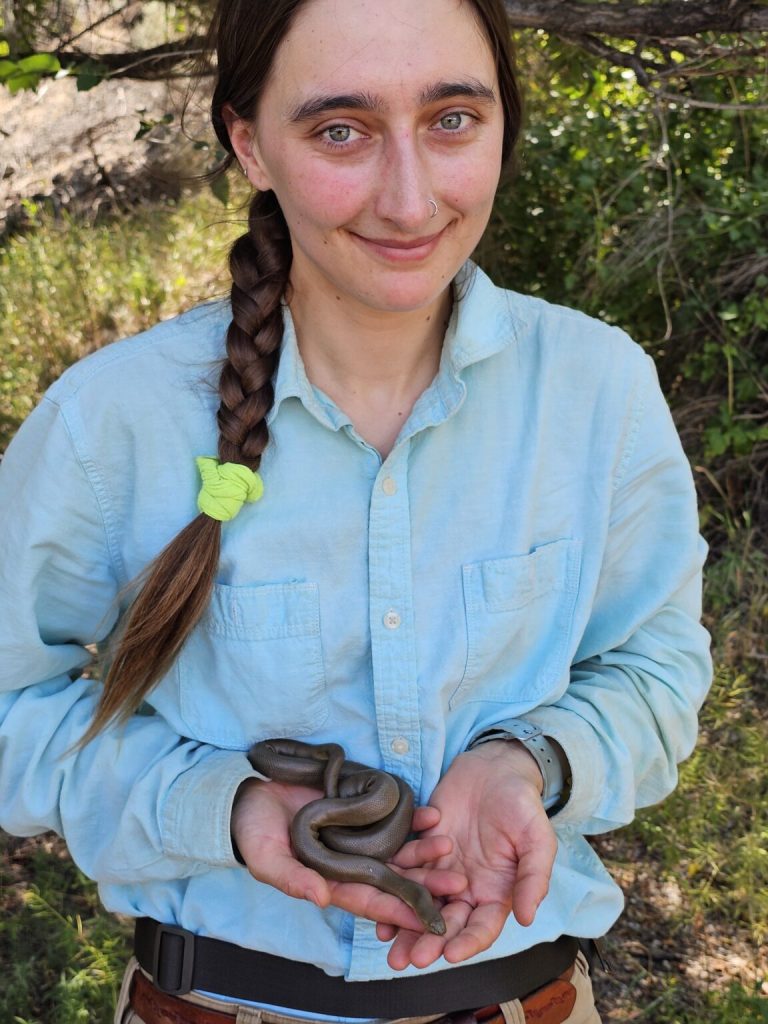
The only species of boa in Canada, extensive research on the snakes has never been done in B.C. Its range is across the Pacific Northwest from northern California as far north as Quesnel. In B.C., the snakes are widespread in the southern third of the province, with highest densities along the Canadian border with the U.S.
Collins’ broad study is shedding light on how the snake interacts with its various environments, and its role in the ecosystem.
“Most of the information we have on boas to base conservation decisions on comes from core populations in Washington and Idaho,” she said. “Here at the northern part of their range, they have shorter active seasons.
“We need more data to know if the snakes are threatened or endangered here.”
Collins started her study in the spring of 2025 that will become a thesis for her master’s in environmental sciences.
She and a few other researchers across the province put radio tracking devices inside 19 rubber boas to track their movements around the clock. Simultaneously, the online BC Boa Outreach Platform was created to ask citizens to submit boa sightings with photos for positive identification.
Assessing and understanding the snakes’ movements could help wildlife management teams improve inventory techniques.
“I wanted to help the rubber boa with my research,” Collins said. “We don’t know how to look for them during species inventory when we’re looking at land management.
“When you’re doing species inventory you follow the same guide for all snakes, but while boas are found in the same places, they’re there at different times.”
Across the past two years, more than a thousand citizens across BC submitted boa sightings with photographs, locations, dates and times. Early on, Collins brought on an undergrad student to help compile data.
“It’s really cool, so many people care about the boa,” Collins said. “I’ve done similar studies with rattlesnakes and didn’t get close to this kind of response.”
Fall submissions helped the team identify how long the snakes remain active in fall before heading into dens for winter.
“Most snake species are in their dens right now (October), and because of citizen reports last year, we found boas are still moving around outside their dens into November,” Collins said.
“The people reporting fall movements is breaking misconceptions and making us rethink what the snake is capable of.”
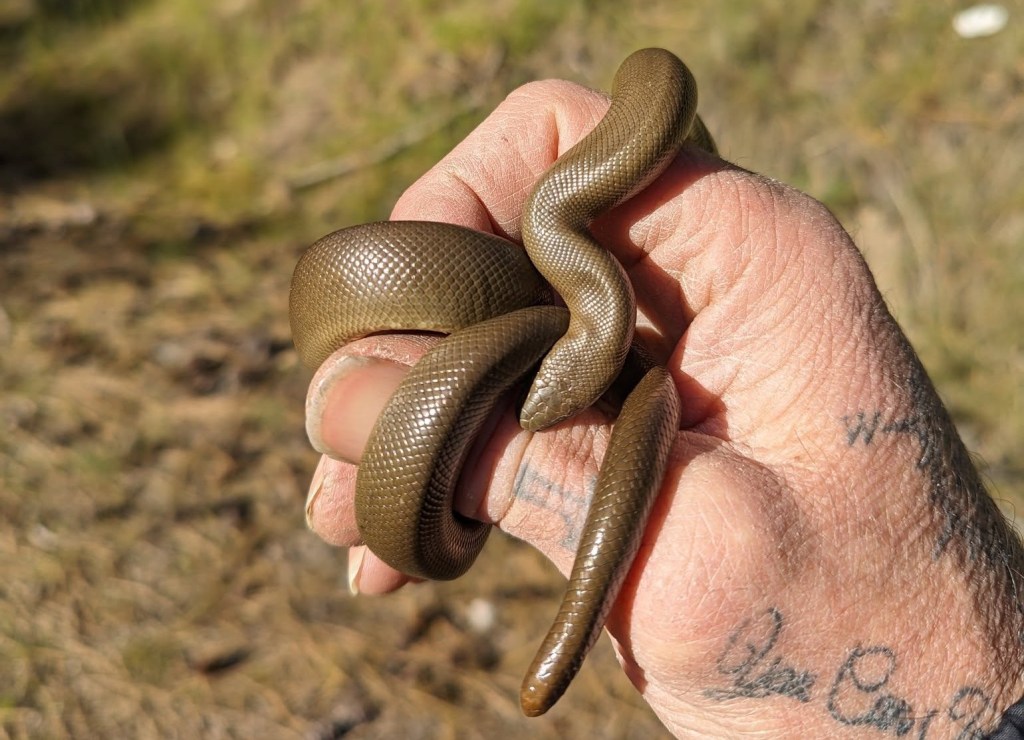
The northern rubber boa is small and thick-bodied, with loose skin and smooth scales that give it a unique rubbery appearance. Known as the two-headed snake, their blunt faces and solid colouring make it tricky to tell which end is which.
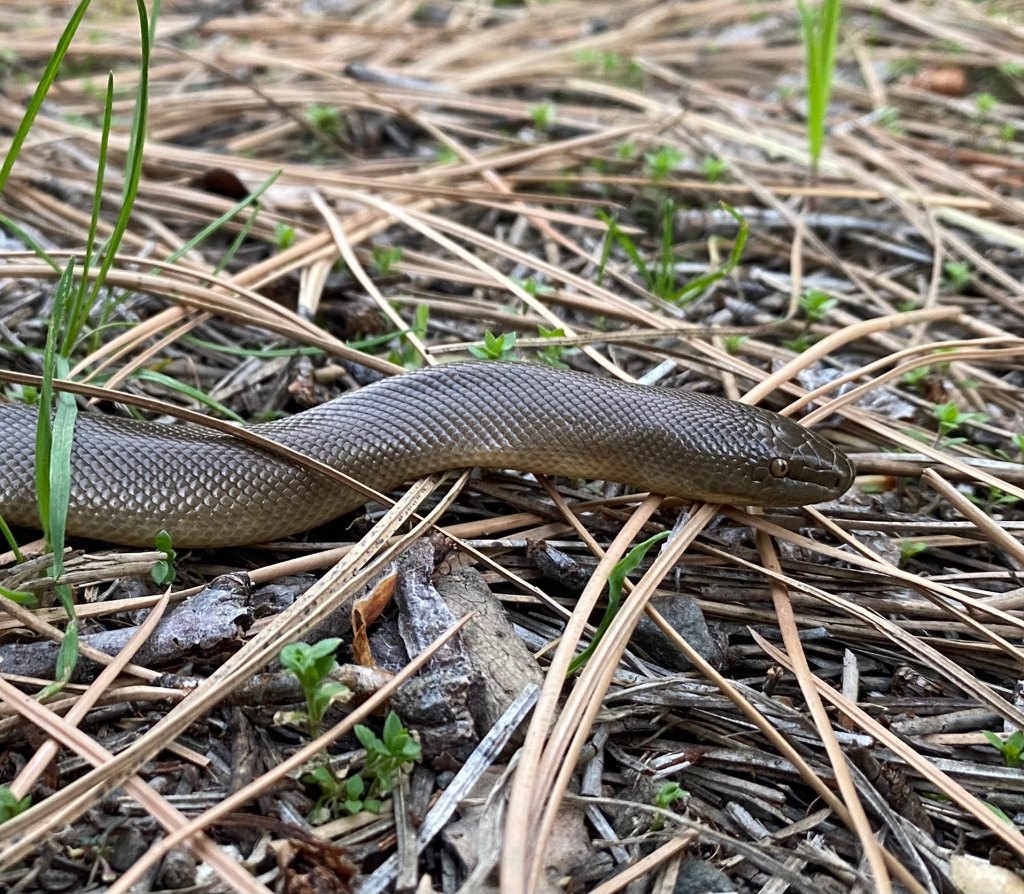
The rubbery snakes hide in crevices below the frostline during the winter months and emerge in spring. When temperatures get above 20 Celcius, the snakes disperse into summer ranges in woodlands, grasslands and riparian areas.
The species avoids hot, dry areas and spends most of its time hiding under features or underground. They’re active during the day in spring, and nocturnal during summer.
“This species is particularly hard to find, so we rely heavily on citizens reporting sightings,” Collins said. “Boas are scattered across the province in weird spots where we don’t expect them. I can’t be doing research in all these regions. We really don’t know much about these animals. We can’t do this without citizens.”
The team has received numerous emails from citizens concerned about boas found with bite marks on their bodies and tails, believing them to be injured.
“Boas are usually eating immature rodents in the nest and the mouse mom is coming back and biting the body,” Collins said. “Boas are super tough and use their tail like a defence. Boas with bite marks are eating well. People keep picking them up thinking they’re injured.”
Prior to heading the project, Collins didn’t know much about northern rubber boas, and she didn’t like snakes.
“I’ve changed how I think about snakes,” she said. “I like the subtle beauty they have. Because I used to be scared of them, I think I’m pretty hyper focussed on being able to see them, so I’m good at finding them.”
The last call for submissions is at the end of November. Collins will be analyzing the two years’ worth of data over the winter. She plans to have her master’s completed in the spring of 2028.
News from © iNFOnews.ca, . All rights reserved.
This material may not be published, broadcast, rewritten or redistributed.

This site is protected by reCAPTCHA and the Google Privacy Policy and Terms of Service apply.
Want to share your thoughts, add context, or connect with others in your community?
You must be logged in to post a comment.