Elevate your local knowledge
Sign up for the iNFOnews newsletter today!
MONTREAL — Prime Minister Mark Carney now says Canada is working to become an “associate member” of the European Union, after largely avoiding that term.
“We’re here because we share a common mission. We’re in the process of forging a new alliance for the future, with Canada as an associate member,” Carney said Thursday.
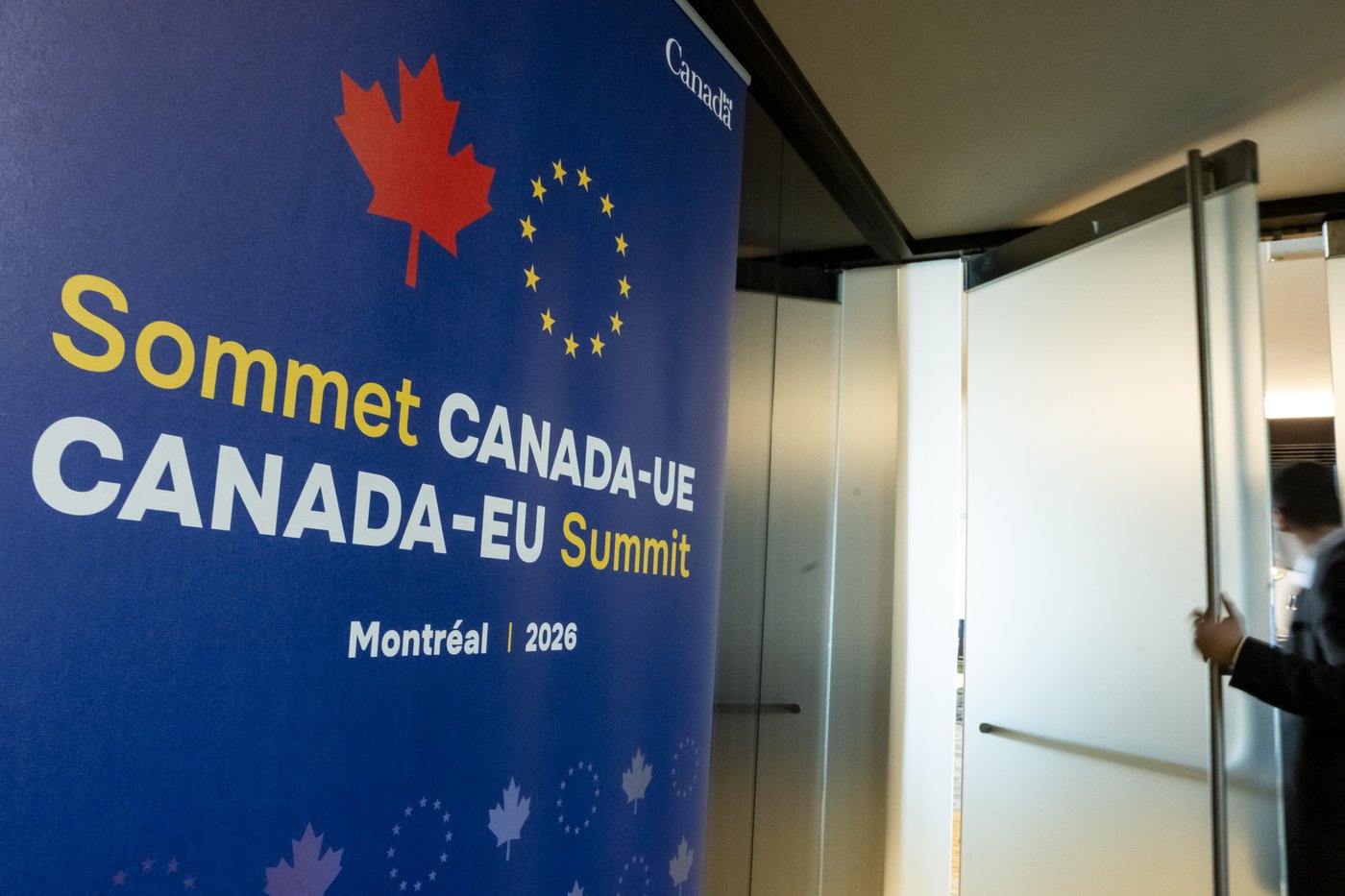
The prime minister welcomed senior officials from Brussels to the two-day Canada-EU Summit in Montreal to negotiate a new partnership — though critics say the outcomes have been unclear.
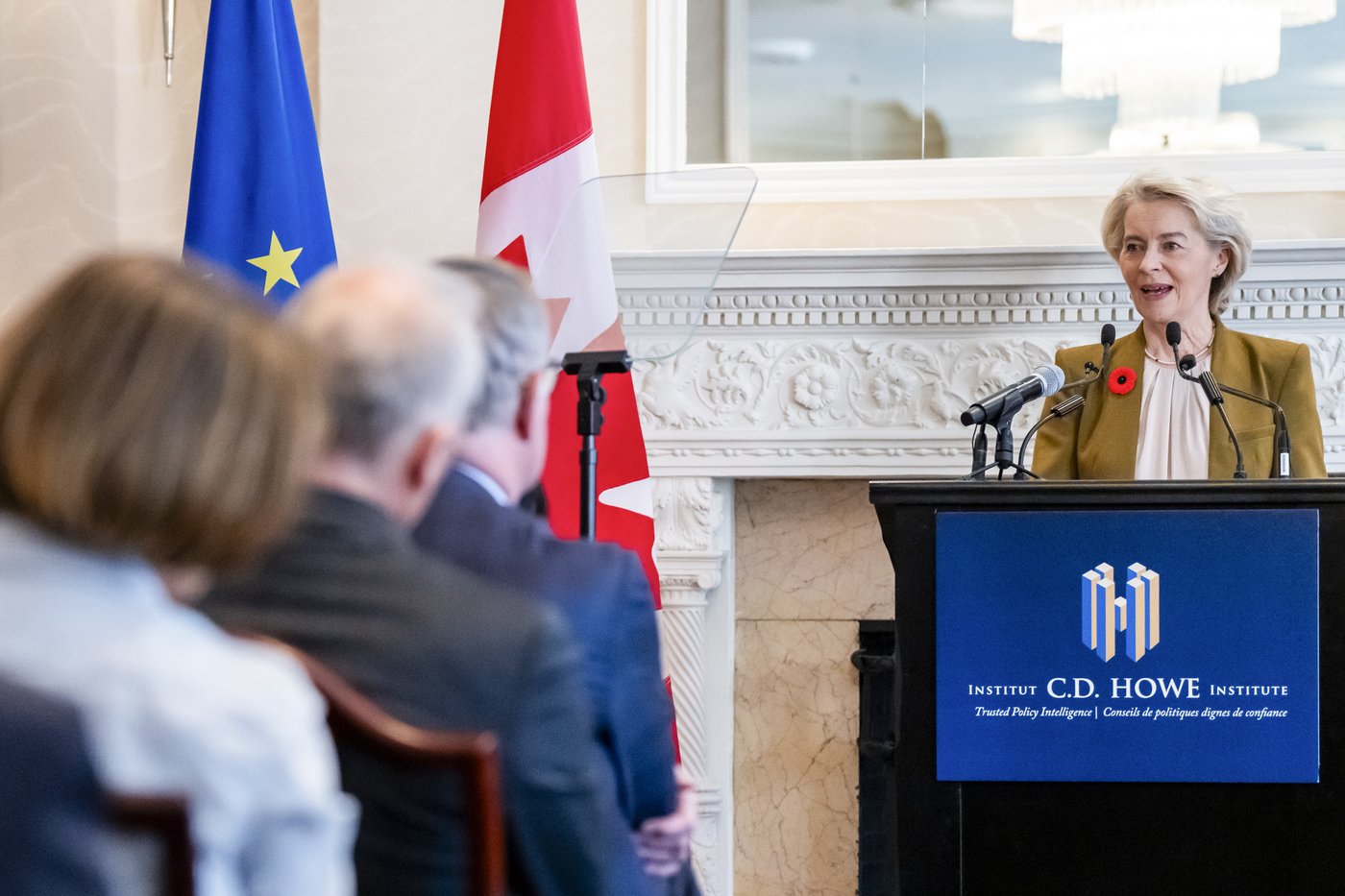
“We can work on everything from AI and climate, to energy and security, you just name it,” European Commission President Ursula von der Leyen said.
She said the term “associate member” is helpful for deepening policy alignment.
“Canada cannot become a fully fledged member of the European Union because of geography. But we both want to bring our relationship to the highest level possible, and this is why we are discussing the idea of Canada becoming the first associate member of the European Union,” she said.
Von der Leyen first proposed associate member status for Canada in a September speech to European Parliament. Canadian and European officials immediately downplayed that terminology, opting instead for “alliance for the future.”
Several EU member nations, including Germany, have rejected the idea of associate membership.
Some have expressed unease with Canada gaining special status while other countries including Ukraine go through arduous reforms for full membership. Others fear a side deal with Canada could incentivize countries to leave the EU and seek select benefits while eschewing some obligations of full membership.
Prime Minister Carney has said repeatedly the substance of the agreement is more important than the language used to describe it.
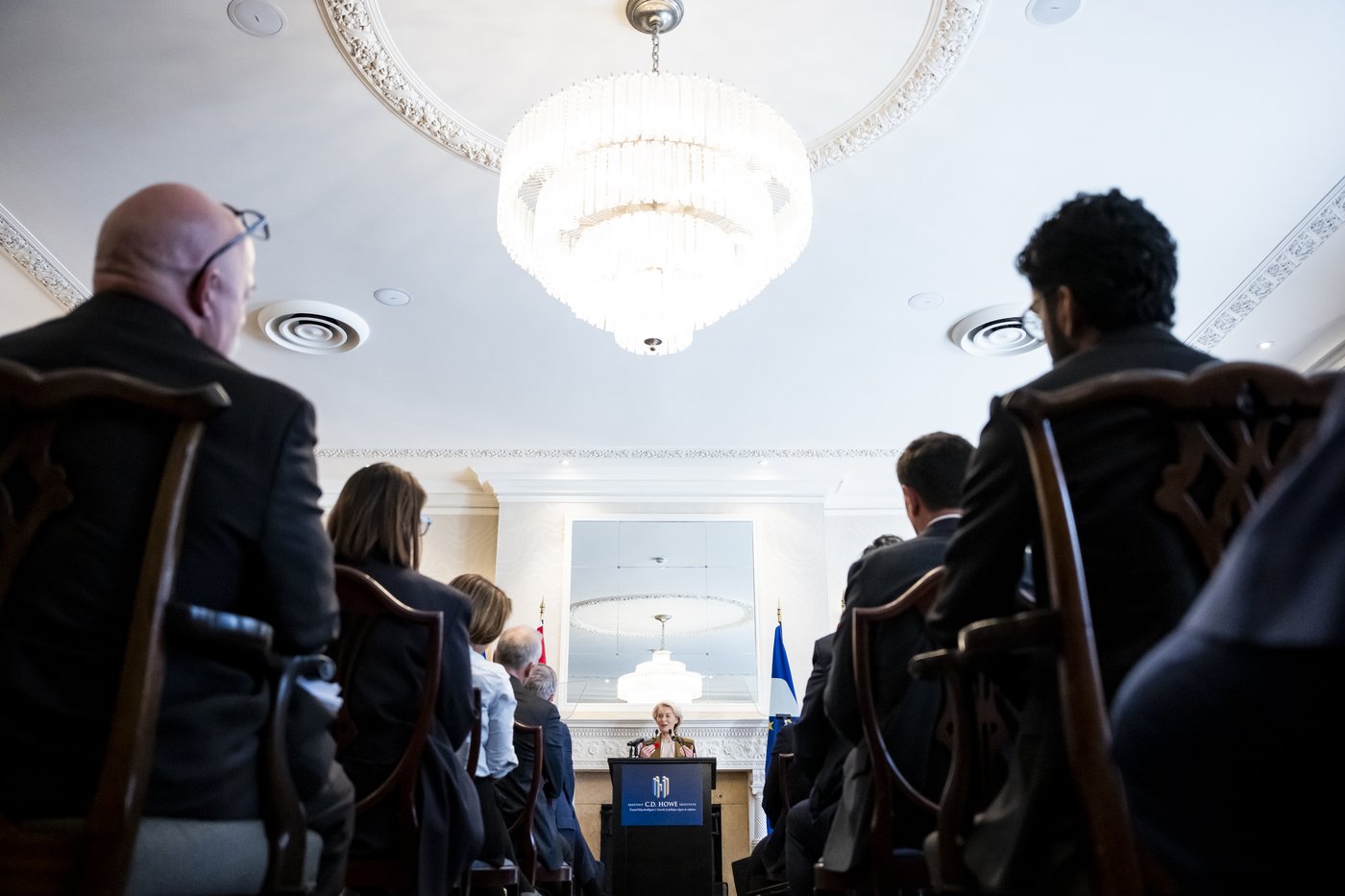
“This new alliance is not a marketing exercise. The name doesn’t matter,” he told reporters.
“What matters to Canadians ultimately from this new alliance is going to be affordability, it’s going to be opportunity,” he said, arguing closer economic links will lead to more purchasing power for Canadians.
Von der Leyen’s visit comes after months of Carney pursuing closer ties with the EU. He has argued Europe complements Canada’s economic strengths and shares its values.
Thursday’s agenda includes a welcome dinner with elected and business leaders, before Canadian and European leaders get down to talks on Friday.
In his own Thursday afternoon speech, European Council President Antonio Costa endorsed the “bold idea” of associate membership for Canada.
“Regardless of the specific term used, one thing is clear: our partnership will be the closest, deepest and most unique one possible,” he said in French.
“At our summit tomorrow, we will announce an agreement on digital trade that will complement the CETA,” he said, referring to the EU-Canada Comprehensive Economic and Trade Agreement.
In her Thursday speech, von der Leyen said the EU wants to work first with Canada and then with other nations to reinforce their sovereignty and interests.
“We can no longer let ourselves be shackled by the limits of the old world order,” she said, adding that nations can work strategically together instead of facing down threats alone.
“We are witnessing a deeper decay in international order. Alliances and assumptions that have enabled our prosperity and security are changing rapidly.”
She cited “choke points” in trade, where one country coerces another by manipulating supply chains. She did not name specific countries.
Industry Minister Mélanie Joly told reporters Thursday that Canada’s work with the EU seeks to reduce reliance on the U.S. as Washington pursues its trade war.
“The challenge of the era is really to be capable of saving companies that otherwise will fail and will have job losses. So we’re in a hurry,” she said in French.
Von der Leyen said in her speech that a new partnership could see Canada increase its mining of critical minerals, aided by European “industrial demand, technology and investment.”
She said Canadian startups and researchers will soon be able to train their models on the EU’s supercomputers.
“Tomorrow we will finalize our agreement to bring Canada into Europe’s infrastructure for supercomputing,” she said Thursday.
Both sides are also working on joint projects in the Arctic on ocean monitoring, critical raw materials and connectivity as Russia rebuilds its Arctic military footprint.
The EU “will deepen Canada’s engagement” in university student exchanges through the Erasmus+ program, von der Leyen said. Both sides are also “working to strengthen Canada’s participation” in the next phase of a scientific research program called Horizon, she added.
She said there also could be cross-Atlantic collaboration between elected officials and judiciaries.
As von der Leyen spoke, the Conservatives dismissed the summit as a “distraction” from deteriorating living standards and the trade war.
“Canadians are faced with another distraction for the next two days, of more meaningless agreements. Meanwhile, they go to food banks and struggle to pay their mortgages,” Conservative trade critic Stephanie Kusie said on Parliament Hill.
Her party colleagues argued Canada should avoid deepening ties with Europe until all EU member states ratify a decade-old trade deal with Canada and Brussels stops charging carbon tariffs on Canadian imports.
CETA was signed during the EU-Canada summit 10 years ago and has been applied provisionally since 2017.
Nine EU members have not fully ratified it. Slovenia became the latest country to ratify CETA on Sept. 29. Belgium, Bulgaria, Cyprus, France, Greece, Hungary, Ireland, Italy and Poland are the remaining holdouts.
The Conservatives have claimed that any new deal with the EU would see Canada lose control over immigration. Federal officials have insisted repeatedly that any labour mobility agreements would be limited to specific professions or student exchanges.
The Asia-Pacific Foundation argued in a Thursday brief that Carney is focusing on European economies with far slower growth than their Asian counterparts.
“The EU — despite its many strengths — is an occasionally distracted suitor, reckoning with sluggish growth, infighting over budgets and Ukraine (and how to label Canada’s relation to the bloc), and ascendant far-right leaders,” the institute wrote in a Thursday newsletter.
This report by The Canadian Press was first published Oct. 29, 2026.
— With files from Marieke Glorieux-Stryckman
News from © The Canadian Press, . All rights reserved.
This material may not be published, broadcast, rewritten or redistributed.

This site is protected by reCAPTCHA and the Google Privacy Policy and Terms of Service apply.
Want to share your thoughts, add context, or connect with others in your community?
You must be logged in to post a comment.